
Using hospitals
Hospital registration in China with a foreign passport
What foreign patients should bring, how to create or recover a hospital record, and what to do when an app or machine rejects a passport.
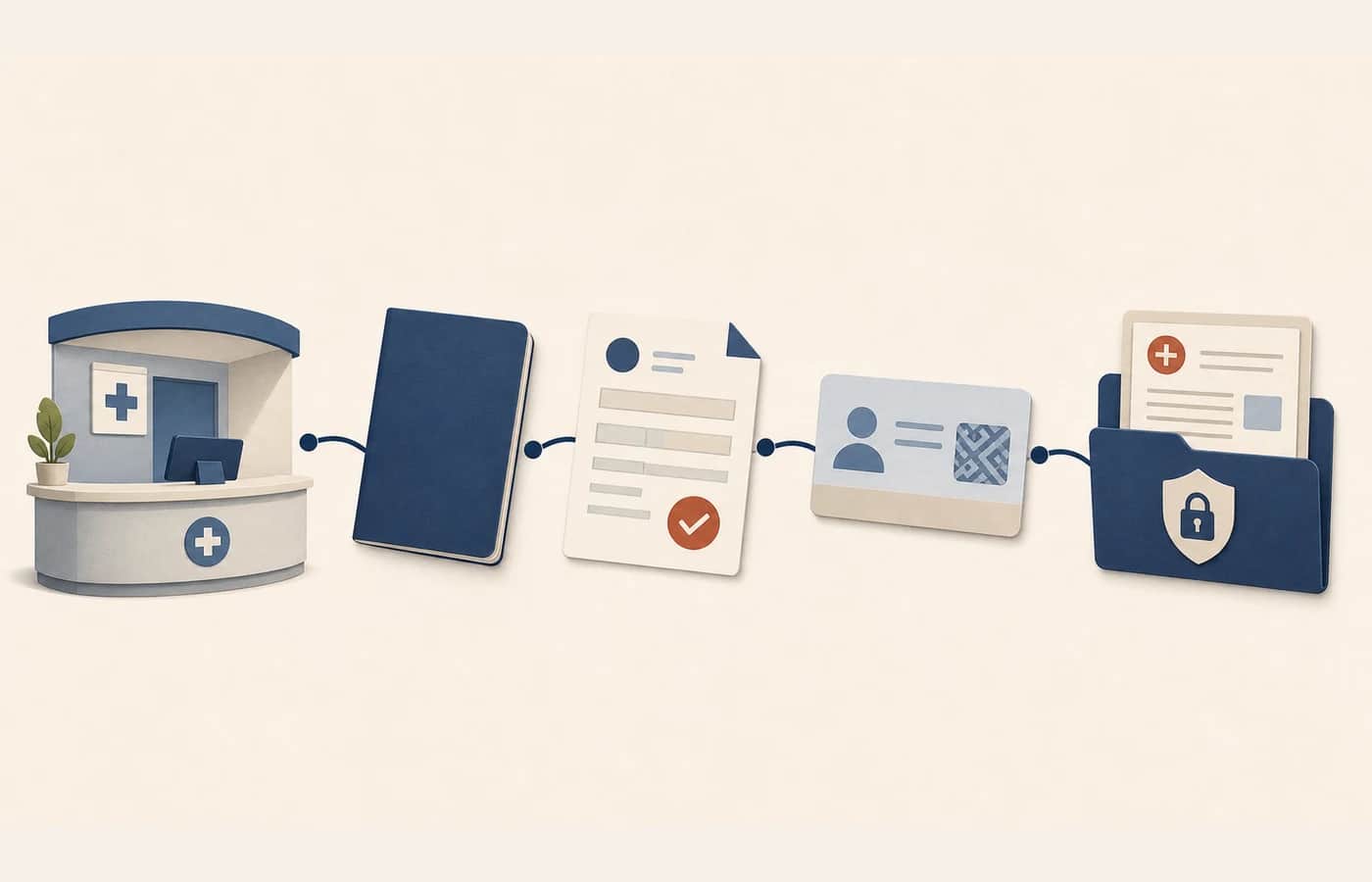
For a planned first visit, bring your original passport, appointment confirmation, a telephone number you can access in China and any insurance card the hospital asks to see. Go to the hospital's registration desk, outpatient service centre or named international-patient desk and ask staff to create your patient record (建档). If you have visited before, bring the old patient number, card, receipt or report and ask staff to retrieve that record instead. Before you leave the desk, check your name, date of birth, passport details and patient number, then ask exactly where to check in. If an app or self-service machine does not accept a foreign passport, use the hospital's staffed route rather than entering false identity data.
Use this as a practical starting point
Provider procedures can change, so confirm time-sensitive details with the hospital, insurer or service. A licensed professional must make clinical decisions for an individual patient.
At a glance
Key points
- First visit: bring the original passport, appointment confirmation, reachable telephone number and any requested insurance card.
- Allow extra time for first-visit registration; follow the arrival time published by the exact hospital.
- Returning patients should bring the old patient number, card, receipt or report so staff can search before creating another record.
- Use the passport name, number and date of birth consistently across the appointment, hospital record and insurance documents.
- If an app or machine rejects a foreign passport, move to a staffed desk instead of selecting the wrong document type.
- Registration creates or retrieves the patient record; department check-in and queue entry may still be separate steps.
- Before leaving, confirm the patient number and ask where to check in, pay and wait.
What to bring and where to go
For a planned first visit, take the original passport or other identity document accepted by the exact hospital, the appointment confirmation, a telephone number you can receive messages on, and any insurer or membership card the provider asks to see. Also keep the hospital name, campus, department and appointment time in Chinese on your phone. If the provider publishes a first-visit arrival buffer, follow it; United Family provider pages, for example, currently tell first-time patients at named facilities to arrive before the appointment for registration.
Start at the hospital's registration desk (挂号处), outpatient service centre (门诊服务中心), patient service desk or named international-patient desk. Say that this is your first visit and that you hold a foreign passport. Ask staff whether they should create a patient record (建档), retrieve an existing record or complete identity verification for an online profile. A patient card, barcode or app profile is only the visible credential; the hospital patient number underneath it is what connects later transactions.
Before walking away, compare the record with the passport and booking. Check the name, date of birth, document type, masked passport number, current telephone number, hospital campus, service category and patient number. Then ask which building or floor handles department check-in and whether payment or queue collection comes first. Save the patient number privately with the hospital name.
- Original passport or provider-accepted identity document
- Appointment confirmation and department name
- Hospital, campus and address in Chinese
- Reachable telephone number and email
- Existing patient card, number, receipt or report
- Insurance or membership card if the hospital requests it
- Previous records and medicine list when relevant to the visit
Registration is not the same as department check-in. Leave the desk only after you know your patient number and the next place to go.
Bind the record to the exact provider, campus and service
Record the hospital's official English and Chinese names where published, the city, exact campus and whether the visit uses general outpatient care, a special service or a named international medical department. A hospital group can run several facilities, and one institution can separate ordinary outpatient and international routes. The same login or brand does not prove that one patient number, card, price category or insurance arrangement works across all of them.
Peking Union Medical College Hospital, for example, publishes a distinct International Medical Department as well as its general outpatient process. That provider evidence supports confirming which PUMCH service owns the visit before record creation; it does not prove how another hospital structures services or whether records transfer between two campuses.
Use the provider's own current website, official app, verified service account, telephone or staffed desk to identify the first-visit route. Save the provider page that supplied the route. A map listing or search result can help locate a hospital, but it should not be the final authority for an identity-document upload, patient-number recovery or payment request.
- Official hospital name
- City and exact campus
- General, special or international service
- First visit or returning visit
- Provider-controlled registration route
- Destination department and appointment reference
Prepare one identity bundle before arrival
Prepare the patient's passport or other document that the exact provider says it accepts, the name exactly as printed, document type and number, expiry date, date of birth and a reliable current telephone number or email. Bring the appointment confirmation and any existing patient number, card, registration slip, app profile or previous provider-issued document that can help staff find the record.
If an insurer, employer, school or membership programme is relevant, compare its patient name with the passport before registration. Bring the card or membership evidence the provider requests, but keep the insurance decision separate: a document can help match the identity without proving eligibility, coverage, direct billing or the patient's final amount.
Beijing United Family Rehabilitation Hospital currently tells first-time patients to bring a Chinese identity card or passport for staffed new-patient registration. Jiahui's patient responsibilities ask for complete and accurate registration and financial information, current contact details, photo identification or a passport, and relevant insurance or membership documents at initial registration. Those are provider examples, not a universal China document checklist.
- Passport name, number and expiry
- Date of birth
- Current telephone and email
- Confirmed appointment reference
- Existing patient number or card
- Previous visit date or receipt if the number is unknown
- Insurance or membership identity only if relevant
- Provider instructions saved offline
Separate the login, booking and patient record
An app or WeChat login identifies an account holder. An appointment request asks for a slot. A confirmed booking reserves a provider route. A patient record identifies the person inside that provider's clinical and administrative systems. Registration activates or retrieves that record for the visit. Check-in tells the department that the registered patient has arrived, and a queue number places that visit in the current service sequence.
These states can appear in one interface, but they are not interchangeable. A helper's login may contain the patient's profile; a booking may exist before a first patient record is verified; a returning patient may have several appointments under one number; and a completed registration may still require department check-in. Ask staff which object the displayed number or code represents.
PUMCH's international-patient instructions describe its own official app patient-list route, while its outpatient notice separately describes record creation, registration and check-in. Beijing United Family's FAQ describes front-desk registration and the resulting medical identification card before the treatment visit. Together they illustrate the state boundaries without creating a universal interface model.
Account created ≠ appointment confirmed ≠ patient record verified ≠ registered ≠ checked in ≠ in the live queue.
Use a staffed fallback when a foreign document fails
If an app, mini-program or self-service machine does not list a passport, rejects the number, cannot represent the passport name or asks the patient to select a document type they do not hold, stop. Do not select a mainland resident identity card, invent digits, shorten the passport number, use another person's identity or change the name merely to reach the next screen.
Move to a route the same provider publishes: an international-patient contact, service centre, telephone, email, registration or cashier window, patient-services desk or another staffed route. Explain that the patient holds a foreign passport and ask whether staff should create a new record, retrieve an existing record or first correct an identity field. Record the staff channel and instructions for arrival.
A useful narrow example comes from a later HKU-Shenzhen medical-record-copy workflow: its published WeChat document-recognition route did not support foreign identity documents and directed foreign patients to a staffed window. That does not describe initial registration or every current app, but it demonstrates why a digital rejection should lead to a verified staffed route rather than false identity data.
A staffed fallback protects the identity trail. It does not guarantee that every provider accepts the passport or can complete registration the same day.
Complete first-visit registration with the patient's own identity
At the staffed desk or provider-approved digital route, use the patient's real accepted document. Preserve the passport name order, spelling, spaces and hyphens as consistently as the system allows. If staff use a documented internal format, ask how that format will appear on receipts, reports and future searches, and retain the patient number that links it to the passport.
Complete only the fields the provider requires and read any registration, financial, privacy or communication form before signing. Use a reliable contact that the patient can access after the visit. If a helper enters the information, the patient should review the identity and contact fields before submission. A helper's telephone or email can affect later verification, password recovery and report access.
Provider examples differ. PUMCH publishes first-visit app, machine and staffed routes in its own outpatient process. United Family's rehabilitation hospital publishes first-visit front-desk registration with a passport or Chinese identity card and describes its own medical identification card. Jiahui asks for accurate registration and financial information, current contact information and a passport or other photo identification. Confirm the exact route rather than copying one provider's sequence.
Search for the existing record before creating another
A returning patient should present the original accepted identity document and any patient card, number, old appointment, receipt, report, app profile or previous visit date. Ask staff to search the existing record before opening another. Mention an old passport number, previous name format, earlier telephone number, different campus or international-service visit if any of those could explain the mismatch.
Do not create several accounts with different spellings and hope that one works. Parallel patient records can divide appointments, orders, results, prescriptions, bills and follow-up history. A staff member may decide that two records are genuinely separate or that a new record is required, but that should be a documented provider decision rather than an invisible workaround.
If staff find more than one record, write down each patient number, the identity attached to it and the desk or team that owns the next step. Do not assume a front desk can merge clinical or financial records immediately. Use the dedicated name, passport and patient-record correction guide when several existing documents or episodes need formal correction.
Audit the record before leaving the registration point
Check the displayed or printed patient name, document type and masked number, date of birth, contact route, patient number, provider, campus and general or international service. If a payer or reimbursement category appears, verify that staff understood the intended route. Compare the record with the booking rather than assuming the appointment automatically corrected the identity.
Ask staff to explain any field that looks truncated, reordered or unfamiliar. A display that shortens a long name may be harmless, while a different document type, number, date of birth or patient number can affect later transactions. Do not alter a provider-issued card, slip or screenshot yourself; request a provider correction or written explanation.
Record the date, desk or channel and outcome of any question. If staff cannot correct the field immediately, ask whether today's visit can safely continue, which identifier should be used at check-in and which official process owns the later correction. Keep the temporary instruction separate from proof that the underlying record has been changed.
- Patient name and date of birth
- Document type and masked number
- Current telephone or email
- Patient number
- Hospital and campus
- General or international service
- Payer or reimbursement category if shown
- Registration status and next check-in point
Identify what the patient credential unlocks
Ask which object must be presented at department check-in: the original passport, patient card, printed slip, app barcode, QR-style credential or patient number. Then ask whether the same object is used for cashier transactions, tests, imaging, pharmacy collection, report access, follow-up booking or record-copy requests. Do not assume one code performs every task.
PUMCH's outpatient notice uses identity documents or provider-issued visit credentials across several later steps, including registration, check-in, payment, pharmacy and record or report access. United Family describes its own medical identification card after front-desk registration. These examples show why the credential matters while remaining provider-specific.
Write down the hospital and campus next to the patient number. A card from one hospital is not a national health card, and an app profile does not prove interoperability with an unrelated provider. Even within a group, confirm whether another campus or service searches the same record before relying on it.
Keep identity and payer categories separate
The hospital patient identity answers who receives care. A local basic-medical-insurance route, commercial direct-billing account, membership or self-pay category addresses how a transaction may be settled. They can appear together on the registration screen, but matching one does not prove the other is active or correct.
Tell staff which payer route is intended and present only the relevant insurer or membership evidence. Ask the insurer separately about the exact provider, campus, service, date, authorization and benefit. A provider accepting an insurance card at registration does not guarantee coverage, direct billing, zero deposit or reimbursement.
PUMCH's own notice describes reimbursement categories and a provider-specific identity review when moving between some services. Jiahui asks patients to provide relevant insurance or membership cards and report changes at registration. Use those examples to check the category at the named provider, not as a universal rule for China.
Patient identity verified does not mean insurance verified; insurance card recorded does not mean the visit is covered.
Control proxy help, representatives and shared devices
A trusted companion, employer coordinator, school office or interpreter may help read an interface or speak with staff, but the patient record should remain tied to the patient. Ask whether the provider permits another person's account or telephone number, how the patient will receive verification messages and what authority is required for record access or later changes.
PUMCH publishes one provider-specific app route in which a Chinese friend can add an international patient to the official patient list. That is not a national rule and does not transfer ownership of the record to the helper. United Family publishes non-clinical patient-services coordination, while HKU-Shenzhen's later record-copy notice distinguishes identity evidence and representative authorization. Each provider controls its own authorization workflow.
Keep one-time codes, passwords, passport images, insurance documents and medical records out of unverified chats. On a shared device, log out when possible and remove unnecessary downloaded files or screenshots after the task. Record which telephone or email remains attached so the patient can recover the account without depending indefinitely on the helper.
Handle a new passport, changed name or lost credential
After a passport renewal, legal name change, changed telephone number or lost patient card, start with the provider's official registration, patient-services or record route. Bring the current passport and the old passport or other linking evidence if the provider requests it, plus the existing patient number and previous visit details. Ask whether staff update the record, add the new document, retain both numbers or issue a replacement credential.
Do not open a fresh patient record merely because the old app login or card is unavailable. Ask staff to search by the existing number, old document, previous contact or visit date. If a credential is lost, ask how the provider verifies identity and revokes, replaces or re-links access. A replacement card and an updated underlying record are separate outcomes.
If receipts, reports, prescriptions, insurer records or multiple patient numbers already contain conflicting identity information, use the dedicated correction guide. It separates a display-format question, underlying record correction, provider-issued document correction and insurer or recipient update rather than promising that one front-desk change fixes every historical document.
Protect the credential and preserve a recovery record
Treat the patient number, card, barcode, QR-style credential, app profile, verification message, report link and registration screenshot as sensitive. These objects can reveal identity or connect to appointments and medical information. Do not post them in public groups, reviews or social media, and cover identifiers before asking a general question online.
Store the provider name, campus, patient number and official recovery contact separately from the card or screenshot. Keep the minimum information needed for future visits and claims, and use the hospital's current site to recover access. If a hospital, clinician, insurer or employer requests information, confirm the recipient and purpose and share only what that transaction requires.
Jiahui's patient responsibilities require accurate information and respect for patient privacy, United Family publishes provider-controlled patient-services contacts, and HKU-Shenzhen's record-copy notice requires identity evidence and authorization in its own later disclosure route. These sources support careful handling without creating one national retention or disclosure rule.
A patient number may look harmless but can connect appointments, reports and identity. Crop or cover it before sharing a screenshot for general help.
Complete the handoff to check-in and the live queue
Registration is complete only when the provider confirms the patient record and tells you the next step. Find the department, floor, check-in machine or staffed desk, and ask whether payment is required before check-in. Present the exact credential staff identified and verify that today's appointment or visit appears under the correct patient number.
Check-in is not the same as joining every downstream service. A consultation can later create separate test, imaging, pharmacy, payment, admission, report and follow-up transactions. Keep the patient number stable across them and save each provider-issued order or receipt. If a downstream system shows another identity, stop at the responsible desk rather than creating a new record silently.
For copy-ready navigation language, use the Medical Chinese appointment and registration guide. For a first-visit route from arrival through consultation and payment, use the first hospital visit guide. This page ends once the correct record and registration credential have been handed to check-in, keeping its search intent distinct and maintainable.
Useful language
Navigation phrases
Show the Chinese characters when pronunciation is uncertain. Use the copy button to send one phrase through a trusted channel without retyping it.
At the desk
Identity
Next step
Avoidable problems
Common mistakes
- Delaying emergency help to solve a routine registration problem
- Assuming a patient card works at every hospital in China
- Registering the hospital group but not the intended campus or service
- Treating an app login as a verified hospital patient record
- Treating a confirmed appointment as completed registration
- Treating registration as department check-in or live queue entry
- Assuming every hospital, campus, machine or service accepts passports the same way
- Choosing a resident identity-card type to pass an online form
- Inventing digits, shortening the passport number or borrowing another person's identity
- Changing the passport spelling merely to make a machine accept it
- Using a helper's identity instead of the patient's
- Opening another record before staff search the old passport, telephone or patient number
- Ignoring a different date of birth, document type or patient number
- Assuming a truncated display is harmless without asking staff
- Editing a provider-issued card, slip or screenshot yourself
- Treating an insurance card recorded at registration as proof of coverage
- Assuming one patient credential unlocks every test, pharmacy or report route
- Opening a new record after losing a card instead of using recovery
- Posting a patient number, barcode, QR code or report link in a public chat
- Leaving registration without knowing the next check-in point
Common questions
Frequently asked questions
Do all hospitals in China accept a passport for registration?
No universal acceptance rule is proved by the provider examples on this page. PUMCH, Beijing United Family Rehabilitation Hospital and Jiahui each publish a passport route in their own processes, but another hospital, campus, machine or service can use different documents or require staffed verification. Confirm the exact provider's current instructions before arrival and use its published staffed fallback if a digital channel cannot process the passport.
Is hospital registration the same as booking an appointment?
No. Booking requests or confirms a slot, while registration creates or retrieves the provider's patient record and binds the visit to that identity. Department check-in and live queue entry can still follow. Keep the confirmation reference and patient number separately, and ask staff which state the current screen represents rather than relying on one check mark.
Is a hospital patient card a national health card?
Usually it is a credential for the issuing hospital or network, not proof of nationwide portability. Record the provider and campus beside the patient number and ask whether another facility in the same group can retrieve it. A local medical-insurance credential, commercial insurer card and hospital patient card are also different objects with different owners and purposes.
Should I register under my English name or a Chinese name?
Start with the name on the accepted passport or other identity document and keep it consistent with the booking. Ask registration staff how the provider records a Chinese name or alias and how the display will appear on receipts and reports. Do not silently replace the official identity or create a second record only to accommodate an interface.
What if the app or self-service machine rejects my passport?
Stop before choosing the wrong document type or inventing data. Return to a staffed route published by that hospital, such as its registration window, service centre, international-patient contact or patient-services desk, and ask whether staff should create, retrieve or correct the record. A digital rejection does not prove the provider rejects the patient, and a staffed fallback does not guarantee acceptance until staff confirm it.
What if the hospital cannot find my old patient record?
Show the original accepted identity document and any old patient number, card, app profile, appointment, receipt, report or previous visit date. Mention an old passport, earlier telephone, alternate name format, campus or international service. Ask staff to search before creating another record. If several records already exist, document each number and use the provider's correction or merge route.
Can another person register me or keep my profile in their app?
Provider rules differ. Confirm whether proxy help is permitted, keep the record under the patient's identity and clarify which telephone, email and account receives verification messages. PUMCH publishes one provider-specific friend-assisted patient-list route, but that is not a national rule. Do not give an unverified helper passwords, one-time codes, passport scans or broad access to medical records.
What if my patient card is lost?
Use the provider's current official contact or registration route and ask how it verifies identity, retrieves the existing patient number and replaces or re-links the credential. Bring the original accepted document and previous visit details. Do not create a new patient record unless the provider instructs you to; replacing a card and updating the underlying record are separate outcomes.
What if I renewed my passport or changed my name?
Ask the provider's registration, patient-services or record desk whether it updates the document number, adds the new passport, retains both numbers or requires a formal correction. Bring the current passport, existing patient number and old passport or linking evidence if requested. Use the dedicated correction guide when receipts, reports, prescriptions, insurer records or multiple patient numbers already conflict.
Does registering an insurance card mean the visit is covered?
No. Recording an insurance or membership identity can help match the payer route, but it does not prove network status, benefits, authorization, direct billing, deductible, deposit or final payment. Ask the hospital about its billing route and ask the insurer separately about the exact provider, campus, service and date. Keep the patient identity and payer decision as separate records.
Can I complete hospital registration entirely online?
Some providers publish app or machine routes, while others require or retain on-site identity verification for a first visit. Foreign documents may also fail in a particular digital workflow even when a staffed route exists. Follow the exact provider's current instructions, bring the original accepted document and leave enough time for a staffed fallback before the check-in deadline.
What should I verify before leaving the registration desk?
Check the name, date of birth, document type and masked number, current contact, patient number, hospital, campus, service and payer category if shown. Ask which credential is needed for department check-in and whether payment comes first. Save the registration outcome and next destination privately. If a material field is wrong, request the provider-owned correction route instead of editing the document yourself.
Evidence
Sources consulted for this guide
National rules are separated from city and provider examples. Access dates show when a source was collected; source pages and procedures can change afterward.