
Using hospitals
Fixing name, passport and patient-record errors at a China hospital
Fix name, passport and patient-number mismatches, duplicate files and factual record errors at a China hospital without confusing them with diagnosis disputes.
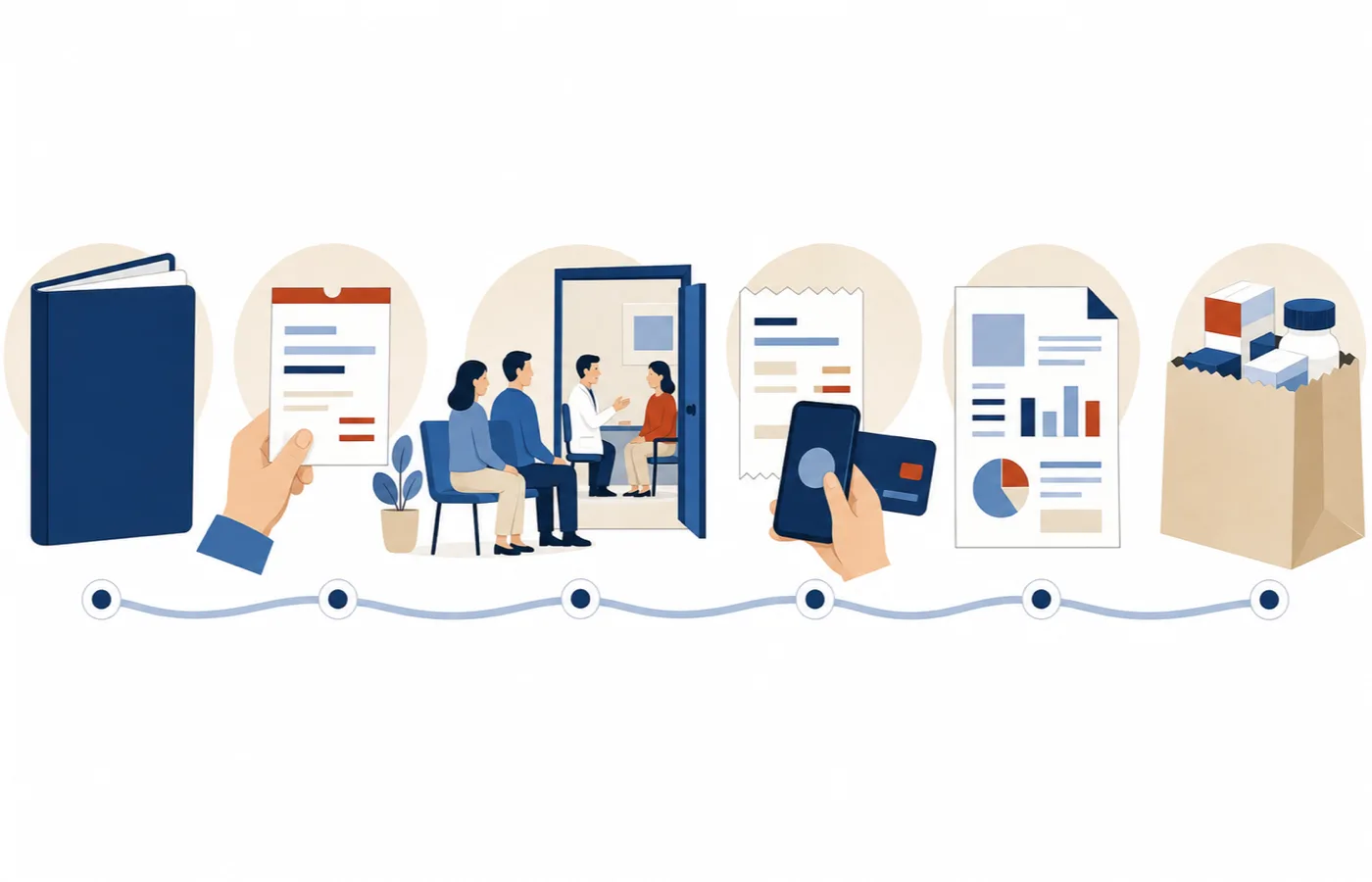
A wrong name, passport number or patient number can disconnect an appointment from reports, prescriptions, payments or insurance documents. The safest response is to identify which system contains the error, ask the responsible hospital team to verify it and retain a traceable result. Identity correction, duplicate-record linkage and amendment of a signed clinical record are different processes.
Use this as a practical starting point
Provider procedures can change, so confirm time-sensitive details with the hospital, insurer or service. A licensed professional must make clinical decisions for an individual patient.
At a glance
Key points
- Report a mismatch before a test, medicine, procedure or other patient-specific action; the national standard calls for staff to verify identity, while emergency care should not be delayed when life is at risk.
- Separate the booking profile, hospital patient master index, visit number, individual document and insurer record before requesting a change.
- Ask the hospital to link or reconcile duplicate patient records, but do not assume that an old number will be deleted or every connected system will update automatically.
- A factual correction must preserve the hospital's audit trail; a disagreement about diagnosis or clinical judgment is not a simple registration edit.
- Confirm the result across appointments, reports, prescriptions, bills and record copies instead of treating one corrected screen as proof that every record changed.
Treat an active identity mismatch as a safety issue
If a wristband, specimen label, test request, prescription, medication, report or procedure document shows another person or conflicting identifiers, tell hospital staff immediately and show the accepted identity document used for that visit. Do not solve the mismatch by changing a number yourself or by proceeding under a new profile without instruction. The national patient-identification standard says an operation should stop when the patient's answer conflicts with the record and that staff should perform a fresh check; the hospital controls that verification.
The same standard allows a passport number or another identity-document number as part of identification and calls for at least two identifiers, preferably including a unique identifier. It also says lifesaving care takes priority when identity is not yet known. This guide cannot decide whether a test or treatment should be delayed: alert the team, follow its safety process and do not postpone emergency help in order to finish an administrative correction.
Someone else's details on an active order, label or wristband require immediate staff attention. A spelling preference on a historical document normally follows a different administrative route.
Identify which record layer is wrong
Write down exactly where the mismatch appears. A city booking platform or third-party appointment profile can be separate from the hospital registration profile. Inside the hospital, the patient master index can connect a name and identity document to one or more patient, outpatient, inpatient or record numbers. A laboratory report, billing receipt and insurer file may each copy data at a different time. Correcting one layer does not prove that the others have synchronized.
Start with a neutral comparison: hospital and campus, appointment or visit date, system or document name, patient number, current field, requested field and supporting evidence. Preserve an unedited screenshot or copy of the error without exposing it publicly. Ask the hospital which office owns that layer—registration, patient services, medical-records management, the issuing department, finance or another designated unit—rather than sending identity data to an unverified account.
- Booking-platform or account profile
- Hospital registration profile or patient master index
- Patient card, outpatient number, inpatient number or medical-record number
- A specific report, prescription, order, medical-record entry or billing document
- Insurer, employer or assistance-company record
Request a name, passport or identity-field correction
Use the exact hospital's official channel and ask which office handles identity information. Be ready to show the current identity document and, if relevant, the former passport, a name-change or relationship document, the affected patient number and examples of the mismatch. The national rules support accurate, updated identity information, but they do not create one nationwide material list for foreign passport renewal, name order, transliteration, aliases or overseas name changes.
Ask staff to state what will change and what will remain. A provider may correct the registration profile, add an alias, connect a new document to the same unique patient identity or require another review. Do not assume the request can be completed online, on the same day, free of charge or without translation or authentication. Also ask whether historical reports, receipts and appointments keep their original display and whether a new verified copy can be issued when necessary.
Handle duplicate patient numbers without creating another one
Duplicate records often appear after different name spellings, a renewed passport, an online channel that did not find an earlier profile or registration at another campus. Keep every number, card and account until the provider finishes checking. The electronic-record system specification expects duplicate checking and supports linking multiple electronic records that belong to one patient, but linkage is not the same as erasing the older record or transferring every item to one portal screen.
Ask which patient identity and number should be used for future bookings. Then ask the provider to check old and current appointments, reports, prescriptions, medicine pickup, payments, receipts, admissions and formal record copies. A hospital may preserve old encounter numbers for traceability even after it establishes that they belong to the same person. Do not create a third profile to bypass a login or booking problem unless the hospital expressly instructs you to do so.
A successful account login or a preferred patient number is not proof that every older clinical and financial record has been linked.
Describe a factual error in a specific medical record
For navigation, this page uses factual error to mean a concrete field that can be checked against evidence—for example, a transposed passport digit or a visit document attached to the wrong patient. It is not a legal definition. Identify the exact record, page or field, the current value, the value you say is correct and the document that supports the request. Ask the medical-records office or another hospital-designated unit how it accepts and records the request.
Medical-record rules protect the history of a correction. A handwritten error should remain visible under a double-line correction with the time and responsible signature; scraping, covering or hiding the original is not permitted. Electronic systems must retain operation traces, and archived records generally require controlled approval for exceptional changes. The result may be a corrected field, an addendum, a linked note or another traceable action—not deletion or a silent replacement of the original record.
Keep diagnosis and clinical-judgment disagreements separate
Disagreeing with a diagnosis, interpretation, treatment choice or later medical opinion does not by itself turn the original entry into a registration typo. Ask the treating service to explain the record and provide any later information through the hospital's stated route. This site cannot determine whether a diagnosis is correct, whether a clinician was at fault or whether a medical record should contain a different professional conclusion.
If an identity or factual request is not resolved, ask for the hospital's designated complaint or patient-relations route and retain the response. Formal dispute pathways can involve complaint review, negotiation, mediation or courts, depending on the issue. Those routes have legal and evidentiary consequences beyond this administrative guide. Do not alter an original record, and obtain individual professional advice when a dispute, limitation period, evidence preservation or legal remedy matters.
Understand why correction does not always mean deletion
China's Personal Information Protection Law provides a route to request verification and timely correction or supplementation of inaccurate or incomplete personal information. Deletion is conditional, and the law recognizes situations where a statutory retention period has not expired. Medical records also have preservation and traceability requirements. It would therefore be unsafe to describe identity correction as a general right to erase an encounter, diagnosis, prior number or audit history.
Keep the hospital-issued original separate from your own translation, annotation or organized summary. You may mark a personal working copy for clarity, but it must not be presented as a provider-amended record. When another hospital, insurer, employer or authority needs the correction, ask what evidence it will accept: a newly issued document, a hospital statement, an addendum, a linked record or something else. Acceptance by one recipient does not bind another.
Verify the result across every connected workflow
Record the hospital office, date, request reference and response. Recheck the preferred name format, identity-document type and number, primary patient number and any aliases or linked numbers. If the provider says the correction is complete, verify the items that matter for the next step rather than asking only whether the profile was updated.
Open the next appointment, recent report, prescription, medical fee receipt and insurer submission separately. If you need a provider-confirmed record, request it after the correction process and check the issued copy. Keep old and new evidence together, label it clearly and share it only through verified channels. A corrected hospital record does not automatically update an insurer, city platform, employer or another hospital, so notify each responsible organization where necessary.
Useful language
Navigation phrases
Show the Chinese characters when pronunciation is uncertain. Use the copy button to send one phrase through a trusted channel without retyping it.
Avoidable problems
Common mistakes
- Creating another patient profile because an old number does not appear online
- Assuming a booking-platform edit updated the hospital master record
- Treating record linkage as deletion of the old number
- Using a diagnosis disagreement as if it were a registration typo
- Editing a downloaded report and presenting it as a hospital correction
- Publishing a passport, report QR code or patient number while asking for help
Common questions
Frequently asked questions
Can a China hospital use my passport number to identify me?
The national patient-identification standard includes a passport number or another identity-document number among usable identifiers. The exact registration channel and accepted documents still depend on the provider and service.
Will correcting my booking profile update the hospital record?
Not necessarily. A city platform, third-party profile and hospital patient master index can be separate. Ask each responsible service to verify its own record and check the next appointment or document.
Must a hospital delete my duplicate patient number?
Do not assume so. Systems can link multiple records to one patient while preserving old encounter numbers and audit history. Ask which number to use and which older records have been associated with it.
Can I make the hospital delete a diagnosis I disagree with?
This administrative correction route cannot promise that outcome. A clinical-opinion disagreement is different from an identity or factual data mismatch and may require explanation, complaint or professional legal and clinical advice.
Will all old reports and receipts be reissued after a name correction?
There is no nationwide automatic-reissue promise. Ask the issuing hospital which historical documents retain their original display, which can be reissued or supplemented and what a recipient will accept.
What should I do if another patient's information appears on my order?
Tell staff immediately and ask them to stop and re-verify the patient and order. Do not publicly share the other person's information. In a life-threatening emergency, follow the care team's safety process rather than delaying lifesaving care for paperwork.
Evidence
Sources consulted for this guide
National rules are separated from city and provider examples. Access dates show when a source was collected; source pages and procedures can change afterward.