
Living in China
What to do when a foreign national dies in China
Immediate steps after a foreign national dies in China: emergency calls, proof, family authority, consular contact, funeral transfer and disposition.
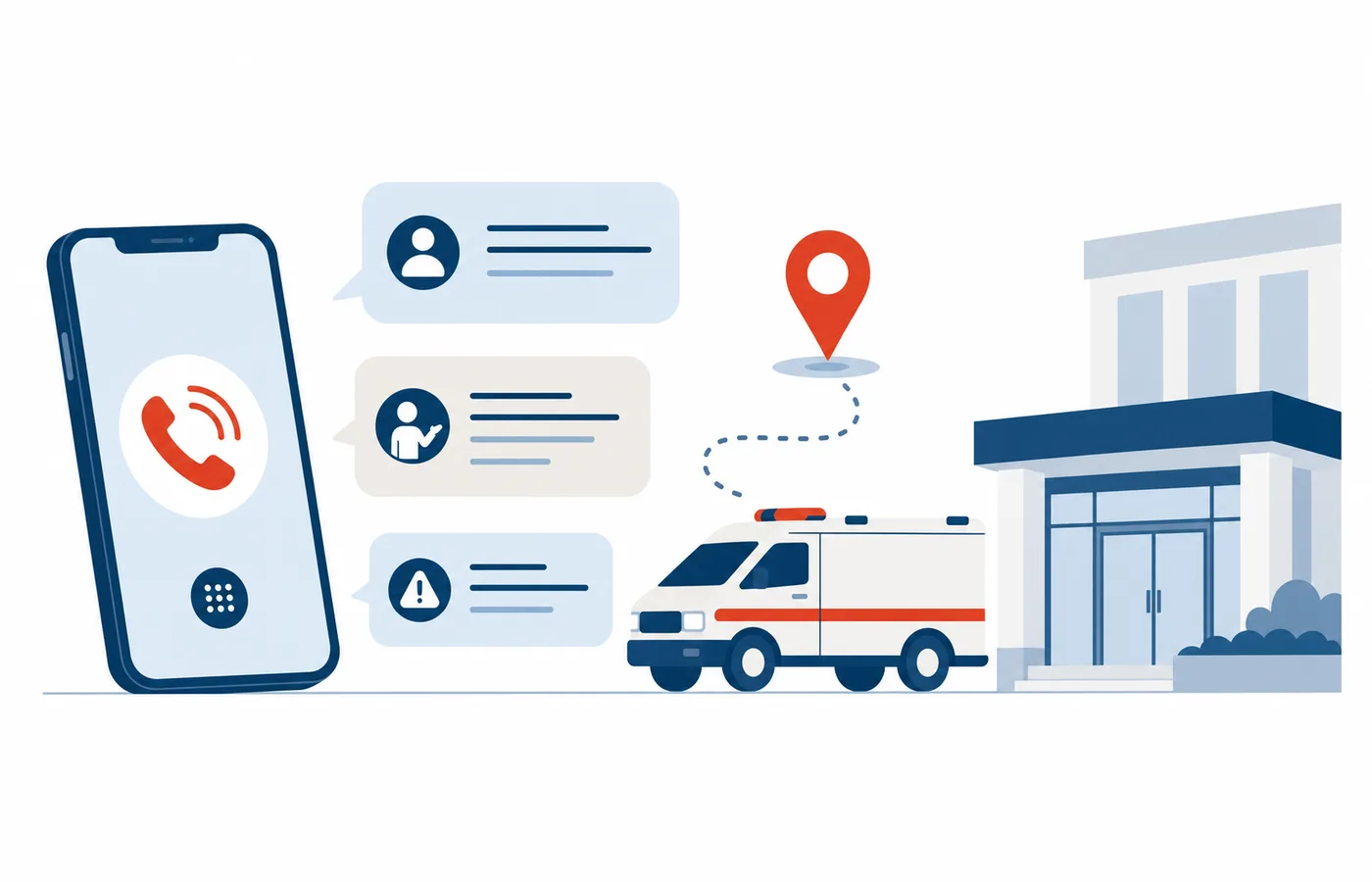
When a foreign national dies in mainland China, the safest response is to separate immediate safety, proof of death, authority to act, custody of the body, immigration reporting and the final disposition decision. These are connected but legally different tracks. If life or death has not been medically confirmed, call 120 and follow the emergency team's instructions. Call 110 where there is suspected crime, violence, an accident, an unexplained or apparently non-natural death, an identity issue, a public-safety concern or a scene that public security should preserve. Do not move the person, clean the scene or arrange private transport merely to make the paperwork faster. Since 1 July 2026, the national medical document for a normal death is the unified Resident Medical Certificate of Death, which expressly covers foreign and stateless people. The issuer depends on where and how the death occurred. This guide provides a national administrative sequence, not a clinical death test, legal representation, inheritance advice or a promise about one city's forms. Provincial and city authorities may publish implementation details, so every case manager should record which authority gave each instruction.
Use this as a practical starting point
Provider procedures can change, so confirm time-sensitive details with the hospital, insurer or service. A licensed professional must make clinical decisions for an individual patient.
At a glance
Key points
- Call 120 when life or death has not been medically confirmed; call 110 for suspected crime, violence, accident, unexplained or apparently non-natural circumstances and follow the responder's scene instructions.
- From 1 July 2026, a normal death is documented on the unified Resident Medical Certificate of Death, including for a foreign or stateless person; a passport or another lawful identity number may be used.
- Hospital or en-route normal death, normal death at home or another location, and a police-handled non-normal death have different proof routes and must not be collapsed into one generic certificate process.
- The applicant is normally a close relative. A close relative may authorize another person in writing; where no close relative exists, a lawful guardian, responsible entity or specified organization may apply.
- Contact the relevant embassy or consulate, but remember that it assists with nationality, family contact and foreign requirements; it does not issue China's medical death certificate or direct a Chinese police investigation.
- Use an official funeral home for body pickup and storage. Do not use an ambulance, non-emergency medical vehicle, private car, hotel van or unverified broker to transport the body.
- Report the death to county-level-or-above exit-entry administration and cancel the deceased person's stay or residence document; employer work-permit cancellation is a different process.
- Do not authorize cremation or international shipment until the family representative, consulate, insurer and official operator understand which option is lawful, funded and accepted by the destination.
1. Stabilize the scene and choose 120, 110 or both
If a person is unresponsive and a qualified professional has not confirmed death, call 120. Give the dispatcher the exact Chinese address, floor or room, gate, callback number and any immediate hazard. Follow instructions from the emergency service rather than trying to decide from appearance whether the person has died. The purpose of this first call is emergency response and professional assessment, not preparation of a death certificate. Keep the person's passport and known medical information available, but do not delay the call while searching for documents.
Call 110 where the circumstances may involve crime, violence, suicide, an accident, poisoning, an unexplained death, uncertain identity, a fall, workplace event, traffic event or another non-natural or public-safety concern. Do not disturb objects, medicines, containers, devices, bedding, messages or security footage. If 120 and 110 are both involved, record the responding unit, officer or team and the case or dispatch reference. Neither a family member nor a building manager should decide that a doubtful death is normal simply to avoid investigation.
- 120: life or death not confirmed, medical emergency response needed
- 110: suspected crime, accident, violence, unexplained or non-natural circumstances
- Both: medical response and scene or public-security control are simultaneously relevant
There is no nationwide public clinical checklist that lets a family pronounce death. Use the responsible emergency and public-security services.
2. Identify the correct proof route before asking for a form
For a normal death during treatment or while the person was being taken to a medical institution, including a responding doctor arriving and finding the person already dead, the responsible medical or prehospital emergency institution issues the Resident Medical Certificate of Death. For a normal death at home, a hotel, apartment or another place outside a medical institution, the township health centre, community health service centre or equivalent medical institution at the place of death investigates and issues it. This is the current national allocation from 1 July 2026; older pages referring only to a county-level hospital or the former inferred-death form should be treated as outdated where inconsistent.
Where public security lawfully handles a non-normal death event and the deceased was not treated by a medical institution, the police station at the incident location issues non-normal death proof based on the investigation and examination or appraisal results. The exclusion for medically treated cases matters: it is unsafe to publish or follow a rule saying every accident death automatically receives a police certificate. If an injured person was treated before death, ask the hospital and case-handling police to state which documents each will produce and what must happen before funeral release.
Ask first, 'Which authority owns the proof in this case?' Do not ask several institutions to issue competing documents.
3. Establish who is authorized to apply and give instructions
The national certificate rules identify the applicant as a close relative: spouse, parents, children, siblings, grandparents or grandchildren. The applicant should prepare the deceased person's valid identity document and the close relative's valid identity document. If the close relative cannot attend, another person may apply with the deceased's and relative's identity documents, the relative's signed authorization form and the representative's identity document. For a foreign family, the issuing institution may need to confirm how a foreign relationship document, name order or translation will be handled.
If there is no close relative, a person, unit or organization with lawful guardianship responsibilities may apply. If no close relative or other lawful guardian exists, a civil-affairs service institution where the person lived, a residents' or villagers' committee or another specified organization may be able to act. Keep certificate application authority separate from authority to approve cremation, sign an international-shipment contract or administer an estate. Ask the funeral home, consulate, insurer and destination authority what separate authorization they require.
- Deceased person's passport or other lawful identity document
- Close relative's identity document and relationship evidence where requested
- Signed authorization plus representative identity if the relative delegates
- Institutional or guardianship evidence where no close relative can act
4. Contact the consulate, insurer, employer or school early
Contact the embassy or consulate responsible for the deceased's nationality and provide only verified facts: full passport name, nationality, passport number if securely available, date and place of death, hospital or police contact, family representative and current location of the body. The Vienna Convention requires competent authorities to notify the relevant consular post without delay, but family contact is still useful for confirming next-of-kin communication, the passport route, destination-country requirements and any consular document. Do not describe a universal four-day deadline because the general treaty wording is 'without delay' and bilateral treaties can differ.
Notify the insurer or assistance company through the number in the policy, not through an unsolicited broker. Ask for a case number, covered options, appointed provider, expenditure limits and written pre-authorization before agreeing to costly embalming or shipment. If the deceased worked or studied in China, tell the employer or school. The institution has its own prompt reporting duty to exit-entry administration, and an employer has a separate work-permit cancellation obligation. None of these organizations can replace the family representative or instruct public authorities outside its role.
Consular support, insurance funding and employer assistance are valuable, but each remains separate from Chinese medical, police, funeral and immigration authority.
5. Build a controlled identity and case record
Create one case sheet containing the deceased's name exactly as printed in the passport, nationality, passport number, date of birth, date and place of death, hospital patient number, police reference if any, certificate applicant, authorized representative, consular contact, insurer case number and employer or school contact. Ask every issuing institution to check identity fields before a final document is sealed where its workflow permits. A reversed name, omitted middle name, incorrect passport digit or inconsistent date can delay funeral, immigration, insurance, apostille and destination-country processing.
Keep a chronological log of calls, instructions, documents handed over and originals retained. Photograph or scan both sides of issued documents in protected storage. Share the minimum necessary information through verified channels, because passport, medical, police and family data are sensitive. Do not post death certificates or passport pages in a public group, and do not allow a private intermediary to keep the only original. Record whether each paper is an original, official copy, translation, receipt or informal reference.
6. Transfer the body only through the official funeral-home route
Once the responsible medical or police authority permits transfer, contact the official local funeral home or the civil-affairs or government service hotline for the death location. Provide the pickup address, proof status, whether police or a hospital controls release, any infectious-disease direction and the representative's contact. Ask the funeral home for its legal name, vehicle details, destination facility, pickup reference, storage terms and itemized price information. If an insurer appointed a local company, verify with the funeral home who will actually take custody.
Hospitals may maintain only a temporary holding area and may not provide funeral services. National rules say hospital temporary storage generally should not exceed 24 hours, while the 2026 funeral regulation says funeral-home storage generally should not exceed three days unless an extension is completed. Those are different facilities and different clocks. Do not use an emergency ambulance, non-emergency medical transfer vehicle, private car, ride-hailing vehicle, hotel van or unverified agent. Official pickup protects identity, custody and later cremation or shipment records.
Hospital temporary holding is generally up to 24 hours; funeral-home storage is generally up to three days unless extended. Do not merge the two limits.
7. Decide between cremation, ashes arrangements and body repatriation
The main practical branches are local cremation followed by storage, lawful burial or transport of ashes, or direct international repatriation of the body. Ask the family representative to document the deceased's known wishes and the chosen decision. Obtain a written comparison from the official funeral home or authorized international operator covering time, preservation, coffin or urn, consular papers, China exit procedures, carrier acceptance, transit permission, destination import rules and cost. Cremation is irreversible, while an international body shipment may be delayed or refused if any authority or carrier requirement is missing.
China does not have one nationwide rule saying every foreign national must be cremated, repatriated or may be buried. Provinces define cremation and permitted burial areas. The foreign-national ministerial opinion generally discourages burial in China and sends exceptional burial or in-China ashes questions to provincial civil-affairs and foreign-affairs authorities. Public-health rules can also require immediate sanitary handling and nearby cremation for particular infectious-disease deaths. Confirm the death-location and destination rules before promising an option to the family.
8. Complete immigration and employment cancellations as separate tasks
The deceased foreign national's family, guardian or agent must take the death proof to a county-level-or-above public-security exit-entry administration, report the death and cancel the person's stay or residence document. National enforcement guidance treats failure to do so within 60 days after the foreign death proof is issued as a failure to report. Contact the authority early and ask what passport, residence document, applicant identity, relationship, authorization, translation and appointment materials it currently requires. Obtain a receipt or written result where available.
If the deceased held a foreigner's work permit, the employer should apply to the work-permit decision authority for cancellation within 10 working days after the death. The employer or school also promptly reports a worker's or student's death to exit-entry administration. These are separate from the family's death declaration. No national source reviewed supports telling families that local exit-entry administration will cancel the deceased's foreign passport or uniformly handle a Foreign Permanent Resident ID Card after death. Confirm those documents with the consulate and local immigration authority.
9. If repatriating the body, treat every approval as separate
An international shipment normally requires an authorized international remains operator, the correct Chinese death proof, identity and representative documents, embalming and coffin records, civil-affairs coordination, Customs health-quarantine declaration, carrier acceptance, transit compliance and destination-country import permission. The operator should produce a written responsibility table showing who obtains each item and when the body can move. Do not book the body as ordinary baggage or rely on a travel agency's statement that an airline will accept it.
China Customs provides an online filing and port inspection or remote-inspection route and issues the relevant health-quarantine certificate when requirements are met. Its current service guide still contains older wording for some medical death documents, so the operator should confirm the post-1 July 2026 certificate package with the chosen port before final movement. Customs release is only the China-side health-quarantine step. It does not guarantee the airline, transit country or destination will accept the shipment.
10. Close the file without losing documents needed abroad
Before cremation, shipment or final release, confirm that the family has protected copies of the death proof, medical or police records available to it, funeral contract, storage and transport receipts, cremation proof if applicable, immigration cancellation result, work-permit cancellation result where relevant, consular communication and operator documents. Ask the insurer which originals and itemized invoices it needs. Ask the destination civil registrar, court, pension provider, bank or insurer which Chinese document must be translated, notarized, apostilled or legalized.
For a Chinese document sent to a Hague Apostille Convention state, an apostille may replace consular legalization where the receiving authority requires it. A non-party destination may require consular legalization. There is no nationwide requirement for a hospital to issue an English or bilingual death certificate, and no national validity period for every use. The receiving organization decides format and acceptance. Keep a final case index showing who holds each original and do not destroy passport, residence, employment or financial records merely because the funeral is complete.
Useful language
Navigation phrases
Show the Chinese characters when pronunciation is uncertain. Use the copy button to send one phrase through a trusted channel without retyping it.
Avoidable problems
Common mistakes
- Trying to decide without a professional whether an unresponsive person has died
- Moving the body, cleaning the scene or discarding medicines before police direction
- Treating every outside-hospital death as automatically non-normal or every accident death as automatically police-certified
- Using the pre-July 2026 certificate name or insisting that only a county-level hospital can certify a normal home death
- Letting an employer, insurer, broker or friend act without clarifying the close relative's authority and written delegation
- Using an ambulance, private car, hotel van or unverified agent to transport the body
- Authorizing cremation before the family has decided whether direct body repatriation is required
- Assuming the consulate issues the Chinese death certificate or can override a police investigation
- Confusing immigration cancellation, work-permit cancellation and foreign passport handling
- Promising electronic death-certificate access everywhere before the phased 2027 rollout
Common questions
Frequently asked questions
Should I call 120 or 110 first?
Call 120 when life or death has not been medically confirmed and emergency medical response is needed. Call 110 for suspected crime, violence, accident, unexplained or apparently non-natural circumstances. Both may be appropriate. Follow the dispatchers' instructions and do not move or clean the scene.
Is there a special nationwide Foreigner's Death Certificate?
No national source reviewed creates a uniformly named separate Foreigner's Death Certificate. From 1 July 2026, the unified Resident Medical Certificate of Death expressly covers foreign and stateless people. Some cities may use an additional locally named document for a specific procedure, which should not be generalized nationwide.
Who can apply for the medical death certificate?
Normally a close relative. A close relative may authorize another person using the required signed authorization and identity documents. Where no close relative exists, a lawful guardian, responsible entity or specified organization may apply under the national rules. Confirm foreign relationship or translation materials with the issuer.
Must every foreign national be cremated in China?
No single nationwide source supports that statement. Cremation and permitted burial areas are provincially determined, foreign-national burial is generally discouraged under the specific ministerial opinion, and exceptional arrangements require provincial confirmation. Infectious-disease controls may require nearby cremation in defined cases.
Can the hospital arrange the funeral and transport the body?
A hospital may provide official funeral-home contacts and temporarily hold an in-hospital body, but it may not operate funeral services. Ambulances and non-emergency medical vehicles must not transport remains. Use the official funeral home after the responsible authority releases the body.
How long can the body stay at the hospital or funeral home?
National medical-institution rules say temporary hospital holding generally should not exceed 24 hours. The 2026 funeral regulation says funeral-home storage generally should not exceed three days, with an extension procedure and applicable fee where more time is needed. Police, public-health or other special controls can affect timing.
Does the embassy handle the entire case?
No. A consulate can help with nationality, family contact, passport and destination-country questions, and may communicate with Chinese authorities. Chinese medical institutions, public security, civil-affairs and funeral authorities, exit-entry administration and Customs retain their own legal functions.
When must immigration cancellation be completed?
The family, guardian or agent should contact the county-level-or-above exit-entry authority promptly. National enforcement guidance identifies failure to report and cancel stay or residence documents within 60 days after the death proof is issued as noncompliance. Employer work-permit cancellation has a separate 10-working-day rule.
Evidence
Sources consulted for this guide
National rules are separated from city and provider examples. Access dates show when a source was collected; source pages and procedures can change afterward.