
Living in China
When a foreign national dies in Shenzhen: funeral, cremation and repatriation
A Shenzhen route through death certification, police reporting, official funeral-home transfer, cremation or repatriation, immigration closure and Customs.
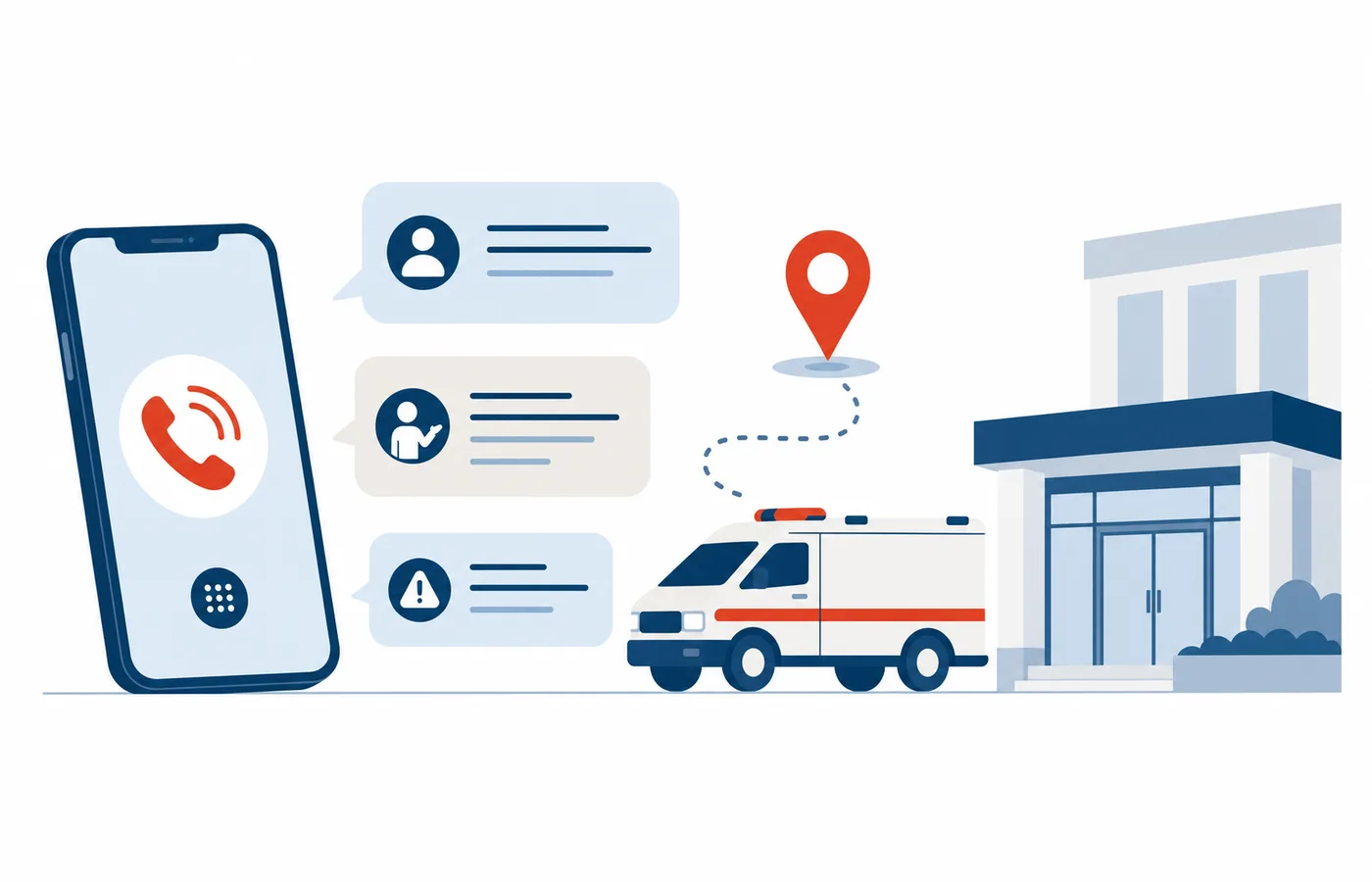
Shenzhen's public information gives families a relatively clear municipal funeral-home entry, but its layers must be read in date order. The currently published special-economic-zone regulation says a death at home should be reported promptly to public security. A 2024 city answer distinguishes medical certification for a normal death from police handling of a non-normal death. Then, from 1 July 2026, the national unified death-certificate rules expressly require the local township or subdistrict health centre or community health service centre to certify an apparently normal death at home or another non-medical location, while public security supplies proof for a non-normal death. The safe Shenzhen response is therefore not to choose one instruction and ignore the other: notify public security as the local regulation requires, contact the responsible local health institution for normal-death certification, and let the authorities classify an unclear death. Shenzhen is also revising its local funeral rules, so this page has a short review cycle. It separates certification, police work, official pickup, cremation, immigration cancellation, international transport, Customs, carrier acceptance and destination admission.
Use this as a practical starting point
Provider procedures can change, so confirm time-sensitive details with the hospital, insurer or service. A licensed professional must make clinical decisions for an individual patient.
At a glance
Key points
- For a normal death in a Shenzhen medical institution or while being taken for treatment, the responsible medical institution issues the unified Resident Medical Certificate of Death under the national rules effective 1 July 2026.
- For an apparently normal death at home, notify public security under Shenzhen's published local rule and contact the health institution responsible for the place of death for the current national medical-certification route.
- For an accidental, violent, suspicious, unknown-cause or otherwise non-normal death, preserve the scene, call 110 and wait for public-security classification, examination and release.
- Shenzhen Funeral Home is the city's municipal funeral provider. Its published 24-hour remains-pickup number is 0755-28444444; its funeral-business consultation number is 0755-28755019.
- A police report, medical death certificate, funeral-home pickup record and cremation certificate are different records. Do not substitute one merely because another office asks for proof of death.
- Choose cremation or direct overseas repatriation before authorizing irreversible preparation. Use Shenzhen's authorized international service route for an intact body.
- Report the death and cancel the foreign national's visa, stay or residence document through exit-entry administration; use 12367 if the responsible Shenzhen office or file is unclear.
- The city's current free basic-service list is not proof that a foreign passport holder or an international shipment qualifies. Obtain an itemized, case-specific decision.
1. Stabilize the Shenzhen case and appoint one person to give instructions
Appoint one family representative and one Shenzhen coordinator before several institutions begin calling. Record the deceased person's name exactly as printed in the passport, passport number and nationality; the precise place and time of death; the treating institution, health centre or police unit; and every funeral, immigration and consular reference. If an employer, school, insurer or assistance company is helping, define who may authorize services and who is only gathering information.
Build a document register that distinguishes originals, certified copies, scans and translations. Keep medical certification, police records, funeral-home custody, cremation or repatriation, exit-entry cancellation, consular reporting, Customs, carrier and destination material in separate sections. These workflows exchange evidence but do not merge. Neither the employer nor the insurer can classify the death, and neither a consular letter nor a travel booking authorizes transport of the remains.
- Photograph every original before it leaves the representative's hands.
- Record who received it, for what purpose and when it must be returned.
- Ask whether a foreign document needs Chinese translation, notarization, apostille or consular treatment.
- Do not sign a service or police record that the representative does not understand.
2. Use the unified national certificate for a normal institutional death
For a normal death during diagnosis or treatment in a Shenzhen medical institution, the responsible institution issues the unified Resident Medical Certificate of Death. The same national route applies when a person dies while being transported for medical treatment. Since 1 July 2026, the unified certificate expressly covers foreign and stateless people and may record a passport or another lawful identity-document number when there is no Chinese citizen identity number.
Ask the issuing desk to verify the passport spelling, number, nationality, time and place before completing the record. Paper and electronic certificates have equal legal effect, but downstream systems may still require a particular retrieval or presentation method. Ask what copy the hospital keeps, what travels with the funeral home and what the representative receives. Do not allow a billing, medical-record or discharge dispute to obscure the separate death-certificate process.
Shenzhen guidance published before 1 July 2026 may use older certificate names or identity fields. The national unified certificate now controls; ask the issuer to resolve, not merely annotate, a passport mismatch.
3. Reconcile Shenzhen's home-death reporting rule with the new national route
Shenzhen's currently published local regulation instructs a person discovering a death at home to report promptly to public security. The newer national operational rules assign medical certification of an apparently normal home death to the township or subdistrict health centre or community health service centre responsible for the place of death. Until Shenzhen publishes a fully revised local workflow, the safest source-led approach is to comply with both: notify public security and contact the responsible local health institution.
Describe the facts without declaring the death normal. The authorities should decide whether the health institution can examine and verify an apparently normal death or whether public security must take control. Where the normal route applies and the circumstances are clear, national rules say the certificate should ordinarily be issued within one day. If the person was in home care, ask the treating clinician for records, but do not assume a private doctor can issue the official certificate outside the designated route.
- Do not move or clean the body before receiving instructions.
- Keep medication, medical devices and the surrounding scene unchanged.
- Record both the public-security notification and the health-institution contact.
- Tell the funeral-home dispatcher which authority has classified and certified the death.
4. Let public security control an unclear or non-normal death
Call 110 immediately for an accident, injury, suspected suicide, possible crime, unknown cause, unidentified person or any facts that make a normal classification uncertain. Public security may inspect the scene, verify identity, arrange forensic examination, decide whether an autopsy is needed and control when the remains can be released. A family objection, religious preference or flight deadline does not itself displace that process.
Ask for the responsible unit, officer and case reference; who may receive the death proof or release document; what authorization, kinship or translation material is needed; and whether cremation or overseas transport remains restricted. Police proof for a non-normal death is not an alternative medical certificate for an ordinary normal death. Conversely, a prior medical history does not prevent police classification where the scene or circumstances require investigation.
Do not promise a cause-of-death statement, autopsy result or release date. Record only what the responsible public-security unit confirms.
5. Use Shenzhen Funeral Home for official pickup, storage and contracting
Shenzhen's municipal funeral system identifies Shenzhen Funeral Home as the citywide provider for remains pickup, storage, preparation, funeral services, cremation and ashes storage. Call its published 24-hour free pickup number, 0755-28444444. For business questions, the current published consultation number is 0755-28755019. Confirm the dispatch vehicle, pickup location, destination facility, required death proof and the name of the person who may sign.
Hospitals, ambulances and private intermediaries should not transport the remains. At the funeral home, request a written, itemized contract distinguishing the listed basic services from optional preparation, refrigeration beyond the covered period, halls, ceremonies, goods, ashes services and international work. National rules generally limit storage to three days unless extended, so raise police, consular, family, carrier or destination delays at once and obtain the extension terms in writing.
- Give the dispatcher accurate infection-control and building-access information.
- Ask for a receipt for the death proof and passport if originals are taken.
- Identify one representative authorized to change or cancel services.
- Keep payment receipts and insurer pre-authorization as different records.
6. Decide between Shenzhen cremation and direct repatriation before preparation
For cremation, the funeral home needs the applicable death proof and a cremation confirmation from the authorized representative under the 2026 national regulation, plus the identity and authority material it specifies. Resolve any police hold, family disagreement, consular request, insurance examination or destination need first. Once cremation occurs, direct transport of the intact body is no longer available.
Ask how identity will be verified, who signs the cremation confirmation, when the cremation certificate is available and who can collect the ashes. If ashes remain in Shenzhen, confirm lawful storage or interment and current terms. If they will leave China, ask the carrier, transit point and destination authority about the cremation certificate, sealed container, translation, apostille or legalization, customs declaration and cabin or cargo rules. Ashes may be simpler than an intact body, but they are not automatically unrestricted baggage.
The cremation certificate documents cremation. It does not cancel immigration status, prove inheritance, release an insurance benefit or guarantee that another country will admit the ashes.
7. Enter Shenzhen's authorized international remains route for repatriation
Shenzhen's official international guidance directs the representative to coordinate with the relevant embassy or consulate or receiving organization, provincial authorities, border-health and Customs functions, and an authorized international remains network operator. The city's published consultation contacts include 0755-89570168 and Shenzhen Funeral Home's 0755-28755019. Ask the centre to identify the current operator and case handler rather than assuming any funeral or cargo company can perform the work.
Require a written document matrix for death proof, passport, representative authority, consular material if requested, preparation and embalming, coffin or container, sanitary verification, health-quarantine declaration, Customs, airline cargo acceptance, transit permission and destination import. Shenzhen's 2025 document answer is a useful official checklist, but the operator must confirm which forms, issuers and port procedures apply to the selected route today. Do not finalize sealing before the carrier and receiving funeral director accept the specifications.
- Confirm the exact Chinese exit port and cargo terminal.
- Ask who books the cargo airway bill and who receives the shipment abroad.
- Verify transit-country requirements even when the coffin stays airside.
- Separate operator, government, preparation, coffin, air cargo and destination charges.
8. Keep domestic transfer and cross-border export on different legal tracks
If the body must go from Shenzhen to another mainland city, the current national funeral regulation requires an acceptance document from the receiving place's county-level-or-above civil-affairs authority and completion of the originating civil-affairs and funeral-home route. A compliant funeral vehicle must make the transfer. Ask Shenzhen Funeral Home which local approval desk applies and what the receiving funeral home must provide.
That domestic approval does not cover Hong Kong, Macao or an overseas destination and cannot be used to move a coffin privately to a different airport. Cross-border movement requires the international operator, applicable civil-affairs coordination, health quarantine, Customs, carrier and destination approvals. State the final jurisdiction clearly at the first call; a receiving address outside mainland China changes the route even if the first road segment stays within Guangdong.
A road transfer to Hong Kong or Macao is cross-border, not an ordinary Guangdong intercity transfer.
9. Report the death and cancel the Shenzhen immigration document promptly
National immigration law requires the family, guardian or agent to report a foreign national's death with the death proof to a county-level-or-above public-security exit-entry authority and cancel the visa, stay permit or residence permit. Contact Shenzhen exit-entry administration promptly; call 12367 if the correct office, appointment method or document list is unclear. Do not treat the 60-day enforcement threshold as a recommended deadline.
Ask whether the office requires the original passport, death proof, representative identity, authorization, kinship evidence, translation, police record or funeral-home document, and whether an original will be retained or cancelled. Coordinate the timing with the consulate and international operator. Exit-entry cancellation is not the same as cancellation of a foreigner's work permit, employer file, social insurance, tax registration, phone number, lease, company appointment, bank access or online accounts.
- Obtain a receipt or result for originals submitted.
- Preserve certified copies before the passport or death proof is altered or retained.
- Ask the employer to contact the responsible work-permit authority separately.
- Do not let a funeral coordinator claim estate authority without a valid authorization.
10. Treat Customs quarantine, customs release, carrier and destination separately
For an intact body or skeletal remains, the authorized operator or agent makes the health-quarantine declaration to Customs, supplies the supporting file and presents the shipment for the directed documentary, port or remote inspection. Customs issues the health-quarantine document and handles release when the requirements are met. Review identity and destination details, but do not attempt to replace the operator through an ordinary passenger declaration.
A China-side quarantine result does not bind the airline, a transit state or the destination. The carrier controls coffin and outer-container specifications, dangerous-goods or sanitary conditions, cargo booking, route and cut-off. Transit authorities may impose separate permits. The destination authority controls import and local funeral disposition. Obtain all acceptances before dispatch and have the receiving funeral director confirm the handoff. Ask separately about ashes, because the intact-body procedure should not be copied blindly.
A passenger ticket, cargo quotation, consular letter or insurer approval is not a substitute for the operator's confirmed airway bill and destination admission.
11. Verify Shenzhen's free-service policy and close every record deliberately
Shenzhen's May 2026 schedule lists ten basic funeral services as free within the stated policy and separately prices optional services. The city provider profile also describes a current basic-service policy. Neither source, by itself, proves that every foreign passport holder, overseas representative, extended-storage case or international transfer qualifies. Before signing, ask Shenzhen Funeral Home to identify covered items, accepted identity and authority documents, exclusions and the charge if eligibility is not recognized.
At closure, collect the unified death certificate or police proof, funeral contract and invoices, cremation certificate and ashes custody record or international handoff, immigration-cancellation result, quarantine and Customs file, carrier record and destination receipt. Record where each original is held. Then route consular registration, work-permit closeout, insurance, employment, tax, bank, property, digital account and estate matters to their responsible institutions. Shenzhen's funeral one-stop service is useful, but it is not universal authority over these separate systems.
- Reconcile every invoice with the signed item list and any written waiver.
- Ask for a final custody record for ashes or remains.
- Keep a bilingual chronology for overseas authorities and insurers.
- Recheck the city guidance because Shenzhen has announced revision of its local funeral rules.
Avoidable problems
Common mistakes
- Choosing either Shenzhen's police-reporting rule or the new national normal-home-death route and ignoring the other; notify public security and contact the responsible local health institution so the authorities classify the death and identify the correct proof.
- Using a police incident record as the medical certificate for an ordinary normal death; obtain the unified medical certificate from the responsible medical or local health institution unless public security has classified the death as non-normal.
- Allowing an ambulance, employer or private funeral broker to move the remains; use Shenzhen Funeral Home's official 0755-28444444 pickup route.
- Signing a combined service package before deciding on cremation or direct repatriation; choose the route first and authorize only compatible preparation because cremation and final sealing are irreversible.
- Treating a mainland domestic transfer application as cross-border permission; use the authorized international operator, health-quarantine, Customs, carrier and destination chain for Hong Kong, Macao or overseas movement.
- Assuming the consulate, insurer or airline can act as the authorized remains operator; let those parties coordinate, but have Shenzhen's official international service identify the approved operator and current process.
- Delaying immigration cancellation until after the funeral or shipment; contact exit-entry administration promptly and coordinate originals with the consulate and operator.
- Advertising Shenzhen's ten basic services as automatically free for a foreign national; obtain the funeral home's case-specific eligibility, accepted-document and itemized-price decision.
Common questions
Frequently asked questions
Who issues the death certificate after a normal death in a Shenzhen hospital?
The responsible medical institution issues the unified Resident Medical Certificate of Death under the national rules effective 1 July 2026. The certificate expressly covers foreign nationals and can use a passport or another lawful identity-document number. Verify all identity fields before it is finalized.
Should we call police or a health centre after a normal-looking death at home?
Do both in a controlled sequence: notify public security under Shenzhen's currently published local rule and contact the township or subdistrict health centre or community health service centre responsible for the place of death under the newer national certification rule. Do not move the body; let the authorities confirm classification.
Can an ambulance take the deceased person to Shenzhen Funeral Home?
No ordinary ambulance or private intermediary should perform funeral transport. Call Shenzhen Funeral Home's published 24-hour pickup number, 0755-28444444, and give it the death-proof and authority status.
Can Shenzhen Funeral Home cremate a foreign national using only the passport?
Do not assume so. The funeral home will require the applicable death proof, cremation confirmation and identity and representative-authority material it specifies. A police release, translation, kinship document or consular communication may also be needed depending on the case.
Where should we start an overseas remains transfer from Shenzhen?
Use Shenzhen's official international consultation route. Published contacts include 0755-89570168 and the funeral-business number 0755-28755019. Ask for the authorized international network operator and a current written document, quarantine, Customs, carrier and destination checklist.
Does Customs approval mean the airline must accept the coffin?
No. Customs handles the Chinese health-quarantine and customs release functions. The carrier separately controls packaging, cargo booking, route and cut-off, while transit and destination authorities control their own admission. All must be confirmed before dispatch.
Are Shenzhen's listed basic funeral services free for every foreign passport holder?
The public schedule does not establish that. Ask Shenzhen Funeral Home which foreign identity and representative documents it accepts, whether the case qualifies, which ten items are covered and what remains chargeable, especially storage extensions and international services.
Does canceling a Shenzhen residence permit also cancel the work permit and bank accounts?
No. Exit-entry administration handles the visa, stay or residence document. Work authorization, employment, social insurance, tax, banking, leases, company roles, online accounts and estate access are separate matters and require their own authority or qualified adviser.
Evidence
Sources consulted for this guide
National rules are separated from city and provider examples. Access dates show when a source was collected; source pages and procedures can change afterward.