
Living in China
When a foreign national dies at home or outside a hospital in China
What to do when a foreign national dies at home or outside a China hospital: 120, 110, medical investigation, police boundaries and transfer.
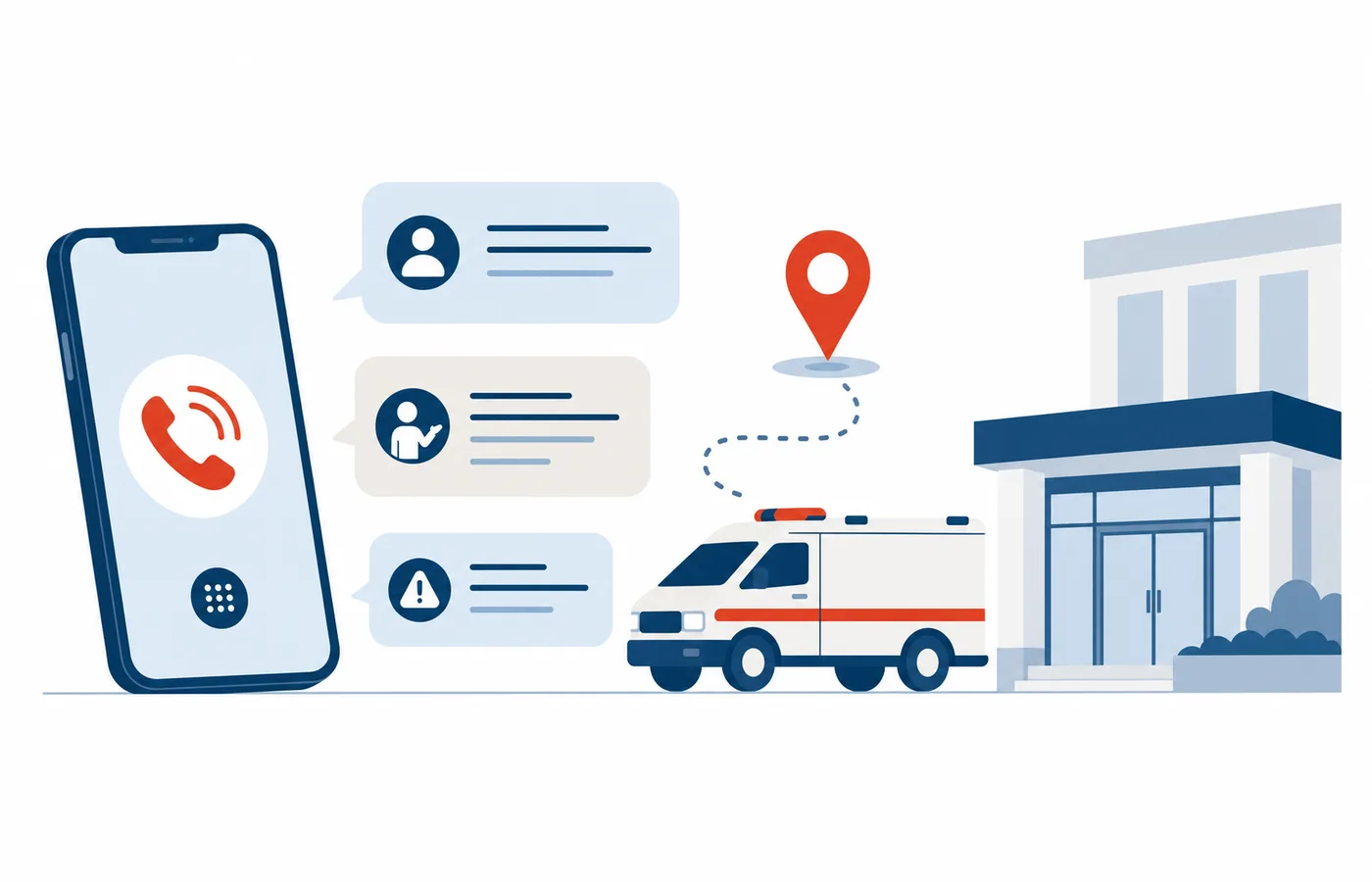
When a foreign national is found unresponsive at home, in a hotel or somewhere else outside a medical institution in mainland China, do not begin with paperwork or body transport. If life or death has not been medically confirmed, call 120. If the scene suggests crime, violence, suicide, poisoning, an accident, an unexplained death, uncertain identity or another non-natural or public-safety concern, call 110 and preserve the scene; both services may be relevant. For a normal death outside a medical institution, the nationwide rules effective 1 July 2026 place the investigation and Resident Medical Certificate of Death with the township health centre, community health service centre or equivalent medical institution responsible for the place of death. That route is not a family self-declaration and is not a promise that every sudden death will be accepted as normal. The issuer must review the person, identity, history and circumstances. Where public security handles a non-normal event, a different proof route may apply. Keep the body in place until responders authorize action, appoint a family representative and use an official funeral home only after release.
Use this as a practical starting point
Provider procedures can change, so confirm time-sensitive details with the hospital, insurer or service. A licensed professional must make clinical decisions for an individual patient.
At a glance
Key points
- Call 120 if the person may still be alive or death has not been professionally confirmed; follow the dispatcher and responding team's instructions.
- Call 110 for suspected crime, violence, suicide, accident, poisoning, unexplained or apparently non-natural circumstances, identity uncertainty or a scene requiring public-security control.
- Do not move the person, clean the area, discard medicines or containers, alter devices or delete messages and footage before responders complete their work.
- For an accepted normal death at home or another non-medical location, the local township health centre, community health service centre or equivalent institution investigates and issues the certificate.
- The applicant supplies the deceased's identity, the close relative's identity, relevant history or incident evidence and a signed death-circumstances declaration; a representative also needs written authorization.
- One-day issuance applies only to a normal death with a clear cause, and the period can run from the close relative's report; it is not guaranteed for every outside-hospital death.
- A landlord, hotel, employer, building manager or friend can assist responders but cannot pronounce death, issue the national medical certificate or authorize final disposition without a recognized basis.
- Use an official funeral home only after the medical or public-security authority permits transfer; never use a private car, ambulance, hotel van or informal broker.
1. If life or death is unconfirmed, call 120 first
An unresponsive person should be treated as a medical emergency unless a qualified professional has already confirmed death. Call 120, state the precise Chinese address, apartment, hotel room, floor, gate code, callback number and any hazard, and follow the dispatcher's instructions. Do not delay while trying to find a passport, contact an insurer or decide whether the appearance is compatible with death. Make access easy for responders and have known medicines, diagnoses and emergency contacts available.
The 120 team addresses emergency assessment and the immediate medical situation; it is not simply a document-delivery service. If a responding doctor arrives and finds that a normal death has already occurred during attempted transport or response, the hospital or prehospital emergency route may become relevant. Ask the responder which institution will record the death and who should be contacted next. Do not assume that every home death must be carried to a large hospital before any certificate can be issued.
A website cannot safely teach a family to pronounce death. When confirmation is absent, use 120 and follow professional instructions.
2. Call 110 for an unexplained or apparently non-natural scene
Call 110 when there is suspected crime, violence, self-harm, poisoning, overdose, a fall, traffic or workplace event, fire, drowning, uncertain identity, an unexplained death or another circumstance requiring public-security control. Tell the dispatcher that the person is a foreign national if known, but do not speculate about guilt or cause. If both emergency medicine and police are needed, contact both or follow the dispatcher's coordination instruction.
There is no sound national rule that every outside-hospital death must always pass through 120 before police, or that every sudden death automatically requires an autopsy. The facts determine the response. Preserve the position of the person and nearby objects. Keep witnesses available and secure any building, hotel or street-camera footage from routine deletion, while allowing only the responsible authority to decide what is evidence and how it should be copied.
- Give facts: what was found, when, where and by whom.
- Avoid unsupported statements about cause or criminal responsibility.
- Record the police unit, officer and case or dispatch reference.
3. Protect the scene, identity and dignity of the deceased
Do not move the body, straighten the room, wash clothing, throw away medication, food, drink, containers or notes, disconnect equipment, reset a phone or delete messages before responders authorize it. If there is a continuing danger such as fire, gas, traffic or violence, protect living people and follow emergency instructions. Keep onlookers away and do not post photographs or the passport page on social media.
Locate the passport or another lawful identity document if it can be retrieved without disturbing the scene. Record the name exactly as printed, nationality, passport number and date of birth. A landlord or hotel should preserve registration and access records; an employer may supply personnel and emergency-contact details. These people are information sources, not substitute certifiers. If identity is uncertain, say so clearly and let public security manage identification rather than matching the person from an informal photograph.
4. Use the local medical route for an accepted normal death
For a normal death at home, in a hotel or at another place outside a medical institution, the 2026 national rules assign the death-cause investigation and Resident Medical Certificate of Death to the township health centre, community health service centre or equivalent medical institution responsible for the place of death. Ask the responder or local health authority for the exact institution and service contact. The responsible institution is determined by location and local implementation, not by whichever private clinic the family finds online.
This route corrects an older oversimplification that only a county-level hospital can handle every home death. The medical institution must still examine or investigate, verify identity and determine whether the case is a normal death with sufficient support. A previous diagnosis or advanced illness can be important evidence but does not let a family complete the cause section itself. If the institution cannot accept the case as a clear normal death, ask which authority assumes control and what record is needed next.
The nationwide home-death route is community or township medical investigation at the place of death, not automatic transport to a distant hospital.
5. Assemble the declaration, history and identity materials
The applicant should be ready to supply the deceased's passport or other lawful identity information, the close relative's identity, relevant medical-history materials or incident evidence, and a signed declaration describing the circumstances of death. Useful records may include diagnoses, prescriptions, discharge summaries, home-care notes, the 120 response record and the contact details of a treating physician. Give originals for inspection only under a clear receipt process and retain scans.
Accuracy matters more than speed. Use the passport spelling and number, distinguish the address where the person was found from a registered residence, and describe observations without inventing a medical cause. A landlord, hotel or friend can explain access and timing but should not sign as close relative unless that status is real. Ask the issuer how it wants foreign relationship evidence, a translated document or a remotely signed authorization. Requirements can be implemented locally even though the applicant categories are national.
- Deceased: passport or another lawful identity document
- Applicant: close-relative identity and relationship support
- Case: medical history, response record and factual circumstances declaration
6. Establish who is authorized to apply and decide
The ordinary applicant is a close relative. If that person cannot attend, the close relative may authorize someone else, with the deceased's identity, the close relative's identity, signed authorization and representative's identity placed in the file. An employer, colleague, landlord, hotel manager, interpreter, insurer or funeral operator should not be treated as having family authority merely because that person is available in China.
Where no close relative exists, the national scheme recognizes alternatives that can include a guardian, responsible entity or specified organization. Public security and consular channels may help locate family or determine the responsible path. Keep authority to apply for the death certificate separate from authority to choose cremation, export remains, manage estate property or release medical information; one authorization may not cover every act. Ask each institution to state what capacity and document it requires.
7. Treat one-day issuance as a conditional rule
For a normal death whose cause is clear, the national notice calls for issuance within one day from death or from the close relative's report. For a home death reported later, that second trigger is important. It does not make every outside-hospital case a one-day case. The medical investigator may need clinical history, identity confirmation, a scene account or clarification from public security before deciding whether the normal-death route applies.
If the cause is not clear or the event appears non-natural, do not push a community clinician to record a convenient diagnosis. Ask which question remains unresolved, which authority is reviewing it and whether an examination or appraisal is required. There is no universal national promise for the time needed to complete a police investigation, autopsy, appraisal or body release. Give insurers and overseas family a conditional timeline rather than a false fixed date.
One day is for a clear normal death, not a general deadline imposed on every home, hotel or public-place case.
8. Understand the police-handled non-normal boundary
Where public security lawfully handles a non-normal death event and the person was not treated by a medical institution, the police station at the incident location issues non-normal death proof based on investigation and examination or appraisal results. This is distinct from the Resident Medical Certificate of Death route for a normal home death. The precise documents and sequence should come from the case-handling authority.
Do not convert that rule into two inaccurate extremes: that every unexpected death is non-normal, or that a known illness prevents police involvement. A sudden death can still be medically determined to be natural, while suspicious circumstances can require investigation despite a medical history. If an injured person received medical treatment before death, the allocation is more nuanced than 'police certificate only.' Ask the medical institution and police to identify their respective records and the release condition.
9. Arrange official funeral-home collection only after release
Do not move the body from the home, hotel or scene until the responsible medical or public-security authority permits transfer. China's funeral regulation reserves body pickup, storage, preservation, restoration and cremation to funeral homes. Select a lawful official funeral home, obtain its registered details and itemized quotation, and coordinate collection directly with the releasing authority. An ambulance, non-emergency medical vehicle, private car, employer van or hotel vehicle must not be used as a body transporter.
A funeral home generally may store remains for no more than three days unless an extension is permitted. Tell it immediately if the case involves an overseas relative, insurer approval, police appraisal or international repatriation. Do not let an unsolicited broker claim that a private transfer will save the case. Record the identity check at collection, the release reference, the funeral-home receipt, storage start time and any authorized extension.
10. Coordinate consular, disposition and cancellation work
Notify the relevant embassy or consulate with the passport details, location, responding authorities and family case lead. Open the insurer or assistance-company case before accepting major charges. Ask the family representative whether it is considering cremation in China, transport of ashes, repatriation of the body or a lawfully approved local arrangement. Provincial rules and older foreign-national procedures mean there is no universal nationwide foreigner burial entitlement or blanket sentence that resolves every case.
After death proof is issued, report the death to county-level-or-above public-security exit-entry administration and cancel the stay or residence document. Current enforcement guidance uses 60 days after issuance of the proof as the outer reporting boundary, not a reason to wait. An employer or school has its own prompt report; an employer separately cancels a work permit, generally within 10 working days after death. For overseas use, verify translation, notarization, apostille or legalization with the actual receiving authority.
Useful language
Navigation phrases
Show the Chinese characters when pronunciation is uncertain. Use the copy button to send one phrase through a trusted channel without retyping it.
Avoidable problems
Common mistakes
- Assuming an unresponsive person is dead and starting administrative calls instead of contacting 120.
- Moving or cleaning the scene before 110 or the responsible authority permits it.
- Treating every sudden home death as automatically non-natural or automatically natural.
- Insisting that every normal home death must be transported to a county-level hospital.
- Letting a landlord, hotel manager or colleague sign as family without recognized authority.
- Inventing a medical cause in the circumstances declaration to obtain faster issuance.
- Advertising the one-day rule as guaranteed for all outside-hospital deaths.
- Using an ambulance, private car, hotel van or informal broker to move the body.
- Authorizing cremation before the family representative, consulate and insurer agree on the route.
- Forgetting that immigration, employer reporting and work-permit cancellation are separate duties.
Common questions
Frequently asked questions
Should I call 120 or 110 when a foreigner is found unresponsive at home?
Call 120 if life or death has not been medically confirmed. Call 110 for suspected crime, violence, accident, poisoning, unexplained or apparently non-natural circumstances or another police concern. Both can be relevant; follow dispatcher instructions.
Who issues the certificate for a normal home death after 1 July 2026?
The township health centre, community health service centre or equivalent medical institution responsible for the place of death investigates and issues the Resident Medical Certificate of Death under the national route.
Must the body be taken to a hospital before certification?
Not as a universal national rule. The current normal outside-hospital route is an investigation by the responsible community, township or equivalent medical institution. Follow the responding authority's instructions and do not arrange private transport.
Can a hotel or landlord issue death proof?
No. They can preserve the scene, supply registration or access information and contact responders, but they cannot pronounce death or issue the national medical certificate. Their employee also lacks family authority unless properly authorized or otherwise recognized.
Is every sudden death treated as an unnatural death?
No. Sudden timing alone does not settle legal or medical classification. A responsible medical or public-security authority evaluates the cause and circumstances. Suspicious facts can require police handling, while some sudden deaths are ultimately natural.
Is an autopsy required after every death outside a hospital?
No. National criminal procedure permits public security to decide on autopsy where the cause is unknown and requires family notification, but it does not require autopsy for every outside-hospital or sudden death.
Can the family drive the body to a funeral home?
No. Wait for release and use a lawful official funeral home. Funeral pickup and storage are regulated funeral services, and ambulances, ordinary vehicles, hotel vans and employer vehicles are not substitutes.
When does the 60-day immigration period begin?
Current enforcement guidance counts from issuance of the foreign death proof. Treat it as an outer compliance boundary and contact county-level-or-above exit-entry administration promptly rather than delaying.
Evidence
Sources consulted for this guide
National rules are separated from city and provider examples. Access dates show when a source was collected; source pages and procedures can change afterward.