
Living in China
Unexpected or apparently non-natural death in China: police and autopsy
How families should handle an unexpected or apparently non-natural death in China, including police proof, autopsy boundaries and body release.
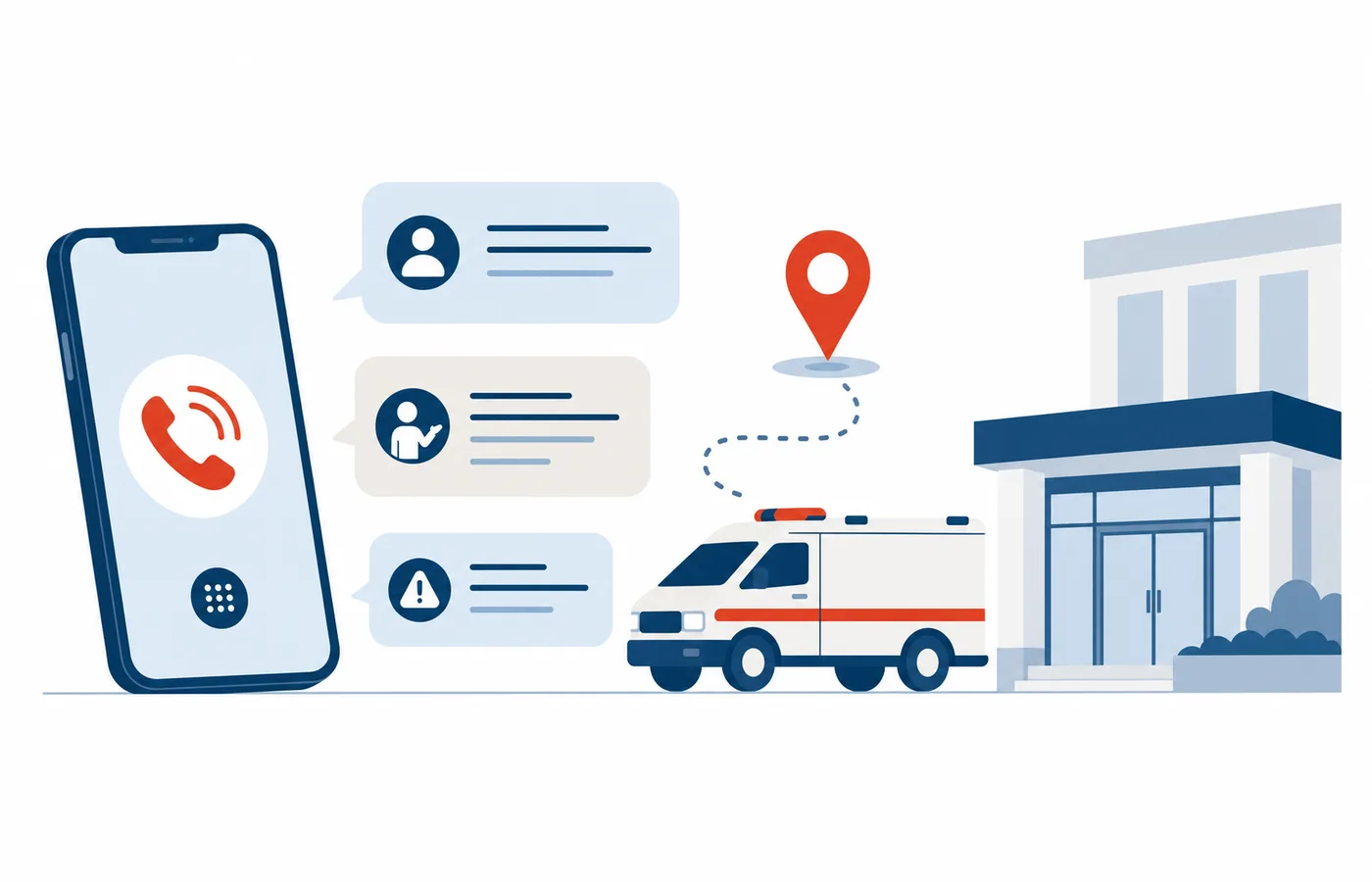
An unexpected death is not automatically a criminal case, and an apparently non-natural death is not automatically an autopsy case. Those classifications depend on the facts and the responsible Chinese authorities. The safe national starting point is narrower: call 120 when life or death has not been medically confirmed; call 110 where there may be crime, violence, suicide, an accident, poisoning, unexplained injury, uncertain identity or another public-security issue; preserve the scene; and do not move the body or discard possible evidence. From 1 July 2026, the national rules distinguish a normal hospital or en-route death, a normal death at home or another location, and a public-security-handled non-normal event where the person was not treated by a medical institution. In that final route, the police station at the incident location issues non-normal death proof on the basis of investigation and examination or appraisal. Criminal procedure also permits public security to decide on an autopsy when cause is unknown and requires notification for the family to attend; it does not create universal family-consent wording or compulsory autopsy for every sudden death. Families need one documented liaison, careful consular and insurer communication, and realistic timelines that remain subject to investigation and release.
Use this as a practical starting point
Provider procedures can change, so confirm time-sensitive details with the hospital, insurer or service. A licensed professional must make clinical decisions for an individual patient.
At a glance
Key points
- Call 120 if life or death remains unconfirmed and call 110 for suspected crime, violence, accident, poisoning, suicide, unexplained or apparently non-natural circumstances; both may be needed.
- Preserve the scene, nearby objects, medicines, devices, messages, access logs and available footage, and give factual observations rather than a theory of cause.
- Unexpected, sudden and non-natural are not interchangeable labels; only the responsible medical and public-security authorities can determine the applicable route.
- For a police-handled non-normal event where the deceased was not medically treated, the incident-location police station issues proof based on investigation and examination or appraisal results.
- Where the deceased received medical treatment before death, do not assume a police certificate replaces every hospital medical record or certificate; ask both authorities to allocate their documents.
- When cause is unknown, public security may decide that an autopsy is required and must notify the family to attend, but national law does not require family consent as a condition for that police decision.
- There is no nationwide fixed timetable for investigation, autopsy result or body release, and a family should not book a flight or cremation from an informal estimate.
- Only an official funeral home should collect the body after release; the police, medical institution, public-health authority or another lawful controller may delay transfer.
1. Contact 120, 110 or both without trying to classify the death
If the person is unresponsive and no qualified professional has confirmed death, call 120. Give the exact location, access instructions, callback number and known hazards, and follow emergency directions. Do not use appearance, temperature or the length of time since last contact as a do-it-yourself death test. The priority remains possible life-saving response and professional assessment.
Call 110 when the facts may involve crime, violence, suicide, poisoning, overdose, a traffic or workplace event, drowning, fire, a fall, unexplained injury, uncertain identity or another public-safety issue. Tell the dispatcher what you observed and that a foreign national is involved if known. Do not tell the family or media that the case is homicide, suicide, accident or natural before the responsible authority reaches that conclusion. If the medical and police needs overlap, both services can be involved.
- 120 addresses unconfirmed life or death and medical emergency response.
- 110 addresses suspected crime, accident, unexplained or non-natural circumstances.
- Dispatchers and responders, not a website label, coordinate the actual scene.
2. Preserve the scene and create a neutral event record
Do not move the person, wash the body, change clothing, clean spills, arrange the room, discard medication or containers, unplug equipment, reset devices, delete messages or release belongings. Protect living people from an active hazard and follow emergency instructions, but otherwise keep the scene stable. Ask a building, hotel or employer to preserve entry records and relevant camera footage from automatic deletion without circulating copies publicly.
Write a neutral timeline: when the person was last known alive, who found the person, what was observed, who entered afterward and when 120 or 110 was called. Record names, units and case or dispatch references. Separate firsthand facts from what another person reported. Witnesses should remain reachable and should not coordinate a shared narrative. Privacy also matters: do not post scene photographs, medical information or passport images in social-media or large messaging groups.
Preservation is not an accusation. It protects the reliability of both a natural-cause conclusion and a criminal or accident investigation.
3. Understand what the national non-normal route actually says
The nationwide death-certificate rules effective 1 July 2026 identify a specific public-security route: for a non-normal death event handled by public security in which the deceased was not treated by a medical institution, the police station at the incident location issues non-normal death proof based on investigation and the results of examination or appraisal. That proof is distinct from the Resident Medical Certificate of Death used for a normal death.
The rule does not state that all foreign deaths, all outside-hospital deaths or all sudden deaths are police-handled non-normal cases. Nor does it allow a family to select the police route because it seems faster. The responsible authorities determine classification from the circumstances, treatment history, examination and investigation. Ask the case officer for the exact Chinese name and purpose of each document, the case reference, the current custody status and the condition for the next procedural step.
4. Resolve the boundary where medical treatment occurred
An accident or other external event may lead to hospital treatment before death. In that situation, the national phrase limiting the police proof route to a deceased person who was not treated by a medical institution matters. It is inaccurate to advise that every accident death receives only a police death certificate. The hospital may have medical-certification duties while public security investigates the event, and each authority may create records for a different purpose.
Ask the treating institution and case-handling police four separate questions: who issues the medical death document, who documents the incident, who controls release of the body and whether an examination or appraisal is outstanding. Get answers from named offices rather than relying on a funeral broker. A police investigation can coexist with medical records, insurance review, workplace reporting or traffic procedures. One record should not be described as replacing all others unless the responsible authority confirms that result for the case.
Treatment history can change document allocation even when the original event appears non-natural.
5. Verify identity and appoint the family liaison
Provide the passport or another lawful identity document through the responsible officer's process, and check the Roman-letter name, nationality, date of birth and number. If identity is uncertain, do not identify the deceased from an informal photograph or another person's passport. Public security may need fingerprints, dental or medical information, family comparison material or consular coordination. Ask what is needed and how sensitive material should be transmitted.
The family should name one liaison and one backup, with written authority where appropriate. Give the officer and consulate reliable telephone and email contacts across time zones. A colleague, employer, landlord, hotel manager, interpreter, insurer or funeral operator can assist but does not automatically have close-relative authority. Keep a log of every instruction and distinguish authority to receive case updates from authority to apply for death proof, approve an autopsy-related arrangement, authorize cremation or manage property.
6. Notify the consulate, insurer and relevant organization
Competent Chinese authorities have a consular-notification duty when they learn that a sending-state national has died. The family should still contact the relevant embassy or consulate directly, giving the passport details, incident location, police unit, case reference and family liaison. The consulate may help confirm nationality, locate relatives, communicate foreign requirements and maintain contact. It does not direct the Chinese investigation, determine criminal responsibility or issue China's medical or police proof.
Notify the insurer or assistance company before committing to examination-related private services, funeral arrangements or repatriation. Ask for the case number, benefit terms, approved operators and documentary requirements. An employer or school should preserve relevant workplace or attendance records and make its prompt exit-entry report where applicable. If the event occurred at work, on the road or at a commercial venue, other regulatory or compensation processes may exist; obtain qualified case-specific advice rather than treating this guide as a liability opinion.
7. Approach examination, appraisal and autopsy precisely
The non-normal death proof route can depend on investigation and examination or appraisal results. Criminal procedure provides that where the cause of death is unknown, public security may decide to conduct an autopsy and must notify the family to attend. The provision does not say that every sudden, accidental or outside-hospital death must be autopsied. It also does not make family consent a stated condition for a police-directed autopsy. Publishing either universal proposition would misstate the national rule.
Ask the case officer whether an external examination, forensic appraisal or autopsy has been decided, which authority or institution performs it, how the family will be notified, whether a representative or adviser may attend, and how results can lawfully be requested. Do not promise the family a fixed report date or release date: the reviewed national sources contain no universal timetable. If the family has religious or cultural concerns, communicate them promptly and respectfully, while recognizing that a lawful investigation or public-health measure may control.
The accurate national statement is 'public security may decide on autopsy when cause is unknown and must notify the family to attend,' not 'family consent is always required' or 'autopsy is automatic.'
8. Do not move the body until the controlling authority releases it
Ask who currently controls the body: public security, a medical institution, a forensic institution, a public-health authority or another lawful entity. Obtain the release instruction through the case contact before arranging collection. A funeral home cannot override an investigation or take the body because a relative has paid a deposit. Similarly, the expiry of an ordinary hospital or funeral storage period does not cancel a lawful police or public-health hold.
After release, use a lawful official funeral home. Body pickup, storage, preservation, restoration and cremation are regulated funeral services. Ambulances, non-emergency medical vehicles, private cars, hotel vans and employer vehicles are not lawful substitutes. The funeral home generally stores remains for no more than three days unless extension is permitted, so disclose the investigation and international plan and request the formal extension route if needed. Record the release reference, identity check and transfer receipt.
9. Manage records, translations and communication without overclaiming
Create a case index covering dispatch records, police unit and case number, medical records, identity materials, family authority, consular contact, examination or appraisal notices, death proof, body release, funeral-home receipts and insurer correspondence. Ask the issuing authority how the authorized person may request copies or a correction. Do not assume every investigation file, photograph or forensic report is immediately available to every relative; access can depend on procedural status and applicable law.
Use a qualified translator where accurate Chinese-English communication is critical, and label informal translations as such. Give overseas parties the original Chinese document title and issuing authority rather than inventing a familiar foreign label. Avoid saying that police have 'cleared' a person or established a final cause unless an official document supports that statement. Public updates should protect dignity, privacy and the investigation. For legal participation, evidence access, compensation or challenge rights, obtain qualified Chinese counsel for the specific case.
10. Move from release to disposition and administrative closure
Once the controlling authority permits disposition, the authorized family representative can compare cremation in China, transport of ashes, international repatriation of the body and any locally permitted arrangement. A qualified international remains operator must handle the Chinese civil-affairs, health-quarantine and Customs steps for body export and coordinate destination rules. Certain infectious-disease deaths require immediate sanitary handling and nearby cremation, which can override an ordinary family preference or repatriation plan.
Report the death with proof to county-level-or-above public-security exit-entry administration and cancel the stay or residence document. Current enforcement guidance sets 60 days from issuance of death proof as the outer boundary for avoiding a failure-to-report finding, but early contact is prudent. An employer separately handles prompt exit-entry reporting and work-permit cancellation, generally within 10 working days after death. If proof will be used abroad, ask the receiving authority whether it needs translation, notarization, apostille or legalization.
Useful language
Navigation phrases
Show the Chinese characters when pronunciation is uncertain. Use the copy button to send one phrase through a trusted channel without retyping it.
Avoidable problems
Common mistakes
- Calling the death criminal, suicidal, accidental or natural before the responsible authority determines the facts.
- Moving the body, cleaning the scene or deleting messages and footage.
- Assuming every unexpected or outside-hospital death automatically requires an autopsy.
- Claiming that family consent is universally required before a police-directed autopsy.
- Assuming every accident death receives only police proof even where medical treatment occurred.
- Letting an employer, friend, interpreter or broker act as family without documented authority.
- Promising a fixed national investigation, autopsy-result or body-release timetable.
- Booking cremation or a flight before formal release and destination clearance.
- Using an ambulance, private vehicle or informal operator to transport the body.
- Publishing case details, medical images or passport information in uncontrolled channels.
Common questions
Frequently asked questions
Is every unexpected death in China treated as a criminal case?
No. Unexpected timing does not itself establish crime or a non-natural classification. Contact 110 where circumstances require public-security attention and let the responsible medical and police authorities determine the route from the evidence.
When do police issue non-normal death proof?
Under the 2026 national route, the incident-location police station issues it for a public-security-handled non-normal death event where the deceased was not treated by a medical institution, based on investigation and examination or appraisal results.
Does every accident death use only the police proof route?
No. Where the person received medical treatment before death, the hospital's medical records and certification role can remain relevant while police investigate the incident. Ask both authorities to identify their respective documents and release responsibilities.
Is an autopsy automatic after a sudden foreign death?
No. National criminal procedure says public security may decide on autopsy where cause is unknown and must notify the family to attend. It does not mandate autopsy for every sudden, foreign, accidental or outside-hospital death.
Can the family refuse any police-directed autopsy?
The national provision reviewed does not state that family consent is a condition for public security's decision when cause is unknown. Raise concerns promptly with the case officer and obtain qualified Chinese legal advice for the specific decision and procedure.
How long will police take to release the body?
There is no universal national release timetable in the sources used here. Timing depends on identity, investigation, examination or appraisal and other lawful controls. Ask the named case officer for status and the next review point.
Can a funeral home collect the body while an investigation is open?
Only after the authority controlling custody permits release. Payment to a funeral home does not override a police, forensic, medical or public-health restriction. After release, use a lawful official funeral home and document the transfer.
What can a consulate do in a police-handled death?
It can help confirm nationality, contact family, explain home-country requirements and communicate with local authorities. It does not run the Chinese investigation, determine cause or criminal responsibility, or issue the Chinese death proof.
Evidence
Sources consulted for this guide
National rules are separated from city and provider examples. Access dates show when a source was collected; source pages and procedures can change afterward.