
Using hospitals
How to verify a hospital or doctor in China
Match the legal Chinese institution, exact campus, registered clinician, service authority and official transaction channel before relying on a provider.
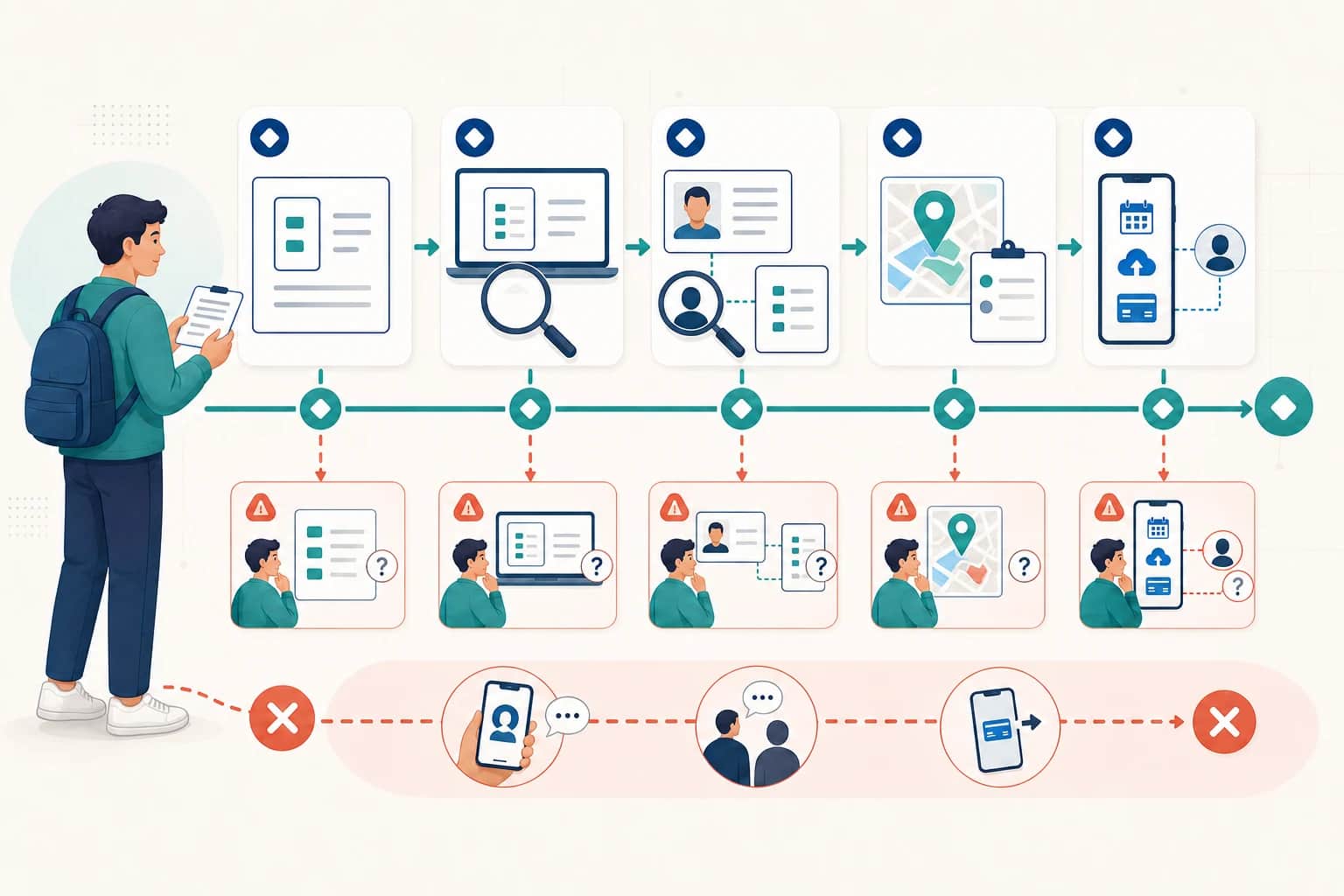
Provider verification in mainland China is a chain of identity checks, not a single badge. A hospital brand, English profile, map listing, social-media account, white coat, company record or attractive premises cannot establish which Chinese medical institution is legally responsible, whether the exact campus is registered, whether a clinician is registered there, whether the requested service sits within the applicable authority, or whether a booking and payment route belongs to that institution. Start with the provider's exact legal Chinese name and address, compare them with official health-sector records, then connect the result to the named clinician, service, campus and institution-controlled transaction channel. Keep dated screenshots or reference details because names, registrations, staffing and online routes can change. A registry match supports identity and authorization checks; it is not a government recommendation, quality ranking, outcome prediction or statement that the provider is suitable for an individual. Equally, an empty or mismatched search result is a prompt to correct the inputs and ask the provider or responsible health authority, not proof of fraud or unlawful practice. This page explains a careful administrative route for planned care. It does not recommend a hospital or doctor, evaluate clinical competence, interpret law for an individual dispute, or decide whether a service is medically appropriate. In an emergency in mainland China, call 120 or follow the hospital's emergency route first; do not delay urgent care to complete these checks.
Use this as a practical starting point
Provider procedures can change, so confirm time-sensitive details with the hospital, insurer or service. A licensed professional must make clinical decisions for an individual patient.
At a glance
Key points
- Capture the provider's exact legal Chinese institution name, exact campus address and service name before searching; an English brand or hospital-group label is not a reliable search key.
- Use an official health-sector institution query or the responsible local health authority to compare the institution identity, location, practice licence or filing and available scope information.
- A medical-institution practice licence, a clinic filing, a hospital assessment label and a commercial company record answer different questions and cannot replace one another.
- Verify a physician separately by Chinese name, province, registered practice information and practising institution; a hospital record does not automatically verify every person advertised by it.
- Match the result to the exact campus and requested service because a group, brand, branch, online page or neighbouring building may not share the same registered identity or route.
- For internet diagnosis, identify the accountable licensed medical institution and supporting physical institution, not only the marketplace, technology operator, customer-service account or advertised doctor.
- Confirm booking, document-upload and payment instructions through an institution-owned website, published telephone route or staff channel that the institution itself verifies.
- Treat a registry match as a baseline identity and authorization check, never as a quality score, ranking, clinical recommendation, availability promise or guarantee of outcome.
1. Define the verification question before you search
Write down the exact planned transaction: obtaining information, booking an outpatient appointment, arranging an examination, entering a remote consultation, sending prior records, paying an estimate or accepting a multi-visit service. Then identify every role visible in that transaction. The medical institution, physical campus, department, clinician, internet platform, coordinator, payment recipient, pharmacy, laboratory and insurer may be different legal or operational actors. Verification fails when one familiar brand is assumed to answer for every role.
Separate five questions. Is the institution legally identifiable in the relevant medical-institution route? Does the exact campus and service fit the displayed registration or filing information? Is the named clinician registered with practice information consistent with the appointment? Is an internet service attached to an accountable medical institution? Does the booking, upload or payment channel belong to the provider it claims to represent? A positive answer to one question does not answer the others. A physician registration does not licence a clinic; an institution record does not prove a particular person works there today; and a commercial operator does not acquire medical authority merely by contracting with a hospital.
Set a stopping rule before you start. Continue only when the institution can give a Chinese legal identity, the public records and provider explanation can be reconciled, and the transaction channel is confirmed through an institution-controlled route. Pause when a material name, address, campus, clinician, service or payment recipient remains unexplained. Record the discrepancy factually and ask for clarification rather than making an accusation. For urgent care, abandon the planned-care checklist and use the emergency route.
- Purpose of the proposed encounter or transaction
- Medical institution expected to create the medical record
- Exact physical campus or accountable internet institution
- Named clinician and department, if already assigned
- Entity or channel requesting identity, records or payment
- Material facts that must match before proceeding
Verification establishes a traceable administrative route. It does not select care, judge clinical competence or guarantee an appointment, price, insurance decision or outcome.
2. Capture the exact Chinese identity string
Ask the provider for the full Chinese legal name shown on its medical-institution practice licence or clinic filing record, the exact campus address, the department or service name, and the Chinese name of the clinician. Preserve the page, message or document on which the provider supplied those details. Do not translate an English brand back into Chinese yourself. Similar English names can refer to a hospital group, a physical hospital, an international department, a clinic, a management company or a marketing account, while the official query is organized around the registered Chinese identity.
Create a simple identity table before using a registry. Put the advertised name, legal Chinese institution name, campus address, licence or filing number if shown, department, service, clinician name, appointment channel and proposed payment recipient in separate fields. Copy characters exactly, including branch or campus qualifiers. Record the source and date for each field. If the provider supplies only an image, request text that can be searched and compared. Do not upload a passport or medical history merely to obtain the legal entity name; institution identity should be available without collecting a patient's sensitive record.
Use the provider's own information-disclosure route as one input, not as the final proof. National disclosure rules expect medical institutions to publish institutional overview, department and service information, staff identification, processes, price-related information and consultation or complaint routes. The existence of a polished disclosure page still does not substitute for the official registration check. Conversely, a sparse English page does not establish noncompliance. Your task is to connect the provider-supplied identity to the applicable public record and to an official contact channel.
- Chinese legal name on the licence or filing record
- Exact campus or clinic address in Chinese
- Department and requested service name
- Clinician's full Chinese name
- Displayed licence, filing or registration reference
- Provider-owned website and published telephone route
- Booking, upload and payment identities shown to the patient
3. Verify the medical institution in official records
Search the National Health Commission government-service medical-institution query with the exact Chinese institution name and compare the returned identity with the provider's information. Depending on the route and available fields, the useful comparison may include institution name, address, practice information, licence information or authority-related details. If the national page does not expose enough current detail for the question, use the responsible provincial, municipal or county health authority or government-service route. Save the query terms, result, date and URL rather than writing only that the provider was 'verified.'
Match characters and places, not logos. A group may operate multiple campuses, outpatient departments or clinics. A result for a similarly named institution elsewhere does not validate the location you intend to visit. Compare the exact address, institution type if shown, issuing or responsible authority, licence or filing status, validity or verification information when displayed, and the registered diagnosis-and-treatment subjects or practice scope relevant to the requested service. Where a field is absent from the public result, ask the provider for the applicable record and confirm it through the authority rather than guessing.
Medical-institution rules distinguish establishment, practice registration or clinic filing and ongoing supervision. A licensed institution must operate within the registered framework, while certain clinics use a filing route rather than the same licence document. The public result is therefore a starting point for identity and authority, not a complete audit of current operations. If the name or address changed, ask for the change record or current electronic credential. If the institution says a local database is authoritative, request the exact official link and the legal identity used there.
- Exact Chinese institution name searched
- Result address matched to the intended campus
- Practice licence or filing route identified
- Responsible health authority identified
- Registered subjects or scope checked where available
- Current validity, verification or change information checked where shown
- Search date, URL and result preserved
A matching institution record supports identity and authorization checks. It is not a quality inspection report, patient review, accreditation score or recommendation by China Care Desk.
4. Separate licence, filing, accreditation and a commercial company record
A medical-institution practice licence is part of the authorization framework for an institution to practise. A qualifying clinic may instead use the applicable filing system and filing credential. Hospital review, assessment or level information is a different administrative concept. A commercial company record identifies a market entity and may help explain the operator or payment recipient, but it does not authorize medical practice. Do not merge these records into one 'licence' column or assume that the easiest database result is enough.
When the provider is a clinic, ask whether the applicable route is practice licensing or clinic filing and which local health or traditional-Chinese-medicine authority received it. Compare the filed legal name, address, responsible person, service mode and practice scope when those items are available. Local implementation and the clinic category matter, so avoid applying the filing label to every outpatient facility. A dental, medical-aesthetic, rehabilitation or traditional-Chinese-medicine service may also have service-specific questions that require a separate check with the responsible authority.
Use the National Enterprise Credit Information Publicity System only for the narrow commercial identity question: does a stated company or other market entity exist under the claimed legal name, and how does that name relate to the medical institution or payment recipient? A company search cannot prove a hospital licence, clinic filing, clinician registration, service authorization or treatment quality. If a bill or payment request names a company that differs from the medical institution, ask the institution's finance office to explain the relationship and confirm the official payment route before paying.
- Medical-institution practice licence or electronic credential
- Clinic filing record and filing authority where applicable
- Hospital assessment or level information kept separate
- Commercial operator or payment recipient record kept separate
- Written explanation for relationships between different entities
5. Match the exact campus and registered service scope
After finding the institution, return to the exact encounter. Confirm the campus, building or online service that will register the patient; the department that will create the record; and the institution that will issue the medical document and financial receipt. A hospital group's main licence, reputation or English-language home page does not automatically cover another branch, cooperating clinic, leased room, health-management company or outreach event. Ask staff to state the licensed or filed entity behind the precise appointment.
Compare the requested service name with the registered diagnosis-and-treatment subjects or practice scope displayed by the responsible authority or credential. Use the provider's current service disclosure to understand what it says it offers, but do not infer authorization from marketing language. Where special technology, special clinic type or another approval may matter, ask the provider to identify the exact authority and current dated record. This guide cannot decide whether a service falls inside a technical category or whether a provider is clinically suitable to perform it.
Resolve common geographic mismatches carefully. A map pin may lead to an office tower while the registered institution is in a neighbouring hospital; an international department may use the hospital's legal name but a different entrance and booking desk; a service page may cover a network while the selected clinician attends only one campus. Confirm the address in Chinese, entrance, department, appointment number and record-issuing entity using a published provider channel. Reconfirm before travel when the appointment was arranged by a third party.
- Exact campus address and entrance
- Licensed or filed entity delivering the service
- Department and registered subjects or scope
- Entity creating the medical record
- Entity issuing the estimate, statement and receipt
- Current appointment at that campus rather than another branch
6. Verify the clinician's registration separately
Ask for the clinician's full Chinese name and the province or municipality of the intended practice, then use the National Health Commission physician practice-registration query. Compare the returned practice information, practising institution, category and scope with the provider's appointment confirmation and official staff information. Names can be shared by multiple people, transliterated inconsistently or displayed without enough context, so do not rely on an English name, photograph or professional title alone.
China's Physicians Law and physician registration measures connect lawful practice with qualification and registration, including registered place, category and scope. The registration framework also permits changes and regulated multi-site practice, so an unfamiliar second location is not automatically improper. Ask the institution to explain the clinician's current relationship with the exact campus and service. If the public query and appointment do not align, request the current registration or multi-site information and confirm it through the responsible health authority.
Keep the interpretation narrow. A match supports identity and registration verification. It does not tell you whether the clinician is available on the selected date, speaks a particular language, accepts an insurer, has experience relevant to an individual's needs, is a preferred choice or will achieve an outcome. Professional titles, hospital biographies, publications and patient reviews are also different evidence types. Direct suitability questions to the responsible clinical team without asking a coordinator, registry or this site to make a clinical recommendation.
- Clinician's exact Chinese name
- Province or municipality searched
- Registered practising institution
- Practice category and scope where displayed
- Current campus or multi-site relationship confirmed
- Appointment date, department and clinician matched
- Provider explanation retained when records differ
Hospital authorization and physician registration are separate checks. Neither is a quality ranking, and neither replaces a current appointment confirmation.
7. Treat special-service authorization as a separate dated check
Some proposed services may raise additional authorization, technology, professional, facility or local-management questions beyond the institution and physician baseline. Do not assume that a broad department name proves authorization for every advertised procedure, device, programme or remote service. Ask the provider to identify the exact Chinese service name, the registered department, the responsible medical institution and any separate current approval, filing or access information it relies on. Then use the official route named by the responsible authority.
Keep the request administrative. You can ask which entity is authorized, which campus provides the service, which credential or notice supports the route, who creates the medical record, and who handles complaints. Do not decide from a licence image that a proposed examination or treatment is clinically indicated, technically appropriate or safe for a particular patient. Those are professional decisions. Do not treat an award, ranking, equipment photograph, imported-device claim or celebrity endorsement as authorization.
Date the answer. A service can move between campuses, a professional can change practice information, and an institution can change a registered item or online route. Where the provider relies on a record not visible in the general query, ask for the issuing authority, document title, number and current official verification path. If staff cannot explain a material special-service question, pause the planned transaction and ask the responsible health authority. Avoid publishing or sending allegations while the factual identity is unresolved.
8. Verify an internet hospital and online clinician
An app screen can combine a technology platform, marketplace, customer-service operator, licensed medical institution, supporting physical institution, clinician, pharmacy and payment processor. Identify which licensed medical institution is accountable for the internet-diagnosis encounter and which physical institution supports it. Search that medical institution's Chinese legal name, compare the official internet-service disclosure, and confirm that the appointment route shown to the patient is one the institution recognizes. A platform brand or app-store listing is not the accountable medical identity.
National internet-diagnosis supervision rules place responsibilities on approved medical institutions, require real identities, connect professionals to electronic credential information, and preserve the traceability of the service. Ask which institution will create the outpatient record, issue any prescription or order, retain the encounter material, disclose charges and receive a complaint. Compare the clinician's identity with the registration route and with the institution shown inside the encounter. Do not assume that a profile on a marketplace proves the professional is scheduled through the named institution.
Verify the handoff to physical care. Ask which campus and department the internet hospital uses when in-person care is required and how the online record reaches that provider. A successful account registration, upload, chat or payment does not establish that the encounter qualifies for internet diagnosis, that the clinician will complete it, or that a prescription or insurance settlement will follow. The responsible professional and institution control those decisions under the applicable route.
- Accountable internet medical institution
- Supporting physical institution and campus
- Official platform entry controlled or confirmed by the institution
- Clinician identity and practising institution
- Medical-record, prescription, fee and complaint responsibility
- Physical-care handoff route
9. Confirm official booking, document-upload and payment channels
Verify each transaction channel from a provider-owned source. Begin with the institution's official website or other clearly published service page and telephone the number the institution itself publishes when a coordinator, advertisement or social-media account supplies a different link. Ask the institution to confirm the exact account, mini-program, app, email domain, upload page, cashier or bank recipient. A platform badge, blue tick, search-engine advertisement, group chat or copied hospital logo is not enough because it may identify only a marketer or intermediary.
Match the patient, institution and purpose before sharing data. A passport copy, medical history, image file and health information can contain sensitive personal information. Send only what the confirmed institution says is necessary, through the verified route, for a stated purpose. Ask who receives it, how to correct a mistaken upload and how to obtain the provider's privacy information. Do not send a complete record to a personal messaging account merely because someone uses a doctor's name or promises faster booking.
Match payment to the documented service and responsible entity. Confirm the estimate or order reference, patient identity, institution, campus, payee, cancellation or refund route and document that will prove payment. If the payee differs from the medical institution, ask the institution's finance office for a written explanation and direct confirmation before paying. Preserve the official confirmation, payment result and receipt route. This guide does not decide whether a price is fair, whether an insurer will pay, or whether a contract or refund claim is legally enforceable.
- Provider-owned source that confirms the channel
- Exact account, app, mini-program, email domain or cashier
- Minimum necessary identity and medical data
- Named receiving institution and stated purpose
- Patient, appointment or order reference
- Payee relationship confirmed by provider finance staff
- Payment evidence, receipt and correction or refund route
10. Resolve a mismatch without making an unsupported accusation
A missing result has ordinary possible explanations: the wrong Chinese characters, old brand name, wrong province, campus confusion, a recent change, use of a clinic filing route, a public-query delay, a clinician's multi-site arrangement or a database that exposes only part of the record. None should be assumed. Recheck the spelling and location, save the search, and ask the provider for the current legal identity, issuing authority and verification route. Repeat the search using the provider-supplied details.
Describe only the observed mismatch. For example: 'The appointment names this campus, while the public result shows another address,' or 'The payment recipient differs from the institution named on the appointment.' Ask which document or current official record reconciles the difference. Do not label a person or institution fake, unlicensed, fraudulent or unsafe from a failed search, screenshot or rumour. A regulatory, contractual or professional-fault conclusion belongs to the competent authority or other qualified decision-maker after reviewing the full facts.
Escalate through the accountable institution first when safe and appropriate: patient service, medical administration, complaint office, finance office or privacy contact, depending on the issue. If the material identity remains unresolved, contact the health authority responsible for the institution or professional and provide the exact Chinese names, address, dates, query URL, screenshots and provider response. For a commercial-entity or payment question, preserve the business identity and transaction evidence separately. For suspected unauthorized access or disclosure, stop further sharing and use the institution's privacy and complaint routes. In an emergency, seek urgent care first and document the issue afterward.
No result or unexplained mismatch is a reason to pause and confirm. It is not, by itself, proof of wrongdoing and should not be published as an accusation.
11. Close the loop before booking, sharing records or paying
Build a compact evidence pack rather than collecting random screenshots. Include the provider-supplied Chinese legal name, institution-query result, exact campus confirmation, applicable licence or filing information, clinician-query result, service-scope explanation, internet-hospital identity if relevant, official booking confirmation, verified upload route and payment instructions. Label each item with its source and date. Keep sensitive patient data separate from public registry material and limit access to the people who need it for the transaction.
Make the go, pause or redirect decision from unresolved administrative facts. Proceed only through the verified institution route and continue to treat availability, language, clinical suitability, consent, price, insurance and outcome as separate questions. Pause when a material identity, scope, campus, professional or channel mismatch remains. Redirect when the provider confirms that another licensed institution or campus is responsible. If a third party coordinates the visit, require it to preserve this chain rather than substituting its own brand for the provider's identity.
Reconfirm time-sensitive details close to the appointment and before a large document transfer or payment. Staff, schedules, campuses, service routes and online accounts change. Verification is not a permanent certificate and should not be copied to an unrelated service. After the encounter, check that the medical record, itemized financial statement and receipt identify the patient and responsible provider consistently. Preserve correction and complaint routes in case the final documents reveal a new mismatch.
- Dated institution and clinician query evidence
- Exact campus, department and service confirmation
- Applicable licence, filing or special-service explanation
- Accountable internet institution where relevant
- Official booking, upload and payment channels
- Unresolved questions and provider responses
- Final medical-record and financial-document identity check
Useful language
Navigation phrases
Show the Chinese characters when pronunciation is uncertain. Use the copy button to send one phrase through a trusted channel without retyping it.
Avoidable problems
Common mistakes
- Searching only an English brand, map pin or social-media name.
- Treating a hospital-group result as proof for every campus or branch.
- Assuming a company registration authorizes medical practice.
- Assuming every clinic uses the same licence rather than checking the applicable filing or registration route.
- Treating a hospital assessment label as the institution's practice authorization.
- Using an institution record as proof that every advertised clinician is registered there.
- Using a physician registration result as proof that a clinic is licensed.
- Treating a registry match as a quality score, ranking or government recommendation.
- Assuming a registration match proves current availability, language ability, suitability or outcome.
- Generalizing a registered service at one campus to another campus or online route.
- Accepting a marketplace or technology platform as the accountable internet medical institution.
- Trusting an online profile, white coat, award or equipment photograph as authorization.
- Uploading a passport and full medical history before confirming the receiving institution.
- Paying a personal account or unexplained intermediary because it uses a hospital logo.
- Calling a provider fake or unlawful from an empty public-query result alone.
- Failing to save the search terms, date, provider response and official channel.
- Delaying urgent care while trying to complete a planned-care verification checklist.
Common questions
Frequently asked questions
What if the medical-institution query returns no result?
Recheck the exact Chinese characters, province, city, campus and whether the facility uses a clinic filing route. Ask the provider for the current legal name, issuing authority and official verification link, then contact the responsible health authority if the identity remains unresolved. An empty result alone is not proof of unlicensed practice, fraud or wrongdoing.
What if a physician query returns no result?
Recheck the clinician's full Chinese name, province and practising institution. Ask the provider whether the person uses a different registered name, recently changed practice information or has an applicable multi-site arrangement. Request the current official record and confirm it with the responsible authority. Do not infer a professional offence from one unsuccessful search.
Does a matching hospital record mean the hospital is high quality?
No. The match supports legal-identity and authorization checks within the fields shown. It is not a quality rating, clinical audit, patient-safety score, outcome forecast, endorsement or recommendation. Current service availability, staffing, language, consent, price, insurance and suitability remain separate questions.
Does a matching physician record prove the doctor is suitable for me?
No. Registration information does not establish current availability, language ability, experience for an individual purpose, insurer acceptance, bedside communication or likely outcome. Ask the responsible provider how it assigns clinicians and direct clinical-suitability questions to qualified professionals.
Can a hospital group licence cover every branch?
Do not assume so. Match the intended campus, registered institution, department and service. Ask which licensed or filed entity will register the patient, create the record and issue the receipt. A group brand or central website may describe several legally or operationally distinct locations.
Is a business registration enough to verify a private clinic?
No. A market-entity record can help identify a company or explain a payment recipient, but it does not authorize medical practice. Check the applicable medical-institution licence or clinic filing and the clinician registration separately through health-sector routes.
How do I verify a filed clinic?
Ask which filing route applies and which county-level health or traditional-Chinese-medicine authority received the filing. Compare the clinic's legal name, address, responsible person, service mode and practice scope through the applicable official route. Do not assume every outpatient facility or special service follows the same filing model.
How do I verify an internet hospital?
Identify the Chinese legal name of the accountable licensed medical institution and its supporting physical institution. Compare the institution record, official internet-service entry, clinician identity, record responsibility, charges, complaint route and physical-care handoff. A marketplace, app store or customer-service operator is not automatically the medical institution responsible for the encounter.
Can I trust a hospital social-media or messaging account?
Confirm the exact account through a provider-owned website, a telephone number the provider publishes or another institution-controlled route. A badge, follower count, copied logo or staff photograph is not enough. Verify booking, upload and payment instructions separately before sending sensitive information or money.
What if the payment recipient has a different name?
Pause and ask the medical institution's finance office to identify the payee, explain the legal relationship and confirm the specific payment channel in writing. Match the patient and appointment or order reference, and preserve the receipt route. A company record alone does not prove that the payment request belongs to the provider.
Should I send a passport to a coordinator who offers to verify the provider?
Not merely for provider verification. The institution's legal name and official records should be checked without sending a full patient identity file. Share only the minimum necessary information after confirming the receiving institution, purpose and secure upload route. Health and identity information can be sensitive personal information.
Can China Care Desk verify or recommend a named provider for me?
This guide supplies an evidence route, not an individual verification certificate, legal opinion or provider recommendation. Use current official records and the provider's own confirmed channels, and ask the responsible authority about unresolved registration questions. Ask qualified professionals about clinical suitability.
How often should I repeat the checks?
Repeat material checks before the appointment, sensitive record transfer or payment when time has passed or a campus, clinician, service, channel or payee has changed. Keep the date of each result. A previous match is not a permanent certificate and should not be copied to another branch or service.
Should I delay emergency care until every check is complete?
No. In a medical emergency in mainland China, call 120 or follow the hospital's emergency route first. The detailed verification chain is for planned decisions and should not delay urgent assessment or care. Preserve names and records afterward if an administrative question remains.
Evidence
Sources consulted for this guide
National rules are separated from city and provider examples. Access dates show when a source was collected; source pages and procedures can change afterward.