
Emergency & urgent care
How to find and verify an emergency department in China
Verify the exact campus, emergency entrance, current service, age scope, language and payment route instead of relying on a map label or hospital grade.
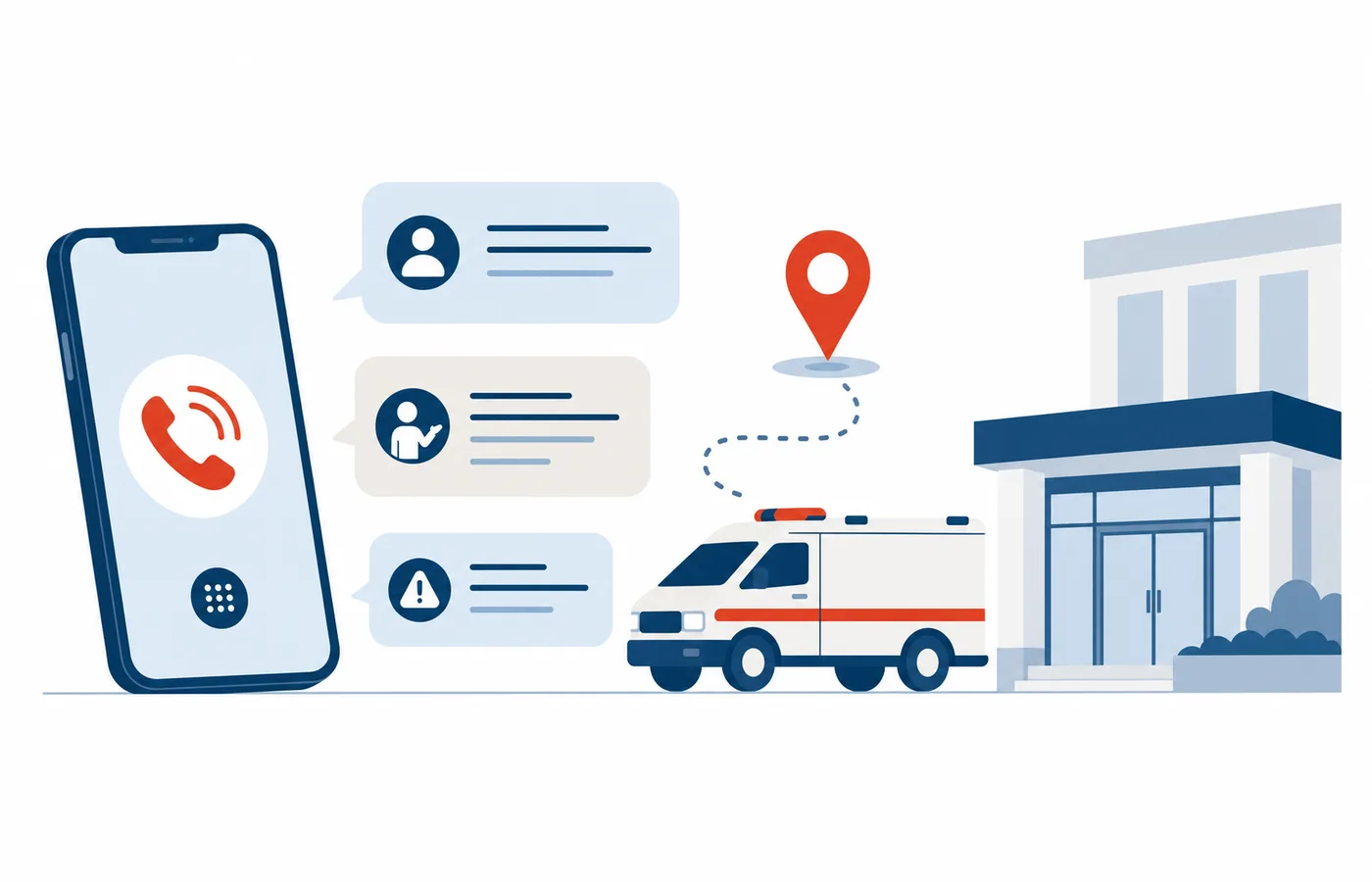
Finding an emergency department in China is an exact-campus verification task, not a ranking exercise. A map pin, hospital group name, tertiary-hospital label, international department or 24-hour telephone number may not identify the entrance or service operating at the place you are considering. One hospital organization can run several campuses with different emergency availability. This guide shows how to verify administrative facts through official sources and record a usable route. It does not assess symptoms, decide whether a situation is an emergency, compare clinical quality, choose between 120 and another form of travel, or advise anyone to wait. For immediate emergency-number information, use the separate 120 safety page.
Use this as a practical starting point
Provider procedures can change, so confirm time-sensitive details with the hospital, insurer or service. A licensed professional must make clinical decisions for an individual patient.
At a glance
Key points
- Verify the legal institution, exact campus and emergency department as three separate facts before relying on a listing.
- Treat map results, hospital grades and general-hospital labels as discovery clues, not proof of a current emergency service.
- Confirm the entrance, current operating statement, age or service scope and registration route through an official provider channel.
- An international or VIP department may have different hours and emergency access from the hospital's ordinary service.
- Confirm language assistance and insurer handling for the exact emergency service; neither follows automatically from an English website.
- Keep the source, check time and contact result because campus arrangements, entrances and service notices can change independently.
Keep emergency action separate from directory research
This page is designed for verifying service information, including advance preparation and confirming a route already identified through an official channel. It cannot determine the urgency of a person's condition or supply a clinical decision tree. The site's emergency page and 120 guide remain the dedicated safety resources; this guide must not be used to replace an emergency operator, emergency department or qualified professional.
Do not spend time comparing reputations, rankings or amenities when immediate emergency action is already being directed by a responsible service. If you are preparing in advance, save the official emergency page, your address in Chinese and the provider facts described below. Preparation is useful, but it does not reserve access or guarantee that one campus will be appropriate or available later.
China Care Desk verifies administrative routes. It does not decide whether care is urgent, whether 120 should be used or how a patient should travel.
Match the institution to the exact campus
Start with the institution's current Chinese legal name and registered location. The national license query can help distinguish organizations with similar English names, but it does not confirm today's services. Next, identify the campus name, street address, district and building. Do not stop at a hospital-group homepage or a map result that merges several locations under one telephone number.
Use the provider's official website, verified app, official WeChat account or a government directory that names the campus. The Beijing government profile for Peking Union Medical College Hospital illustrates why this matters: its international service lists emergency availability at Dongdan Campus and none at Xidan Campus. That example proves campus variation, not superiority or a rule about another hospital.
- Chinese legal institution name
- Exact campus and Chinese address
- Emergency department name and entrance
- Official page, account or telephone used for confirmation
Verify the emergency-service claim and current opening statement
National guidance states that emergency departments within its scope—secondary-and-above general hospitals—operate 24 hours. That is a management rule for an in-scope emergency department, not proof that every institution, specialist hospital, clinic, international service or campus has one. Ask the exact provider whether an emergency department exists at that campus and whether its published service is operating now.
Confirm the date of any notice, the physical entrance and whether registration, cashier, imaging or pharmacy support uses another location after ordinary outpatient hours. A 24-hour building, switchboard, bilingual hotline or online account is not the same fact as a 24-hour emergency department. If an official page and telephone answer conflict, ask the provider to identify the current notice and responsible desk.
Record what the provider actually confirms. Do not convert a hospital grade, opening-hours label or 24-hour phone into an emergency-service claim.
Confirm who and what the published service covers
Ask whether the named emergency service has any published age, campus or service limitation relevant to the person being registered. Do not assume that a general emergency department includes a pediatric route, that a children's service accepts every age, or that an international outpatient department supplies emergency care. The provider must identify its own registered service and patient-access process.
Language support also needs task-level confirmation. Ask whether English assistance is available at the emergency entrance at the relevant time, whether it is in person or by telephone and whether it covers registration or clinical communication. A multilingual booking line, translated webpage or daytime international clinic does not guarantee an interpreter inside another department.
- Published age or patient-access scope
- Relevant campus and department
- Language-support type and availability
- Accessibility and companion process if needed
Verify arrival, identity, registration and payment fields
Request the Chinese name of the entrance, gate or building and save it separately from the hospital's main address. Ask which identity document the registration desk accepts and whether an existing patient number can be used. An outpatient appointment account or international-department patient card may not automatically connect to the emergency registration record.
Ask the hospital and insurer separate questions about payment. Confirm accepted payment methods, deposits or staged charges with the provider. Ask the insurer about the exact campus, emergency service, network and claim documents. Direct billing exists only where the parties confirm an applicable arrangement; an insurance logo, card or international-services label is not authorization or a coverage promise.
- Entrance name in Chinese
- Accepted identity and patient-number route
- Provider payment methods and receipt process
- Insurer contact and policy reference
Create a source-dated emergency route record
Save a compact record containing the institution, campus, Chinese address, emergency entrance, official telephone, service statement, age-scope answer, language arrangement and payment notes. Add the official source URL and the date and time checked. A screenshot can preserve context, but retain the live official link because an old image may outlast the service notice it captured.
Recheck the route after a move, before travel and whenever a provider posts a campus or holiday notice. If no official source confirms a field, label it unknown instead of filling the gap from a review site. A verified unknown is safer than an invented promise. City and hospital directories should apply the same evidence rule and never rank providers from incomplete emergency data.
An exact, source-dated route is more useful than a long list of hospitals whose current emergency access has not been confirmed.
Useful language
Navigation phrases
Show the Chinese characters when pronunciation is uncertain. Use the copy button to send one phrase through a trusted channel without retyping it.
Avoidable problems
Common mistakes
- Treating a map's emergency-room label as provider confirmation
- Assuming every tertiary or general hospital campus has the same emergency service
- Confusing a 24-hour hotline, building or switchboard with an open emergency department
- Assuming an international department includes emergency, pediatric or multilingual services
- Using an insurer logo or hospital network name as proof of direct billing or coverage
- Saving an address without the Chinese campus and emergency-entrance details
Common questions
Frequently asked questions
Can I assume that every tertiary or general hospital has a 24-hour emergency department?
No. National guidance describes 24-hour operation for emergency departments in secondary-and-above general hospitals within its scope. It does not prove that every institution or campus has such a department. Confirm the exact campus through its current official channel.
Does an international or VIP medical department include emergency care?
Not automatically. International outpatient, inpatient and emergency services can be separate. The Beijing government profile for PUMCH, for example, publishes different emergency availability for two campuses. Verify the named department, campus, entrance and time without generalizing from that example.
Will English-speaking staff be available in the emergency department?
Only the provider can confirm the arrangement for the exact department and time. An English webpage, multilingual appointment line or international clinic does not guarantee emergency-department interpretation. Ask whether support is available and how it is delivered.
Does being in my insurer's network guarantee emergency direct billing?
No. Ask the hospital whether the exact campus and service have a current direct-billing arrangement, and ask the insurer whether the policy, event and documents qualify. Network status, authorization, payment and final coverage are separate decisions.
Evidence
Sources consulted for this guide
National rules are separated from city and provider examples. Access dates show when a source was collected; source pages and procedures can change afterward.