
Diagnostic tests, imaging & pathology
Identity errors in laboratory, imaging and pathology records in China
Trace a patient, order, specimen, image or report identity mismatch to the responsible institution without editing source records or interpreting results.
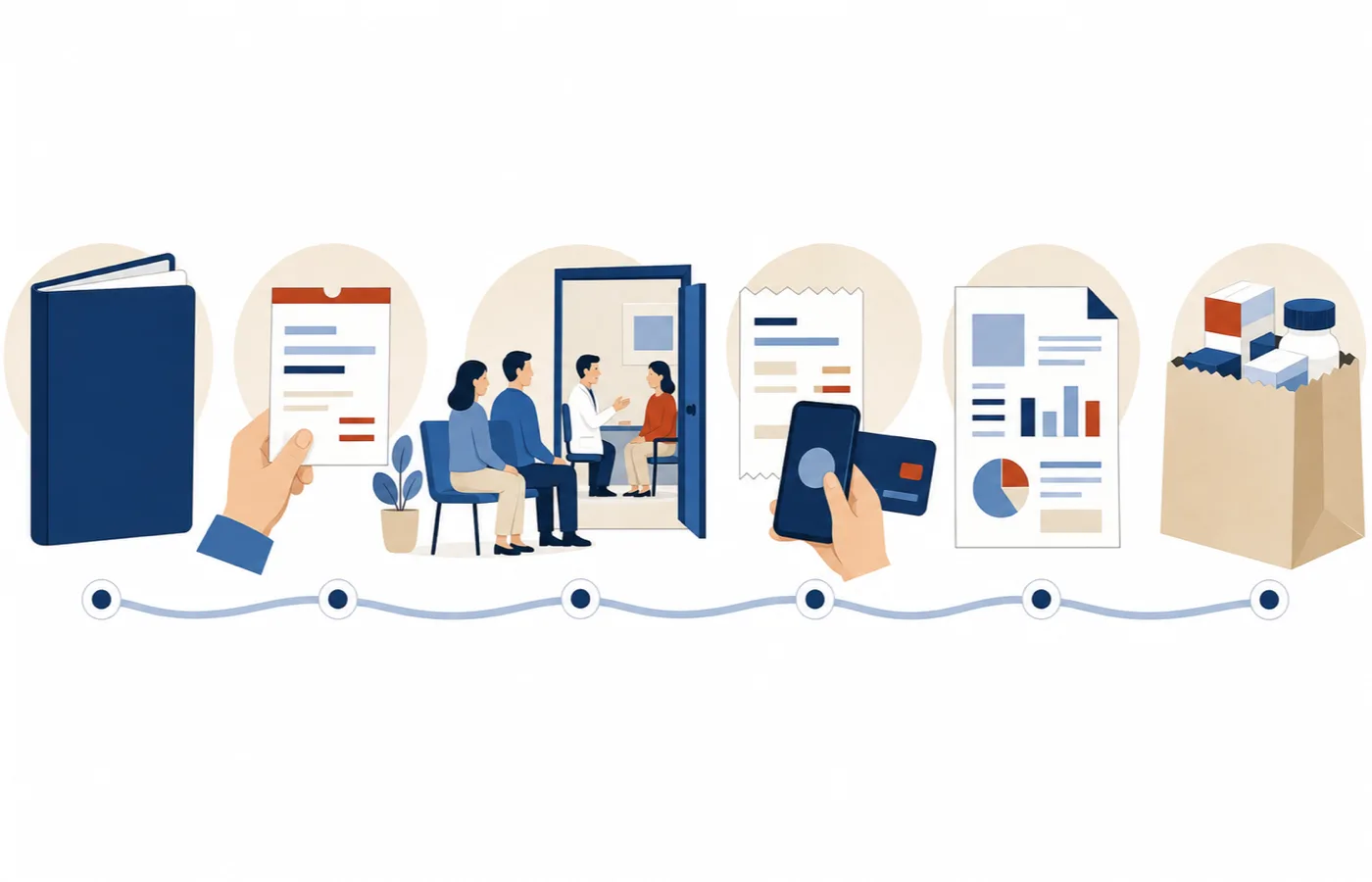
A foreign patient's diagnostic workflow can copy identity data across an appointment profile, hospital master record, order, specimen label, imaging study, pathology number, written report, patient portal, receipt and insurer claim. Correcting one layer does not prove that every downstream record changed. Some issues are identity or linkage errors; others are report-version, clinical-content, custody or insurance questions and need different routes. This R1 guide helps a patient preserve the source record, identify the responsible institution and request a traceable review. It does not decide whether a specimen, image or report belongs to a person, whether a result is valid, whether a service must be repeated, what a result means, or whether an error caused harm, fault, refund or coverage entitlement.
Use this as a practical starting point
Provider procedures can change, so confirm time-sensitive details with the hospital, insurer or service. A licensed professional must make clinical decisions for an individual patient.
At a glance
Key points
- Pause an unresolved visible identity mismatch at the responsible desk and do not relabel a specimen, edit an image file or alter a report yourself.
- Inventory every affected layer separately: appointment, patient profile, order, specimen, study, pathology item, report, portal, bill and insurer file.
- Use the identity document and historic linkage evidence accepted by the institution; a new passport does not erase the identity used during an earlier encounter.
- A factual identity correction differs from disagreement with a clinical description, interpretation or diagnosis.
- Send each issue to the institution that holds and manages the source record, then ask how authorized corrections flow to derived records.
- Preserve the unedited old version, request, acknowledgment, correction or annotation, reissued item and downstream confirmations.
- Keep current clinical contact separate from correction, billing, privacy, insurer, complaint and formal-dispute workflows.
Stop and classify the visible mismatch
If a visible name, date of birth, identity number, patient number, order, specimen label, imaging study, pathology number or report appears connected to the wrong person or encounter, notify the responsible collection, imaging, pathology or records desk immediately. Ask staff to record and investigate the mismatch under the institution's process. Do not peel, rewrite, cover or replace a label and do not continue an administrative handoff merely because payment succeeded.
Describe only what is visible: 'the passport shows A and the order shows B,' 'the patient number differs,' or 'the portal study date does not match this appointment.' Do not say the observation proves a specimen switch, false report, privacy breach, negligence or clinical harm. Only the responsible institution can inspect its source systems, custody records and professional evidence.
If the mismatch is found after the patient has left, preserve the original file or screenshot, date, official route and record identifier without sharing unnecessary health information. Contact the issuing institution through a verified channel rather than replying to an unknown message sender.
The family's job is to identify and preserve a mismatch. Attribution, validity and clinical consequences require institutional and professional investigation.
Map every identity and record layer
Create a table with one row for the booking profile, registration or master patient record, patient card, order, collected specimen, imaging study, pathology accession, written report, portal account, formal copy, receipt, basic-insurance settlement and commercial-insurer file. Record the exact identifier and issuing organization shown on each. Similar-looking numbers can belong to different systems.
Identify which organization holds and manages the source field. A third-party appointment platform may manage its profile; the hospital manages its patient and clinical records; an external laboratory or diagnostic centre may manage a linked report; the insurer manages its member and claim file. Do not ask one organization to rewrite another's authoritative record.
Mark what is asserted rather than proven. A family translation, coordinator spreadsheet or wallet label can help locate an item but is not an institutional correction. Keep the provider's Chinese field and any verified translation side by side.
- Displayed value and expected value
- Issuing or record-holding organization
- Patient, encounter, order and item references
- Original source supporting the request
- Downstream records that copied the field
- Current investigation and correction status
Build a lawful foreign-identity linkage
Use the passport or other lawful identity document recorded by the provider. For a renewed passport, changed name, different name order, spacing, punctuation, transliteration or middle name, preserve the historic document and official linkage or change evidence available to the patient. Ask the institution which evidence it accepts and whether it links identities or updates a current display while retaining the historic encounter record.
The national patient-identification standard calls for multiple identifiers and recognizes passport or other lawful identity-document numbers, but it does not prescribe one hospital's registration interface. Do not enter a fabricated resident identity number, shorten a name to fit without staff direction, reuse another person's mobile account or open a second profile merely to bypass a mismatch.
If duplicate profiles already exist, ask the institution's registration or information office for its duplicate-record review and linkage route. A merged portal view does not prove that every specimen, image, report, receipt and insurer record was reconciled.
Separate factual identity correction from clinical content
A misspelled name, wrong passport number, incorrect date transcription, duplicate patient record or report attached to the wrong profile can support factual review. A disagreement about specimen description, imaging observation, pathology wording, reference interval, interpretation, diagnosis or recommendation is not the same request. It may require professional explanation, addendum, complaint or formal process rather than identity-desk editing.
Ask the institution to state whether it will correct a source field, add a traceable annotation, link identities, detach a wrongly displayed item after investigation, reissue a derived report or preserve the original and add a new version. National record-writing rules require traceable corrections; they do not allow a patient to overwrite a clinician's professional conclusion or delete a lawfully retained source record.
Do not modify a downloaded PDF, DICOM metadata, pathology label or translated report to make records match. A clean-looking edited file destroys provenance and can create a new inconsistency for care, insurance or a formal record request.
Ask for a traceable institutional correction or annotation. Never make the only 'corrected' version on a family device.
Send a narrow request to the source-record holder
Address the request to the institution that holds and manages the affected source record. Identify the patient, encounter, order or item, exact screen or document, field, displayed value, asserted value, evidence and requested process. Ask for an acknowledgment, case number, responsible office and expected next official contact without inventing a correction deadline.
Provide only the evidence necessary for the task. Passport copies, historic identity evidence and medical reports are sensitive. Use the institution's verified portal, records office or privacy route, watermark working copies where accepted and avoid sending a complete chart to a general customer-service account.
If the issue might expose another person's information, stop viewing and forwarding it. Tell the apparent issuing institution through an official contact, ask it to contain access and preserve only the minimum evidence needed to identify the incident. This guide cannot decide whether unauthorized access or a legal violation occurred.
Verify every downstream correction separately
After the source institution acts, ask which systems were updated and which require separate requests. Check the active patient profile, order, final report, available image or pathology access, formal copy, receipt, basic-insurance settlement and commercial claim independently. A reissued report may not update a previous insurer submission or an old portal cache.
Preserve the old version, correction request, acknowledgment, institution's response, authorized new version and date each recipient received it. Do not delete the earlier file where it is needed to explain the audit trail. Label family notes as notes, not provider records.
If a receiving hospital already imported the earlier record, ask its records or clinical service how it accepts the originating institution's authorized update. Uploading a corrected file does not prove that it replaced, was reviewed with or clinically superseded the earlier one.
- Source record or identity profile
- Order and item identifiers
- Final report and formal copy
- Portal and image-data access
- Receipt and itemized charge list
- Basic-insurance settlement
- Commercial-insurer claim file
- Receiving-provider import or handoff
Escalate unresolved identity, privacy or service problems
If the responsible desk cannot resolve the issue, use the institution's records, information, privacy or complaint route with the same neutral evidence packet. Ask it to categorize the issue as identity linkage, record correction, wrong-recipient disclosure, missing report, billing mismatch or another defined process. Do not merge all branches into a claim of medical fault.
Keep an insurer mismatch in the insurer's own correction or appeal file while preserving the provider's official response. A hospital cannot rewrite a policy member record, and an insurer cannot alter a hospital's source medical record. Track both case numbers and the document that links them.
Contact the responsible clinical service for any present care question. A correction queue cannot interpret a result or determine whether waiting is safe. For a perceived medical emergency in mainland China, call 120. This page cannot assess urgency, result meaning, need for repeat testing, harm, fault, refund, insurance entitlement or compensation.
Useful language
Navigation phrases
Show the Chinese characters when pronunciation is uncertain. Use the copy button to send one phrase through a trusted channel without retyping it.
Avoidable problems
Common mistakes
- Relabelling a specimen container or editing a report on a family device
- Assuming a corrected patient-card screen updated every diagnostic record
- Creating another hospital profile to bypass an identity mismatch
- Calling disagreement with a clinical conclusion a simple name correction
- Using a translated or reformatted file as though the provider reissued it
- Sending a complete medical chart when only identity linkage evidence is needed
- Forwarding another person's apparent report to prove a privacy concern
- Treating an insurer-file correction as a hospital-record correction
Common questions
Frequently asked questions
Should I change the name on a downloaded report myself?
No. Preserve the original and request a traceable correction, annotation, linkage or reissue from the institution that holds and manages the source record. A family-edited file has no institutional provenance.
Does a new passport mean the old report should be rewritten?
Not necessarily. The historic record may remain under the identity used at the encounter. Ask the institution how it records current identity and links the old and new documents while preserving the source record.
What if the report appears to belong to another person?
Stop viewing or forwarding it and contact the apparent issuing institution through a verified route. Preserve only the minimum evidence needed for containment and investigation. This page cannot decide attribution, validity or whether a privacy violation occurred.
Can an identity mismatch mean the test must be repeated?
Only responsible professionals and the investigating institution can determine record attribution, validity and any next clinical step. This guide does not recommend or oppose repeating a test.
Will a hospital correction automatically update my insurance claim?
Do not assume so. Obtain the hospital's authorized corrected record, then ask the insurer how to update its separate member or claim file. Track both references.
Evidence
Sources consulted for this guide
National rules are separated from city and provider examples. Access dates show when a source was collected; source pages and procedures can change afterward.