
Emergency & urgent care
Emergency observation or inpatient admission in China
Understand emergency observation, inpatient admission and transfer records in China while leaving every clinical destination decision to the responsible team.
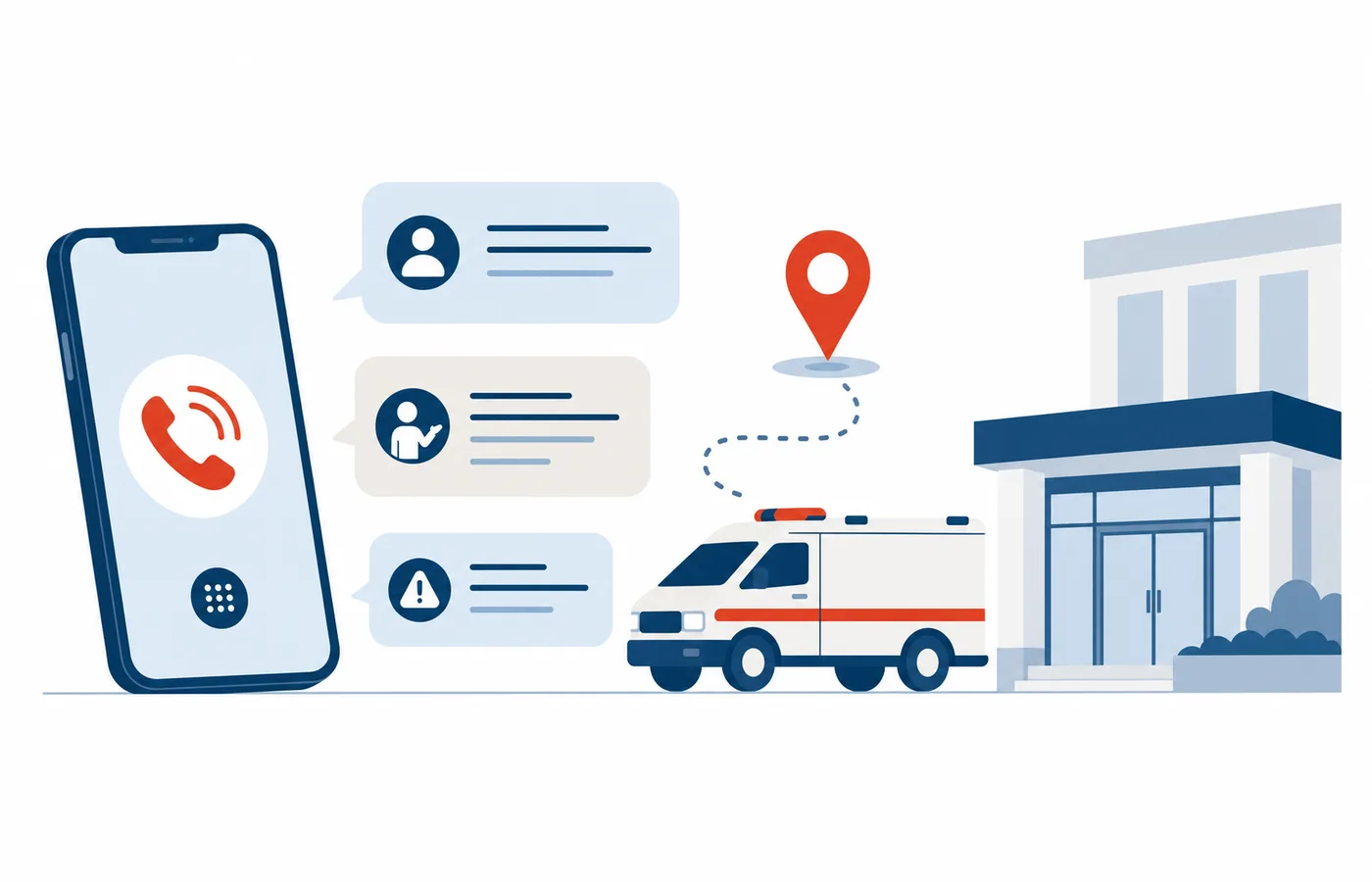
After an emergency-department assessment, the responsible clinical team records what happens next. The record may show an advised departure, transfer, emergency observation (急诊留观), conversion to inpatient care or another destination. Those states affect where the patient is located, which team is responsible, what record is created and how payment or insurance questions are handled. This guide explains that administrative handoff. It cannot decide whether observation, admission, transfer or departure is medically appropriate, whether someone is safe to leave, or whether a family member has legal authority to consent. In an immediate medical emergency in mainland China, call 120.
Use this as a practical starting point
Provider procedures can change, so confirm time-sensitive details with the hospital, insurer or service. A licensed professional must make clinical decisions for an individual patient.
At a glance
Key points
- Ask the responsible team to state and record the patient's current destination or status; do not infer it from a bed, wristband, room or payment screen.
- Emergency observation is a clinician-directed emergency status with its own record and recorded destination; it is not automatically the same as inpatient admission.
- An admission notice, ward acceptance, patient-identity check, account and clinical handoff are separate parts of moving from emergency to inpatient care.
- Confirm observation, emergency and inpatient charges separately with the provider and payer; no label on this page guarantees insurance classification or direct billing.
- A companion may provide practical help but does not automatically gain consent authority, record access or decision-making power.
- For a transfer, the sending and receiving providers control clinical acceptance, information handoff and transport; a referral message alone is not a completed transfer.
Identify the clinician-recorded destination rather than guessing the status
China's 2024 emergency information-page rules distinguish several clinician-recorded destinations, including advised departure, transfer, emergency observation and transfer from emergency to inpatient care. They are documentation states, not options for a patient to select from an online description. Ask the responsible clinician or emergency desk which destination has been recorded and what administrative action follows.
Do not infer inpatient admission because the patient is on a bed, has remained in the department, received tests or was asked for payment. Likewise, do not infer that an emergency visit is complete because an app shows a charge or preliminary report. Ask for the status in plain terms, the responsible department and any admission notice, observation record, transfer record or departure instruction created by the provider.
This page explains record states only. It cannot assess whether observation, admission, transfer or departure is clinically appropriate or safe.
Understand what emergency observation records—and what it does not mean
National record-writing standards describe an emergency-observation record as the record created while an emergency patient remains for clinician-directed observation. It records changes, measures and the patient's destination. The 2024 information-page rules list emergency observation separately from conversion to inpatient care. Separately, the 2009 national emergency-department management guide for secondary-and-above general hospitals states an institution-facing principle that emergency observation generally should not exceed 72 hours. That principle does not let a patient decide to leave, determine a room type or price, or establish an insurance category.
Ask which emergency team remains responsible, where the observation area is, which patient number or encounter identifies it and how updates are communicated. Confirm who may accompany the patient, where belongings are kept and whether an interpreter can be arranged for explanations. Obtain all care instructions from the treating team; this guide gives no observation schedule, clinical monitoring advice or rule about when a patient should leave.
For payment, ask the hospital how it records observation charges and ask the insurer how that exact encounter is classified under the policy. A payer may require a particular document or use a contract-specific definition. A hospital label, time spent in a department or national record category does not by itself prove inpatient coverage.
- Current recorded status and responsible emergency team
- Observation-area location and encounter or patient number
- Communication, interpreter and companion arrangements
- Provider billing contact and insurer classification reference
- Recorded next review or destination instruction from the clinical team
Protect identity and the record during every move
The current national recommended patient-identification standard describes identity checks across registration, admission, transfer and discharge. It recognizes passport or other identity information and permits temporary identification in an emergency, with later confirmation. Before a move, check the patient's name, date of birth, passport or other identifier, patient number and visible wristband information with staff. If something does not match, raise it immediately and ask how the affected emergency, observation and inpatient records will be linked or corrected.
A new department, ward or campus can create another administrative handoff without creating another person. Preserve registration slips and record numbers but do not create a second profile merely to overcome an app or language problem. If a temporary emergency name was used, ask the provider to confirm when the verified identity is attached across orders, reports, prescriptions, billing and the destination record.
A companion can help confirm facts, but only the provider can reconcile its patient identities and connected clinical records.
Confirm the emergency-to-inpatient admission handoff
If the clinical team decides on inpatient care, ask whether an admission notice or inpatient order has been issued, which department and ward has accepted the patient and where the admission account is completed. A clinician's recommendation, a bed request, ward acceptance and finished admission registration are related but not identical states. Record the responsible contacts instead of relying on a verbal promise that a bed is being arranged.
Ask what identity, insurance credential, deposit or payment method the admission desk needs, and request an itemized explanation of charges. The national advance-payment notice creates safeguards within its stated public-institution scope but does not make every charge covered or remove all payment at admission. Confirm direct billing, preauthorization, emergency notification, patient share and fallback payment separately with the exact hospital and insurer.
Ask how the emergency record, reports, current orders, medicines brought by the patient and personal belongings move with the admission. Do not carry out an informal medicine handoff or assume that an emergency prescription remains the active inpatient plan. The ward team must reconcile the clinical information and give patient-specific instructions.
- Admission notice or other provider record
- Accepting department, ward and responsible contact
- Identity and patient-number reconciliation
- Emergency-to-inpatient record and report handoff
- Deposit, payment and insurer reference
- Interpreter, companion and accessibility arrangements
Separate language help, consent and representative authority
Tell the responsible team that qualified language support is needed for an explanation, consent discussion or admission document. A bilingual receptionist, app translation or helpful companion may support navigation, but those routes are not automatically adequate for a clinical explanation. Ask who is interpreting, what document is being signed and how the explanation is recorded.
Do not assume that the person who called 120, paid a deposit, booked the visit or accompanied the patient can consent, obtain records or make every decision. National law contains principles on explanation, consent and emergency measures, but capacity and representative authority depend on the actual facts and law. The medical institution must identify the required signer or authority; this website cannot do so.
If a relative or insurer needs records or updates, ask the provider for its identity, relationship and authorization requirements. Share the minimum information through a verified channel and keep clinical consent, record access, insurance communication and practical accompaniment as four separate tasks.
Handle transfer or departure as a documented handoff
For a transfer, ask the sending team to identify the receiving institution, campus, department and acceptance status, plus who controls transport and which records travel with the patient. National continuity policy supports provider-to-provider handoffs but does not guarantee that a receiving bed, specialist, ambulance or insurer approval is available. Do not arrange an unsupported move from a directory listing or informal message.
If the responsible clinician records departure rather than observation, admission or transfer, ask for the emergency visit record, destination or follow-up instruction, pending-result route, prescriptions, charges and contact for administrative questions. Do not use this guide to decide whether to leave, to disregard an instruction or to set a return interval. Ask the responsible clinical team to explain the patient-specific next step in a form the patient can understand and request qualified language support when needed.
Keep the encounter number, destination record, identity-correction reference, payment documents and any receiving-service confirmation together. These records allow a later hospital, insurer or records office to reconstruct the transition without treating a receipt or app status as the clinical record.
Useful language
Navigation phrases
Show the Chinese characters when pronunciation is uncertain. Use the copy button to send one phrase through a trusted channel without retyping it.
Avoidable problems
Common mistakes
- Assuming that lying on a bed or staying overnight automatically means inpatient admission
- Using time spent in emergency observation as proof of an insurance category
- Treating a bed request or verbal transfer discussion as completed acceptance
- Allowing a temporary or mismatched identity to pass into observation and inpatient records without asking for reconciliation
- Assuming a companion or person who paid has automatic consent or record-access authority
- Leaving because an app or payment screen looks complete without asking the responsible team for the recorded destination and instructions
Common questions
Frequently asked questions
Is emergency observation the same as inpatient admission in China?
Not automatically. National information and record standards list emergency observation separately from transfer to inpatient care. Ask the provider which status is recorded, which team is responsible and how billing and records are handled. This distinction does not itself decide insurance coverage.
How long can emergency observation last?
The 2009 national emergency-department management guide for secondary-and-above general hospitals says observation generally should not exceed 72 hours. This is an institution-facing management principle, not permission to leave at a particular hour and not an insurance definition. The responsible clinical team and institution control the actual destination; ask for the current recorded status and provider-issued next step.
Can a family member sign every hospital document?
No automatic authority follows from being a relative, companion, caller or payer. Ask the institution what authority and evidence it requires for the particular consent, record, payment or communication task. This site cannot determine capacity or the lawful decision-maker in an individual case.
Will an insurer count emergency observation as inpatient care?
Only the payer can apply the contract to the exact encounter. Send the provider's recorded status and requested documents, then obtain the insurer's answer in writing. A bed, duration, receipt or emergency-observation label does not guarantee inpatient benefits or direct billing.
Evidence
Sources consulted for this guide
National rules are separated from city and provider examples. Access dates show when a source was collected; source pages and procedures can change afterward.