
Diagnostic tests, imaging & pathology
Diagnostic reports, images, data and pathology material in China
Request the exact report, image data, laboratory record or pathology material needed, while keeping issuer, format, custody and recipient requirements distinct.
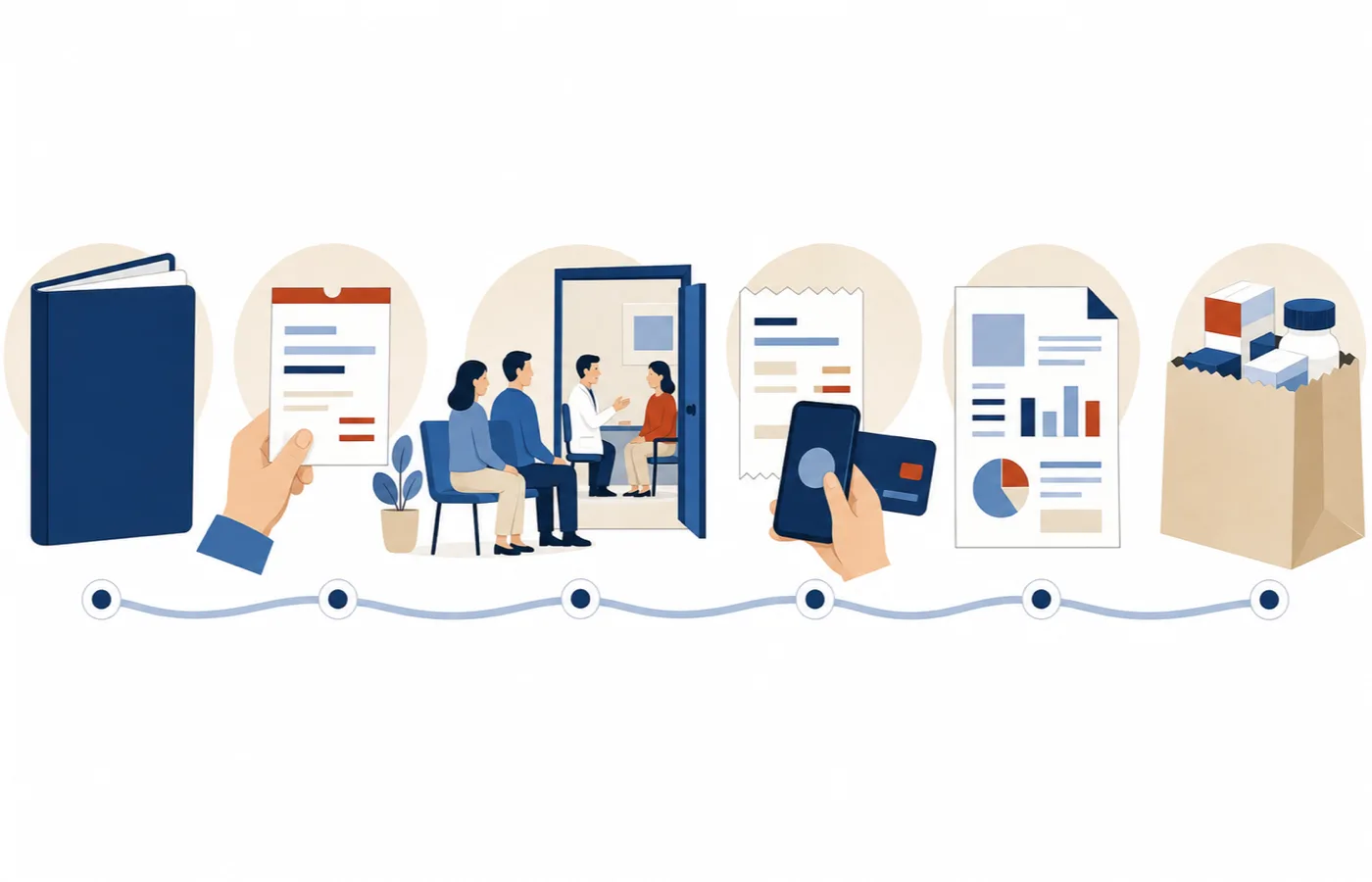
A request for 'my test results' can refer to several different assets: a signed report, displayed laboratory values, instrument or method details held by a provider, diagnostic images, DICOM image data, a viewer, a pathology report, glass slides, paraffin blocks, other retained material, a clinician's note or a certified medical-record copy. These assets are not interchangeable, and some remain under an institution's custody even when a patient can request a report or copy. This R1 guide helps international patients build an exact administrative request and trace delivery. It does not interpret results, decide whether raw data or pathology material is clinically needed, guarantee a format, alter an issued record, establish ownership or approve domestic or cross-border transfer.
Use this as a practical starting point
Provider procedures can change, so confirm time-sensitive details with the hospital, insurer or service. A licensed professional must make clinical decisions for an individual patient.
At a glance
Key points
- Ask the receiving clinician or organization to name each required asset, accepted format, verification feature and deadline before requesting records.
- A narrative report, image data, viewer, laboratory value display, pathology slide and block are different objects with different holders and release routes.
- Record the issuing institution, campus, encounter, order or examination number, date and patient identity for every requested item.
- DICOM is a medical-image data standard and workflow term, not a promise that every patient portal offers a complete downloadable study.
- Pathology reports can be copied as records while slides, blocks and other retained material follow controlled archive, lending or consultation procedures.
- Translations, screenshots and exported PDFs should remain linked to the original issuer's record and should not be presented as issuer-created replacements.
- Clinical acceptance, technical import, insurer acceptance and lawful transfer are separate receiving-side decisions that this page cannot guarantee.
Build an asset-level request instead of asking for all results
Start with the receiving party. Ask the treating clinician, second institution, insurer or overseas provider to name exactly what it needs: issued report, laboratory result pages, imaging report, complete image study, DICOM data, viewer, pathology report, selected slide or block, clinician summary, stamped copy or another defined item. Record the accepted medium, language, verification feature, delivery route and deadline for each asset.
Next, map each item to the institution that created or holds it. The hospital where the patient registered may differ from the independent laboratory, imaging center or pathology service that performed and reported the work. Record the full Chinese institution name, campus, department, encounter and examination or pathology identifier. A single patient portal can display several organizations' outputs without becoming the authoritative issuer of every record.
Request only what is necessary for the stated purpose and keep the list itemized. A vague demand for raw data can be impossible to route and may collect sensitive information the recipient cannot use. The receiving party should explain its technical and clinical need; this site cannot determine whether an instrument file, image series, source slide or other underlying asset is necessary for a patient's care.
- Exact asset and accepted format
- Issuer or holding institution
- Encounter, order, study or pathology identifier
- Patient identity used in the source system
- Recipient, purpose, deadline and delivery channel
Separate laboratory reports from underlying data
A laboratory report is the institution-issued clinical document containing the provider's required report fields and authorized release. A portal display, text message, screenshot, exported table and machine-generated file may represent or transport parts of the result without becoming the signed report. Ask the laboratory or medical-record office which version is authoritative, how it is verified and how a patient may obtain an official copy.
If the recipient requests method information, reference information, specimen details, a corrected version or another data element, send that exact request to the issuing laboratory. Do not derive it from a consumer tracker, retype values into a new template or edit the issued PDF. National laboratory rules establish institutional quality and report responsibilities, but they do not require every provider to release every instrument-level file or use one public export format.
Keep report versions separate. Record the issue date, correction or addendum status, issuer and reason given by the institution for any reissued document. A later value display, translated table or clinician note does not silently replace the laboratory's earlier report. Only qualified professionals can interpret differences, trends or clinical significance; this guide only supports documentary traceability.
Distinguish an imaging report from DICOM and image access
An imaging report is a professional narrative issued by the responsible imaging service. The image study is a separate dataset that may be delivered as DICOM files through a disc, hospital system, image cloud, secure link or another institution-supported route. A viewer may be bundled so a person can open files, but a screenshot, selected JPEG or portal preview is not necessarily the complete study the receiving service expects.
Ask the receiving clinician or institution whether it needs the report, the complete DICOM study, a specific series, a viewer, a secure transfer or an institution-to-institution image-cloud route. Then ask the source institution what it can provide, for how long a link remains accessible, whether identity verification or a request form is required and how the recipient confirms that the study imported successfully. This page cannot certify technical completeness or compatibility.
Do not rename series, compress files, convert DICOM into ordinary photographs or upload medical images to an unapproved public service to solve a transfer problem. Preserve the original folder structure, identifiers and institution instructions where a copy is supplied. If an image is missing or linked to the wrong patient profile, ask the source institution to investigate rather than editing metadata or creating a replacement yourself.
Report, DICOM study, viewer and screenshot are four different deliverables. Ask the recipient which ones it accepts and the source institution which ones it can release.
Treat pathology reports and physical material as separate assets
A pathology report is an issued medical record. Glass slides, paraffin blocks, smears, tissue and other retained materials are managed inside pathology archive, quality, lending and consultation systems. National guidance supports controlled records and material processes; it does not make every physical item a patient-owned document or guarantee permanent release. Ask the receiving pathology service for an exact case-specific checklist before approaching the originating institution.
Use the originating institution's pathology or medical-record route and name each requested item. Ask whether it offers a copy, loan, sealed transfer, newly prepared derivative or institution-to-institution consultation; which identity and authorization evidence applies; whether any item will be consumed or altered; and what return date and acknowledgment close the custody chain. Do not cut, clean, mark, relabel, open or repackage material yourself.
Keep the originating report, later consultation report, addendum, slide or block inventory, release receipt, transfer record and return acknowledgment separately. A receiving pathology opinion does not automatically correct or erase the originating report. Qualified pathology and treating professionals must explain the clinical relationship, while each institution controls its own signed documents and material custody.
- Issued pathology report
- Glass slide or other prepared slide
- Paraffin block or other retained material
- Digital pathology image where available
- Loan, transfer, receipt and return records
Request certified copies, translations and identity linkage carefully
Use the medical institution's current record-copy route for official copies. Ask which office holds the report or imaging material, which patient identity and encounter references are required, who may apply, what authorization a representative needs, which items can be copied, how verification marks appear and whether the institution offers electronic or paper delivery. National record rules define a framework but do not guarantee same-day access or every requested format.
When the passport name, romanization, Chinese name or document number differs across systems, list every version exactly as recorded and ask the institution to link or investigate the profile. Do not alter the original report, DICOM metadata, pathology label or certified copy. A translated cover note can explain the mismatch to a recipient, but only the responsible institution can correct, reissue or document linkage within its source record.
Keep translations paired with the complete original and identify the translator, date and scope. Ask the recipient whether it needs a certified translation, institution stamp, apostille or other authentication for its purpose. A translation helps comprehension; it does not become the source institution's diagnosis, prove that every technical term is equivalent or guarantee legal, insurer or clinical acceptance abroad.
Transfer the minimum necessary information through accepted channels
Medical and health information is sensitive personal information. Confirm the recipient's identity, authority, purpose and accepted delivery method before sending a report or dataset. Use the institution's secure channel where available, protect passwords separately and avoid public links, social-media groups or unverified translation and file-conversion sites. An interpreter, employer, school, insurer or family member does not receive automatic access merely because it helps with care or payment.
For cross-border transfer, ask both source and recipient institutions about their current route and obtain specialized advice where required. Electronic records, physical pathology material and ordinary paper copies can engage different technical, privacy, carrier and customs questions. A hospital's ability to release an item does not prove that a carrier may transport it or that an overseas system can lawfully receive and clinically use it.
Ask the recipient to acknowledge the patient, asset, issuer, date, item count and technical usability. Successful upload is not the same as complete receipt or clinical acceptance. Keep a minimal transfer log containing the request, release reference, method, date, recipient acknowledgment and any deficiency, while avoiding unnecessary duplication of the sensitive content itself.
Resolve missing, mismatched or rejected assets by holder
When an expected asset is unavailable, first confirm that it actually exists and identify its holder. Ask whether the report remains pending, the images are stored in another system, an external service issued the result, the pathology material is archived under a different identifier or the patient profile is duplicated. Keep the answer factual and do not infer that a missing portal item means the work was normal, lost or never performed.
For an identity or content discrepancy, preserve the original item and submit a precise request to the issuing institution. State the patient identifiers, encounter, item, disputed field and supporting document without rewriting clinical language. Medical-record writing standards support trace-preserving correction processes; they do not let a patient or website overwrite professional judgment or determine that a diagnostic conclusion is wrong.
If the receiving organization rejects an asset, request a written deficiency: wrong patient, missing issuer verification, incomplete study, unsupported format, expired link, absent translation or another exact reason. Return that specification to the source holder. Escalate an unresolved service issue through the institution's formal route, but contact the responsible clinical team for care decisions. If the patient perceives an immediate medical emergency in mainland China, call 120.
A missing item, technical rejection and clinical disagreement are different problems. Route each one to the organization that owns that decision.
Useful language
Navigation phrases
Show the Chinese characters when pronunciation is uncertain. Use the copy button to send one phrase through a trusted channel without retyping it.
Avoidable problems
Common mistakes
- Asking for all results without naming the asset, format or recipient
- Treating a report, portal preview, DICOM study and screenshot as interchangeable
- Assuming every laboratory releases instrument-level raw data to patients
- Describing pathology slides and blocks as ordinary patient-owned paper records
- Editing names, values, image metadata or pathology labels to fix a mismatch
- Sending sensitive files through public links or unverified conversion services
- Presenting a translation as if the source medical institution issued it
- Assuming successful upload proves technical completeness or clinical acceptance
Common questions
Frequently asked questions
Is an imaging report the same as the scan images?
No. The report is a professional narrative, while the image study is separate data often handled as DICOM through the provider's supported route. Ask the recipient which asset it needs and the source institution what it can release.
Does a disc or cloud link always contain the complete DICOM study?
Do not assume so. Ask the source what the delivery contains and the recipient to confirm successful import and completeness. A viewer, selected image, screenshot or accessible link does not by itself prove that every expected series arrived.
Can I request raw laboratory data as well as the report?
You may ask the issuing institution about a precisely named data element, but national laboratory rules do not guarantee patient release of every instrument file. Have the receiving professional explain what is needed and use the institution's official request route.
Are pathology slides and blocks part of an ordinary record copy?
They are different from the issued pathology report and are managed through controlled archive, consultation, lending or transfer procedures. Ask the receiving service for its checklist and the originating institution for its custody and return process.
Can I correct a name directly in a PDF or DICOM file?
No. Preserve the original and ask the issuing institution to investigate, link the patient identity and use its traceable correction or reissue process. A patient-edited file can break authenticity and does not correct the source medical record.
Evidence
Sources consulted for this guide
National rules are separated from city and provider examples. Access dates show when a source was collected; source pages and procedures can change afterward.