
Mental health & psychiatric care
Child and adolescent mental-health care, guardians and schools in China
Separate a child's identity, guardian authority, school support, clinical records and emergency routes without promising disclosure, access or accommodation.
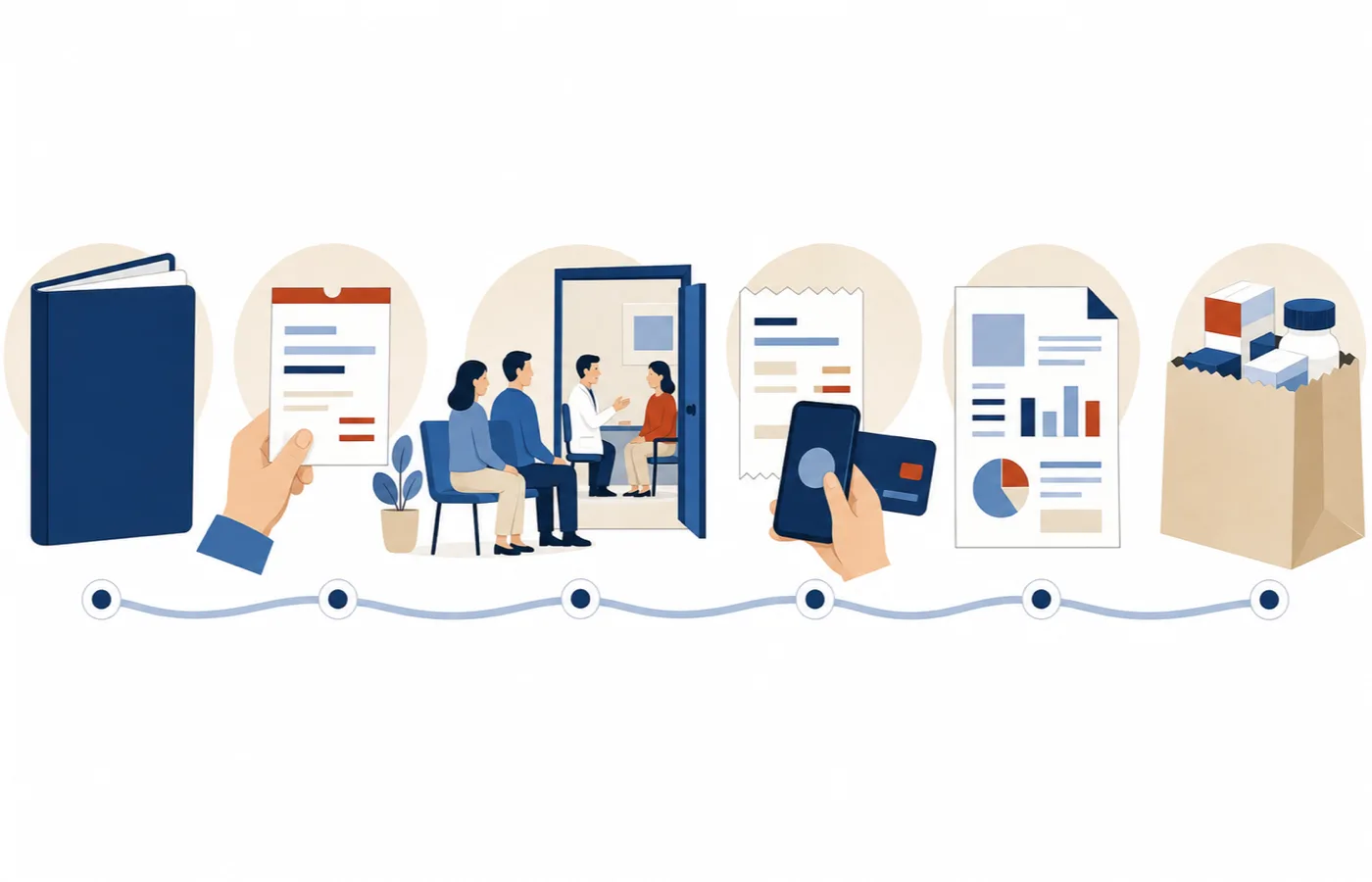
A child or adolescent may interact with a school counsellor, teacher, hotline, community service, hospital clinic and guardian, but those participants do not hold the same authority or record. The child remains the patient in a medical route, while the medical institution decides its identity, consent, guardian and clinical processes and the school decides its own support and attendance process. Health information and information about a child under fourteen require especially careful handling. This guide helps families map roles, documents, privacy questions and handoffs. It does not assess the young person, decide urgency, diagnose a condition, recommend counselling or treatment, determine capacity or guardianship, compel disclosure, or promise an appointment, confidential outcome, school accommodation, leave, admission, discharge or clinical result.
Use this as a practical starting point
Provider procedures can change, so confirm time-sensitive details with the hospital, insurer or service. A licensed professional must make clinical decisions for an individual patient.
At a glance
Key points
- Keep the child's registered patient identity separate from the adult account, phone number, payment method and guardian evidence used to support the process.
- Ask the medical institution which identity, relationship, guardianship and consent documents it requires for the child's exact age and service route.
- A school counsellor, teacher, hotline and hospital professional have different roles; a school conversation does not automatically become a medical diagnosis or hospital record.
- Ask the school for its current support, confidentiality, family-contact, medical-referral, absence and return-to-study procedures instead of relying on a national policy headline.
- Medical and health information, and personal information about a child under fourteen, are sensitive information that should move through an authorized minimum-necessary route.
- A guardian, school or payer does not automatically receive the entire medical record; the institution must apply its identity, authority and lawful-disclosure process.
- A provider-issued note does not guarantee that a school will approve an absence, accommodation, reduced timetable, leave or return date.
- For a perceived medical emergency in mainland China call 120, and for an immediate safety or police emergency call 110; 12356 is a separate psychological-assistance route.
Map the child, guardian, school and medical-provider roles
Create a role sheet before sending records. List the child as the patient, the adult who is acting as guardian or authorized representative, the school's named support contact, the legal medical institution and the professional responsible for any hospital encounter. Record the exact Chinese service name because school psychological education, school counselling, social support, psychological assistance and medical diagnosis and treatment are not interchangeable. A teacher or counsellor may support a student within the school's process, but that role does not by itself authorize psychiatric diagnosis, prescribing, access to a hospital chart or decisions reserved to a medical institution.
Ask each organization to state what it controls. The school can explain its attendance, safeguarding, family-contact and learning-support procedures. The hospital can explain registration, consent, guardian evidence, records and clinical follow-up. The guardian can provide authority and participate as permitted, but family status does not automatically settle every question about the young person's communication, privacy or decision-making. This website cannot decide a disputed guardianship, a young person's decision-making ability or whether a particular school or hospital must accept an overseas document.
- Child's registered patient identity
- Guardian or authorized representative
- School support and attendance contacts
- Medical institution's Chinese legal name
- Professional role and service label
- Owner of each decision and record
One episode can create several records. Keep the school support file, hospital medical record, hotline contact and family notes clearly separated.
Prepare identity, guardian authority and consent questions
Match the child's name, date of birth, identity-document number and any earlier transliteration or patient number before registration. Then ask the institution which evidence it requires from the accompanying adult, such as the adult's identity document, relationship evidence, guardianship document or provider-specific authorization form. Requirements may differ by age, institution, inpatient or outpatient route and the action being requested. Possessing the child's passport, paying the bill or being listed as an emergency contact does not automatically prove authority to consent, obtain every record or direct every disclosure.
Ask how the team will communicate directly with the young person, how language assistance is arranged, what information will be given to the guardian and how disagreements are documented. Mental-health law protects dignity and confidentiality, but this should not be translated into an absolute promise that no information can ever be shared. The responsible institution applies the legal and clinical framework to the actual circumstances. Do not ask an interpreter, school employee or website to decide consent, capacity, guardian status or a lawful exception to confidentiality.
- Child's accepted identity document
- Earlier patient number or name variant
- Adult's identity and relationship evidence
- Institution-specific authority form
- Language and communication arrangement
- Recorded consent and disclosure questions
Separate school support from clinical mental-health care
Ask the school whether the contact is a teacher, school psychological-health educator, counsellor, nurse, external provider or referral coordinator and which current policy governs the service. The national student action plan describes education, monitoring, counselling, referral cooperation, crisis work and family-school coordination during its stated period, but it is not a live promise about one school's staffing, language, confidentiality, guardian contact, medical referral or accommodation. Request the school's present written process and the name of the office accountable for it.
If the school suggests outside care, ask whether it is providing general information, a formal referral, a required document list or an emergency instruction. A school form or screening result should not be treated as a medical diagnosis, and a school request does not force a hospital to accept an appointment or issue a particular document. Likewise, a hospital visit does not automatically decide school attendance or learning support. Preserve the original school communication and let the responsible medical and educational teams create their own records without copying one another's conclusions inaccurately.
- School service and staff role
- Current school policy and privacy notice
- Guardian-contact procedure
- Referral or outside-provider status
- Attendance and support decision-maker
- Separate school and medical records
A school support route and a clinical route can cooperate, but neither should be presented as if it holds the other's legal or professional authority.
Use a minimum-necessary information handoff
Before sending information, ask the recipient to identify the exact purpose, required fields, accepted format, secure channel and person authorized to receive it. Medical and health information is sensitive personal information, and information about a child under fourteen has additional protection. Send the smallest record set needed for the stated task rather than a complete psychiatric chart by default. Keep Chinese originals unchanged, label translations separately and record who prepared them, because an informal summary can lose the source, date and professional context.
A guardian may request records through the institution's process using the identity and authority evidence the institution requires. That does not give a school, interpreter, insurer, tutor, employer, host family or ordinary chat account automatic access. Ask the hospital whether it can issue a targeted certificate or summary when the school needs limited administrative evidence, and ask the school whether that limited document is sufficient before disclosing more. Neither organization can promise how a later overseas recipient will interpret or accept the material.
- Purpose of the disclosure
- Minimum fields requested
- Authorized recipient and secure channel
- Unmodified source-language original
- Separately labelled translation
- Disclosure date and acknowledgement
Request school documents without assuming an outcome
Ask the school what decision is pending: an excused absence, deadline change, temporary support, leave, reduced timetable, return-to-study review or another defined process. Obtain the required form, deadline and receiving office before asking a medical provider to write anything. The provider decides what it can lawfully and professionally certify from its own record, including whether it can state dates, attendance at care, functional limits or another narrowly framed fact. A family should not draft a diagnosis or requested conclusion and ask staff merely to stamp it.
When a provider issues a document, check the patient's identity, institution, date, issuer, seal or verification method and the scope of the statement. Submit it through the school's authorized channel and request a receipt. The school retains its administrative decision, and neither the note nor a national student-policy document guarantees leave, confidentiality, accommodation, promotion, examination changes or return approval. If the school asks for more information, request a written reason and compare it with the provider's minimum-necessary disclosure process before sending the full medical record.
- Exact school decision pending
- Required form and submission deadline
- Provider-controlled certificate scope
- Identity, issuer and verification details
- Authorized school recipient
- Written school outcome or next step
Plan escalation and emergency routes without self-triage
Keep four routes visible: the school's current urgent or safeguarding process, the medical institution's clinical contact, 12356 psychological assistance and public emergency services. The national 12356 route supports psychological education, consultation, supportive guidance and crisis intervention, but it is not ambulance or police dispatch and does not guarantee English, immediate connection or a hospital appointment. This guide cannot assess a young person's statements, behaviour, urgency or legal status, so families and schools should not use it as a screening tool or substitute for an authorized response.
For a perceived medical emergency in mainland China call 120; for an immediate safety or police emergency call 110. Do not wait for a school meeting, portal message, insurer decision, guardian-document review or routine hotline reply before using the appropriate public emergency route. For non-emergency process failures, record the organization, contact, time, request and response, then use the responsible school's or medical institution's published escalation or complaint channel. A complaint can request review but does not guarantee confidentiality, accommodation, a clinical decision or another outcome.
Emergency services, 12356, the school and the hospital are separate routes. Record which route was contacted without claiming that one automatically replaces the others.
Useful language
Navigation phrases
Show the Chinese characters when pronunciation is uncertain. Use the copy button to send one phrase through a trusted channel without retyping it.
Avoidable problems
Common mistakes
- Registering the guardian as the patient because the adult owns the phone or pays the bill.
- Assuming family relationship gives automatic authority for every consent, record or disclosure.
- Treating a school counsellor, teacher or screening result as a medical diagnosis.
- Assuming a national student-policy plan guarantees a particular school service or accommodation.
- Sending the complete psychiatric record when a limited certificate may answer the stated request.
- Using an ordinary group chat for sensitive child information without checking authorization.
- Editing the original record or translation so it appears to support a requested school outcome.
- Assuming a provider note automatically approves absence, leave, examination changes or return.
- Promising the young person absolute confidentiality without checking the responsible process.
- Waiting for a school or routine hotline reply during a perceived emergency instead of using 120 or 110.
Common questions
Frequently asked questions
Can a school counsellor diagnose a mental-health condition?
Do not infer medical authority from the English title alone. Ask whether the person is acting in a school education or counselling role or through a licensed medical institution. Diagnosis and treatment of mental disorders belong to the qualified medical route; a school conversation or screening result does not automatically create a diagnosis.
Does a parent automatically receive the child's complete psychiatric record?
No universal automatic-access conclusion should be made. The medical institution applies its identity, guardian or agent-authority, privacy and record-copying process to the request. Ask what evidence is required and which materials can be copied; being a parent, payer or emergency contact does not by itself settle every request.
Must the school accept a hospital note and grant an accommodation?
A provider decides what it can issue from its record, while the school decides the educational or attendance request under its current procedure. Ask for the school's form, required fields, deadline and written outcome. The existence of a medical note does not guarantee leave, accommodation, confidentiality or return approval.
Can the school send a student's information directly to a hospital?
Ask both organizations to identify the purpose, lawful or consent route, minimum record set, authorized recipient and secure transfer method. A referral or safeguarding process may have its own rules, but an informal teacher message should not be assumed to authorize transfer of the complete school or medical file.
Does 12356 replace a school crisis contact or a hospital appointment?
No. 12356 is a psychological-assistance route and does not replace the school's current urgent process, a medical institution's appointment or public emergency dispatch. It also does not guarantee English, immediate connection, diagnosis, treatment, transfer or an appointment.
What should a family do if it perceives an immediate emergency?
In mainland China call 120 for a perceived medical emergency and 110 for an immediate safety or police emergency. Do not wait for this website, a school meeting, a routine hotline call, document review or insurer response. This guide does not assess symptoms, danger or urgency.
Evidence
Sources consulted for this guide
National rules are separated from city and provider examples. Access dates show when a source was collected; source pages and procedures can change afterward.