
Mental health & psychiatric care
Community mental-health rehabilitation and follow-up in China
Identify community, public-health, rehabilitation and hospital routes while checking local responsibility, enrolment and handoffs without eligibility promises.
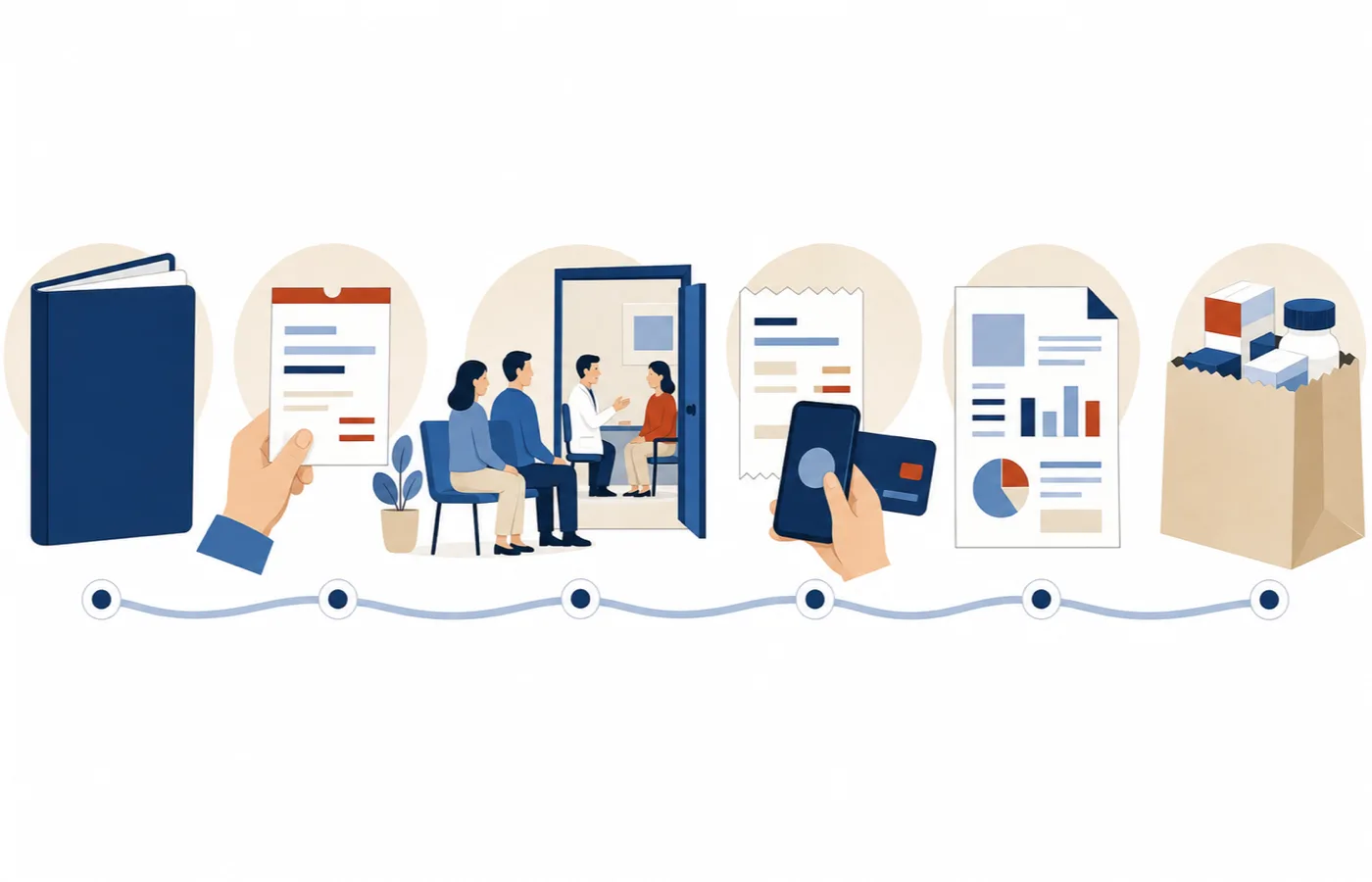
Community mental-health follow-up can refer to several different systems: ordinary care at a community health institution, a locally managed basic public-health programme, rehabilitation or social support, hospital follow-up, family-doctor coordination or a referral arrangement. These routes can share information and cooperate, but they do not have identical eligibility, staff, records, medicines, funding or emergency functions. A national public-health standard describes defined management services for people who meet its serious-mental-disorder programme criteria, yet a website cannot decide whether an individual qualifies or whether a local institution can enrol a foreign resident. This guide organizes institution checks, consent, records and handoffs. It does not diagnose, assess severity or stability, recommend rehabilitation or treatment, determine programme eligibility, or promise enrolment, home visits, medicines, reimbursement, confidentiality or a clinical result.
Use this as a practical starting point
Provider procedures can change, so confirm time-sensitive details with the hospital, insurer or service. A licensed professional must make clinical decisions for an individual patient.
At a glance
Key points
- Ask which route is actually being offered: ordinary community care, basic public-health management, rehabilitation, social support, hospital follow-up or family-doctor coordination.
- A national programme description does not let a website decide that an individual meets serious-mental-disorder, residence or local enrolment criteria.
- Verify the Chinese legal name and local responsibility of the community or medical institution rather than relying on a map label or an informal referral.
- Keep the hospital chart, community public-health record, rehabilitation plan, family-doctor agreement and insurance record as separate documents unless the responsible bodies confirm linkage.
- Ask who obtained consent or other authority, who may access the record and what minimum information is needed for the handoff.
- A discharge direction, diagnosis record or family request does not guarantee community acceptance, home visits, free medicines, a particular worker or continuity across districts.
- Moving to another city or district can require a new responsibility and registration check; records do not necessarily transfer automatically.
- For a perceived medical emergency in mainland China call 120, and for an immediate safety or police emergency call 110; community follow-up and 12356 are not dispatch services.
Name the community route before relying on it
Ask the referring hospital, local health authority or community institution to write the exact Chinese service name and accountable organization. Ordinary community outpatient care, family-doctor services, a resident health record, basic public-health management for people who meet defined programme criteria, psychiatric rehabilitation, social-work support and a hospital outreach arrangement are different routes. A person can interact with more than one, but participation in one does not automatically create enrolment, benefits or records in the others. Do not translate every community contact as psychiatric treatment or every follow-up call as a medical encounter.
The national basic public-health standard includes a defined community management route for people with serious mental disorders who meet its criteria, while the 2026 social psychological service plan describes broader cooperation and service-system development. Neither source is a self-enrolment form or a live local directory. Ask the responsible local institution what programme it administers, what population and area it serves, which professionals participate and whether the proposed contact is medical care, public-health management, rehabilitation, social support or administrative coordination.
- Exact Chinese service name
- Legal institution or public body
- Ordinary care or public-health route
- Rehabilitation or social-support role
- Hospital or family-doctor relationship
- Record created by the contact
Community mental-health service is an umbrella description, not one national appointment or entitlement.
Verify local responsibility and enrolment requirements
Identify the community health institution, district authority or other body said to be responsible for the person's address and compare its Chinese legal name with an official institutional source where applicable. Ask whether responsibility is based on current residence, a resident health record, household or local administrative information, a hospital handoff, a programme list or another documented criterion. Foreign passport, residence-permit, address, phone and name-format handling may vary, and an official institution listing does not prove that the site administers the relevant programme or accepts the individual's documents.
Request a written list of identity, address, prior-diagnosis, discharge, consent, guardian or authorization materials the local route requires, but do not treat the list as a promise of acceptance. The responsible institution must apply its programme and professional rules. A diagnosis shown in a hospital record, previous enrolment in another city, family request or insurer approval does not by itself determine local public-health eligibility. This website cannot certify the diagnosis, residence status, stability, guardian authority or any other condition used by the responsible body.
- Responsible area or service boundary
- Patient identity accepted locally
- Address or residence evidence
- Hospital or programme records requested
- Consent, guardian or agent evidence
- Written acceptance or pending status
Record who provides follow-up and what the service includes
Ask for the named institution, team and role that will contact the patient, plus the service channel, expected record and way to verify identity. A community physician, public-health worker, nurse, rehabilitation professional, social worker, family doctor and hospital psychiatrist can have different responsibilities. Do not assume that a home or telephone contact includes diagnosis, prescribing, medicine supply, psychotherapy, emergency response or insurance approval. Ask the provider to describe the current local service scope without requesting a clinical recommendation from administrative staff.
If a schedule is offered, record whether it is a planned public-health follow-up, ordinary appointment, rehabilitation activity, medicine-related visit, record update or coordination call. Keep missed-contact, rescheduling and withdrawal questions in the provider's documented process. National standards describe programme work, but they do not guarantee frequency, a named worker, English, home visits, transport, free services or uninterrupted availability. Only the responsible provider can explain what it currently offers and whether the person remains enrolled.
- Named team and professional role
- Contact channel and identity verification
- Type of appointment or follow-up
- Record produced after the contact
- Rescheduling and missed-contact process
- Current service scope and limits
Do not infer medical treatment from a phone call or home contact. Ask what service occurred and which professional recorded it.
Build a hospital-to-community handoff without clinical promises
Before discharge or transfer, ask the hospital which community organization it contacted, what document it sent, who accepted it and whether the handoff is a referral, notification, application or confirmed enrolment. Preserve the hospital's discharge record, current prescription status, follow-up direction and contact details as separate items. A hospital statement that community follow-up is recommended does not guarantee that the local route will accept the person, provide the same services, issue medicines, visit the home or assume responsibility on a particular date.
Ask the community side to confirm receipt, patient identity, programme status, first contact and any missing document. If the community provider cannot access the hospital's electronic record, use the authorized copy and transfer process rather than screenshots or an edited summary. The receiving team makes its own professional and administrative decisions, so a complete handoff does not mean it will adopt another provider's schedule, medicine plan, assessment or terminology. This guide cannot tell either team what care should occur.
- Sending hospital and department
- Receiving community organization
- Referral, notification or application status
- Record and prescription documents sent
- Receipt acknowledgement
- First confirmed contact or pending item
Protect records, consent and cross-city continuity
Ask which record is being created and the authority for access: a hospital medical record, community public-health record, resident health record, rehabilitation file, family-doctor record or social-service case file. Medical and health information is sensitive personal information, and authorized, minimum-necessary, secure and traceable use is important. A family member, building manager, employer, school, volunteer, interpreter or community worker does not automatically receive the whole psychiatric record merely because that person helps with contact or logistics.
When moving, notify the current responsible organization and ask it to record the closure, transfer or continuing status rather than assuming an automatic national transfer. Then identify the new locality's responsible route and ask what documents it accepts. Preserve originals and separately labelled translations, and maintain a handoff index showing sender, recipient, purpose and date. Cross-city movement may affect address responsibility, local programme administration, insurance and provider access, but this guide cannot decide eligibility or require either locality to transfer or accept the record.
- Record type and lawful custodian
- Access and authorization basis
- Minimum information for the stated task
- Transfer purpose and recipient
- Old-locality closure or transfer status
- New-locality responsibility check
Resolve gaps through the correct owner and emergency route
Classify an unresolved issue before escalating it. Identity or address mismatch belongs with the registering body; missing hospital records belong with the medical-record office; unclear community enrolment belongs with the responsible local programme; service conduct can use the institution's published complaint route; insurance settlement belongs with the relevant insurer or agency. Keep dates, names, submissions and responses. A complaint or health-authority enquiry can clarify administration but does not diagnose the patient, determine clinical fault, guarantee enrolment, compel a home visit or award a benefit.
12356 can provide psychological assistance and help orient a caller, but it is not the local programme owner, routine follow-up team, ambulance service or police. For a perceived medical emergency in mainland China call 120, and for an immediate safety or police emergency call 110. Do not wait for a community appointment, record transfer, programme review, family-doctor reply or complaint outcome. This website does not assess symptoms, danger, urgency, capacity or the appropriate clinical setting.
Use one owner for each open item: hospital, community programme, record custodian, insurer or complaint office. Use 120 or 110 for the corresponding perceived emergency.
Useful language
Navigation phrases
Show the Chinese characters when pronunciation is uncertain. Use the copy button to send one phrase through a trusted channel without retyping it.
Avoidable problems
Common mistakes
- Calling every community mental-health contact medical treatment.
- Assuming a national programme description proves individual or foreign-resident eligibility.
- Treating a hospital discharge direction as confirmed community enrolment.
- Assuming a diagnosis record guarantees home visits, medicines or a named worker.
- Combining the hospital chart, public-health record and rehabilitation file into one assumed record.
- Sending a complete psychiatric record to an unverified community contact.
- Allowing an informal helper to present themselves as automatically authorized for record access.
- Assuming enrolment or records transfer automatically after moving to another district or city.
- Using a complaint office to seek diagnosis, treatment, benefit approval or emergency response.
- Waiting for routine community follow-up during a perceived emergency instead of calling 120 or 110.
Common questions
Frequently asked questions
Does a psychiatric diagnosis automatically qualify someone for community public-health follow-up?
No automatic conclusion should be made. The national standard describes a defined programme, but the responsible local body must apply its diagnosis, residence, programme and administrative criteria. A website, family member or previous hospital cannot promise enrolment for an individual.
Can a foreign resident create a community mental-health record?
Ask the responsible local institution which identity, address, residence and prior records it accepts and which service is being requested. National sources do not guarantee foreign-passport registration or enrolment in every locality, and an ordinary community visit is different from a managed public-health programme.
Does community follow-up include home visits or free medicine?
Do not assume either. Ask the local programme to describe the person's confirmed status, current service scope, contact format, charges and medicine route. National standards do not guarantee home visits, free medicines, delivery, a particular schedule or uninterrupted availability for every participant.
Will the community provider see the hospital's complete electronic record?
Not necessarily. Confirm whether an authorized system link exists and what minimum information can be accessed. Otherwise use the hospital's formal copy and transfer process. A screenshot, app chat or family summary is not automatically the institution-held record.
What happens to community follow-up after moving to another city?
Ask the current organization to document closure, transfer or continuing status, then identify the new locality's responsible body and requirements. Do not assume automatic national transfer, continued enrolment, identical services, record access, medicine supply or insurance settlement.
Which route applies if someone perceives an immediate emergency?
In mainland China call 120 for a perceived medical emergency and 110 for an immediate safety or police emergency. Community follow-up and 12356 are separate non-dispatch routes. This guide cannot assess symptoms, danger or the appropriate clinical response.
Evidence
Sources consulted for this guide
National rules are separated from city and provider examples. Access dates show when a source was collected; source pages and procedures can change afterward.