
Dental & oral care
Transfer dental X-rays and records between providers in China
Request a provider-created dental record pack, confirm the receiving clinic's file requirements and transfer it securely without interpreting images.
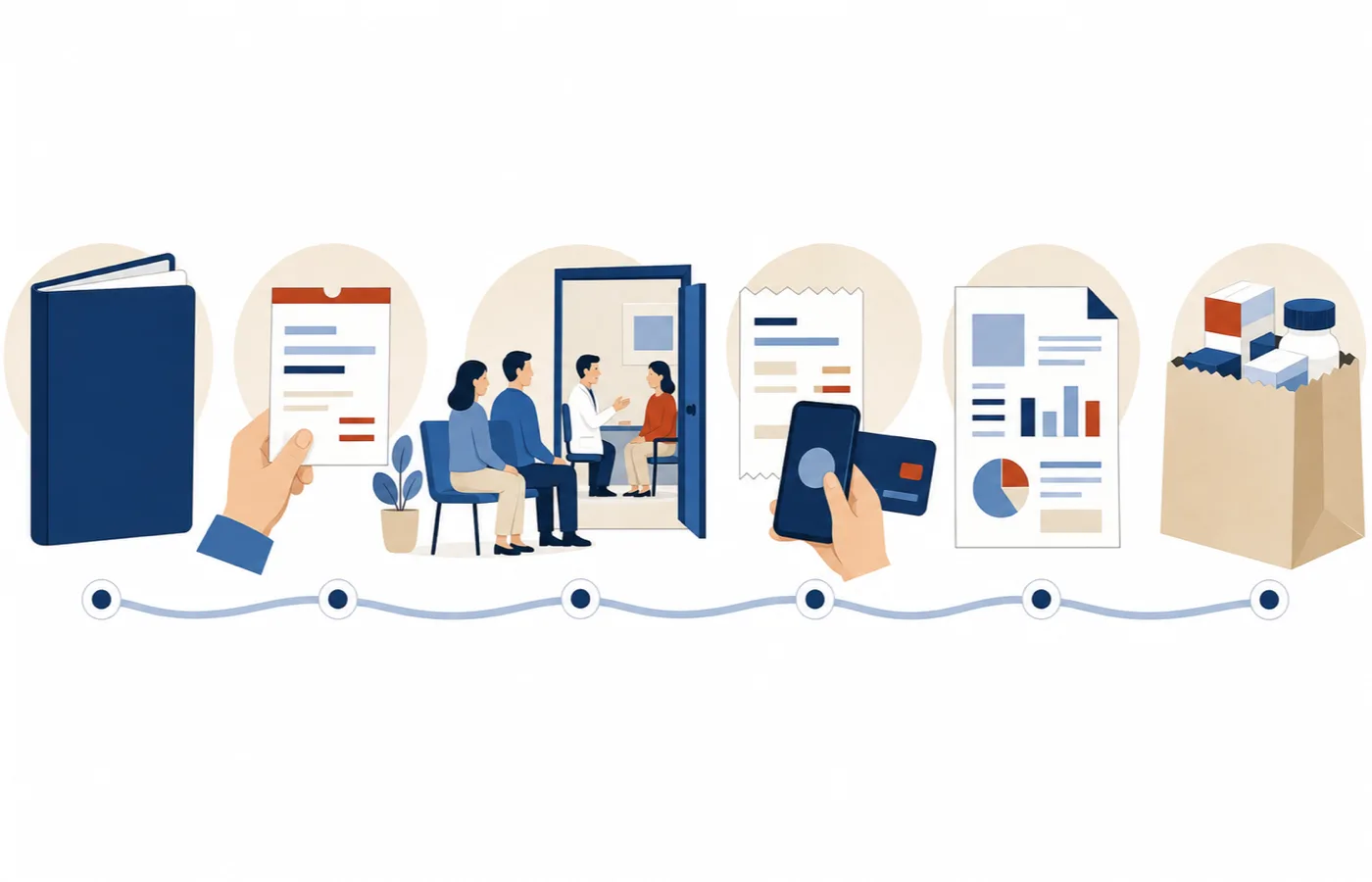
A useful dental handoff is not just a photograph of an X-ray on a phone. It is a record set that the originating provider can lawfully release, the patient can identify, and the receiving dental team can open and connect to the correct person and episode of care. The exact contents depend on what the first provider created and what the receiving provider requires. This guide explains how to define the request, obtain reports and image data, preserve original Chinese documents, transfer files securely and confirm receipt. It does not interpret an X-ray, scan, model, photograph, pathology result or treatment record; decide whether an image is current or sufficient; recommend repeat imaging; or tell a receiving dentist to accept another provider's diagnosis or plan. Those are clinical decisions for qualified professionals.
Use this as a practical starting point
Provider procedures can change, so confirm time-sensitive details with the hospital, insurer or service. A licensed professional must make clinical decisions for an individual patient.
At a glance
Key points
- Ask the receiving dental provider which records, dates and file formats it needs before requesting a broad export from the originating provider.
- Request named documents and image items through the originating institution's formal medical-record, imaging or patient-service route.
- Keep reports, original image data or access instructions and phone screenshots as different items; a screenshot may not contain the data a receiving system needs.
- Match every file to the patient name, institution, date and body area or study label shown by the provider, without relabelling clinical content yourself.
- Preserve the Chinese original beside any translation and use minimum-necessary, authorized sharing.
- Confirm that the receiving provider can open the files and has attached them to the correct patient before considering the transfer complete.
Ask the receiving provider to define the handoff
Contact the receiving clinic or hospital before requesting records. Give the administrative purpose of the transfer, previous provider name, approximate dates and whether the request relates to continuing care, a second opinion, insurance documentation or a move. Ask the receiving team to list the documents and data formats it can use. One provider may want a formal report and original image export; another may also request provider-created photographs, scan or model files, appliance or material identification, procedure notes or a clinician summary.
The receiving provider decides whether the available information is clinically adequate and whether it will reassess the patient or create new records. Do not ask a records clerk to promise that old images are sufficient, and do not use this guide to decide whether another image is needed. Record the receiving provider's upload link, secure email or in-person media rules, file-size limit, accepted language and naming instructions.
- Purpose of the handoff and relevant date range
- Required visit notes, reports and procedure records
- Required image report and original data or export format
- Required scan, model, photograph or appliance files if they exist
- Accepted transfer channel, file size and media type
- Need for Chinese originals, translations or provider certification
The receiving dental team—not this website or the former provider's records desk—decides what is clinically sufficient for new care.
Build a precise request to the originating provider
Use the originating provider's published medical-record office, imaging department, patient portal or patient-service route. Identify the patient with the document and name format used at registration, and include the patient number when available. Request a defined date range and name each item rather than asking for everything related to dentistry. National record rules cover written and image-based information where it was created, but they do not guarantee that every requested item exists or is immediately available.
Ask which requester can collect the material, what identity or authorization evidence is required, whether a fee applies, how long the process normally takes and whether delivery is online, in person or by approved representative. If the patient has already left China, ask about the remote-request route instead of sending passport copies to an informal contact. A companion, employer, insurer or new clinic should not be assumed to have automatic access.
- Registered patient name, identity-document type and patient number
- Originating legal institution and exact campus
- Visit or study dates and relevant department
- Named clinical documents and image items requested
- Requester identity or authorization documents
- Collection method, fee, expected timing and contact number
Separate reports, image data and viewing access
Ask the imaging office what it actually produced and can release: a written report, exported image files, physical media, a download package, a viewer, a QR code or time-limited portal access. These are not interchangeable. A photograph or messaging-app preview can be useful for identification but may omit image detail, study information or the files needed by the receiving system. Do not convert, compress, crop or annotate the only copy before the receiving provider has confirmed it can use the original.
Record any password, access-expiry date, viewer requirement and download instructions separately from the health file. Check that the patient name or identifier, institution and study date are visible in the provider-supplied record. If there is a mismatch, ask the originating provider to correct or explain it through its formal process; do not rename a clinical file in a way that suggests the underlying record has been amended.
- Provider-issued image report
- Original image data or export supplied by the imaging office
- Viewer or software instructions, if required
- Portal link, QR code, password and expiry date
- Patient and study identifiers shown by the provider
- Separate untouched backup before any working copy is created
This page can help identify file types. It cannot read an image, confirm image quality or decide whether the study answers a clinical question.
Preserve originals and translate only what is needed
Keep the Chinese original of each record and link any translation to it by date, document title and page count. Do not replace the provider-recorded diagnosis or procedure wording with a self-written English label. Ask the receiving provider which documents need full translation and whether it accepts an informal working translation, a professional translation or a certified format. Image data itself may not require language translation, while reports, notes and consent documents may contain clinically relevant text.
Create an index that states only administrative facts: file name, provider, date, document type, language and whether a translation is attached. Avoid summarizing clinical findings in the index. If a translator needs access, share only the relevant files through an authorized route and confirm deletion or retention expectations. Current electronic-record policy emphasizes authorized, secure, minimum-necessary and traceable use rather than unrestricted forwarding.
Transfer securely and confirm receipt
Use the receiving provider's official upload link, portal, secure email instruction or in-person process. Verify the destination by calling an official number if the address was sent in a personal chat. Send the minimum record set requested and keep a transfer log showing the date, recipient channel and file names. Do not post dental images in a public forum to ask strangers whether they are usable or what they show.
Ask the receiving provider to confirm that the files opened, were linked to the correct patient and are available to the treating team. A successful upload receipt proves transmission, not clinical acceptance. The new dentist may still request an appointment, clarification, a formal copy, a different format or additional records. Let that professional explain any clinical limitation rather than trying to repair or interpret the files yourself.
- Verify the receiving address or portal through an official channel
- Send only the requested patient and date range
- Keep a list of transmitted file names
- Record upload confirmation or collection receipt
- Ask the receiving clinic to confirm that files open
- Ask whether any item must be reissued by the original provider
Close gaps without rewriting the clinical record
If a document is missing, ask whether it was never created, remains incomplete, belongs to another department or must be requested through a different office. If the originating provider cannot release the requested format, tell the receiving provider exactly what is available and ask what alternative it accepts. Preserve written responses and do not state that a provider withheld a record when the issue may be identity, authorization, processing time or file format.
If the patient believes a demographic detail is wrong, use the institution's correction or identity-linking process. If there is disagreement with clinical content, request that the responsible professional explain the record or use the formal record-query route; do not alter the original. For persistent process problems, use the provider's patient-service or complaint channel with the request receipt, dates and specific missing item.
Useful language
Navigation phrases
Show the Chinese characters when pronunciation is uncertain. Use the copy button to send one phrase through a trusted channel without retyping it.
Avoidable problems
Common mistakes
- Requesting a vague complete file before asking what the receiving dentist needs.
- Treating a phone photograph of an image as the original image data.
- Letting a download link or QR code expire before preserving the provider-supplied files.
- Renaming or editing a clinical file in a way that obscures its source.
- Discarding Chinese originals after creating an English summary.
- Sending records to an unverified personal email or messaging account.
- Assuming a companion, employer, insurer or new clinic has automatic access.
- Treating a successful upload as proof that the new dentist accepts the prior plan.
- Trying to interpret, crop or enhance images instead of asking the receiving professional.
Common questions
Frequently asked questions
Are phone photos or screenshots of dental X-rays enough?
Only the receiving dental provider can decide what it can use. A screenshot may omit data, identifiers or detail available in the provider's original export. Ask the originating imaging office what report, original data, viewer or access package it can supply, then ask the receiving provider to confirm that the format opens.
Can my companion request my dental records for me?
Do not assume so. Ask the originating institution what patient identity, written authorization and representative identity evidence it requires. The exact channel may differ for in-person collection, remote requests and direct provider-to-provider transfer.
Must the old clinic send the files directly to the new dentist?
The cited national rules do not create one universal dental transfer method. The patient may receive copies, the institutions may use an authorized direct route, or another process may apply. Confirm requester authority, privacy, format and destination with both providers before transmitting records.
Should I translate every page and image label?
Ask the receiving provider what it needs. Preserve every Chinese original and link translations to the correct document. Some records may need a professional or certified translation, while image data may be usable with its provider-issued report. Do not replace clinical wording with a self-written summary.
Can this guide tell whether an X-ray is current or good enough?
No. Image quality, relevance, interpretation and whether another examination is appropriate are clinical judgments for qualified dental professionals. This guide covers only record identification, release, transfer and receipt.
What if the receiving clinic cannot open the files?
Ask it to state the accepted format or alternative in writing, then return to the originating imaging or records office with that request. Preserve the original export and do not convert the only copy. A different viewer, re-export, physical medium or formal report may be available, but each provider must confirm its own process.
Evidence
Sources consulted for this guide
National rules are separated from city and provider examples. Access dates show when a source was collected; source pages and procedures can change afterward.