
Dental & oral care
Dental treatment problems, refunds and records in China
Separate clinical follow-up, record requests, charge questions, refund requests, provider complaints and formal disputes without assuming fault or entitlement.
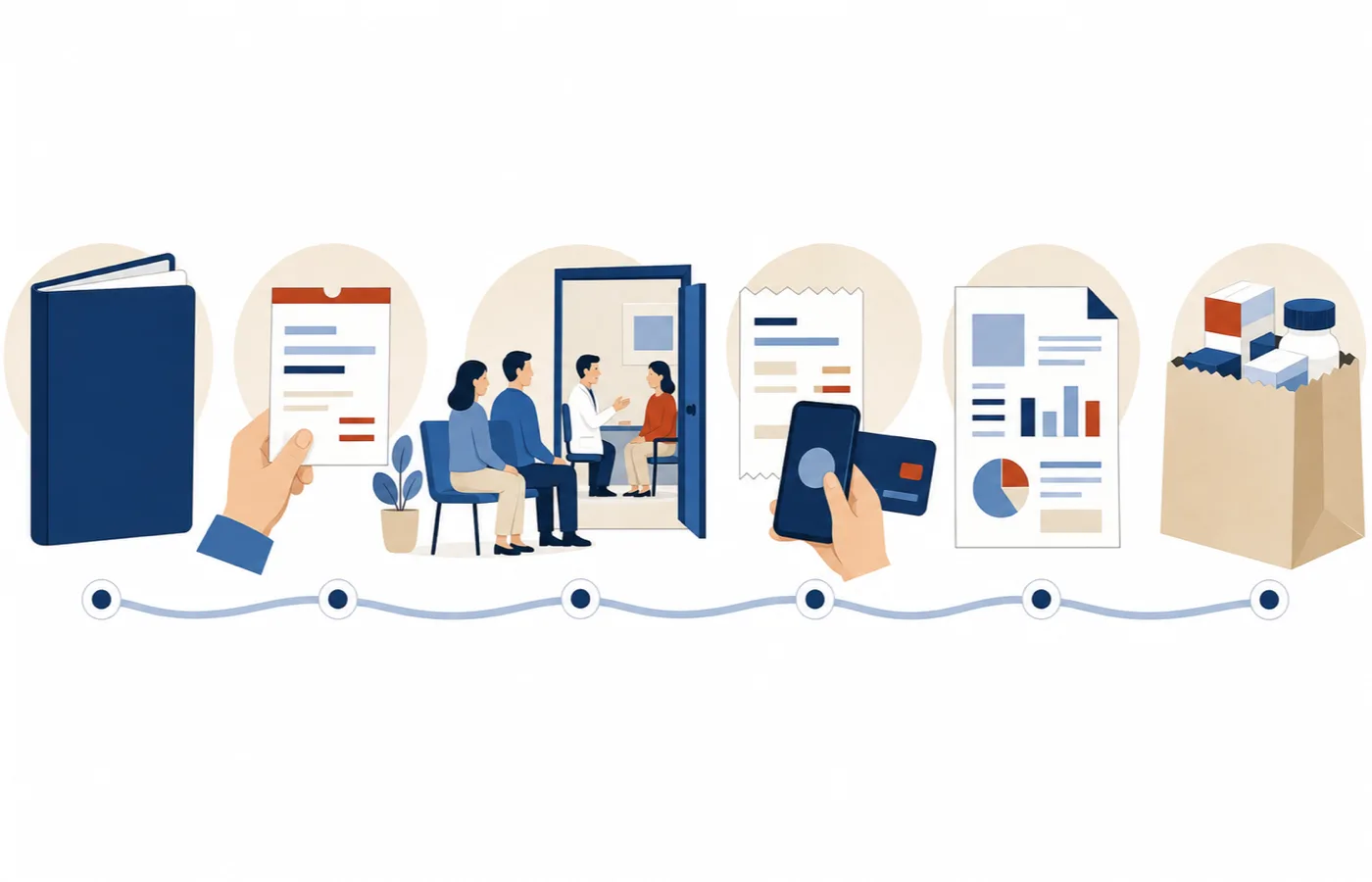
A concern after dental care can contain several different requests: clinical reassessment, access to records, explanation of a charge, cancellation of an unfinished stage, return of an unused payment, an institution-level complaint or a formal medical dispute. Combining them into one accusation can make the response harder to trace. This guide shows how to separate the tracks, preserve evidence and ask the correct office for a written answer. It does not determine whether treatment was appropriate, whether a provider was at fault, whether a refund or compensation is owed, or what corrective treatment should occur. Qualified clinicians, the provider's authorized offices, insurers, competent authorities and formal dispute mechanisms retain their separate roles.
Use this as a practical starting point
Provider procedures can change, so confirm time-sensitive details with the hospital, insurer or service. A licensed professional must make clinical decisions for an individual patient.
At a glance
Key points
- Use the treating team's clinical follow-up route for care concerns and a separate administrative route for records, charges, refunds or complaints.
- Build a dated file containing the accepted plan, consent records, clinical records, messages, itemized charges, receipts, payment proof and requested remedy.
- Ask for a line-by-line charge explanation before labelling an estimate change, staged payment, product charge or duplicate entry as an error.
- A refund request should identify the payment, unfinished or disputed stage, provider's written terms and requested response; it does not create an automatic entitlement.
- An institution-level complaint can request investigation and a written reply, but the complaint office does not automatically decide legal liability or compensation.
- Escalate to a formal dispute route only after preserving the original evidence and identifying the exact issue that remains unresolved.
Separate clinical follow-up from the administrative case
If the concern involves the patient's current condition, contact the treating provider through the clinical follow-up or urgent route stated in its written instructions. Ask which licensed clinician or department will review the patient and how the reassessment will be documented. Do not delay a provider-directed review while waiting for a cashier, complaint office, insurer or website to answer. This guide cannot classify symptoms, decide urgency, diagnose a complication, recommend corrective treatment or say whether the original treatment caused the concern.
Open a separate administrative file for records, fees, cancellation, refund or complaint questions. Use a short factual summary: patient name and number, provider's Chinese legal name, campus, dates, clinicians or departments, payment references, documents already requested and the exact written answer sought. Keep clinical questions for the treating team and financial or process questions for the appropriate office. One issue may require several parallel responses, but each response should have its own owner, submission date and reference number.
- Clinical reassessment owner and appointment
- Medical-record request owner
- Cashier or price-office inquiry owner
- Cancellation or refund request owner
- Institution complaint-office owner
- Insurer or formal dispute reference, if used
A clinical review, billing correction, refund and complaint are different outcomes. Request each through the office responsible for it.
Preserve a neutral, dated evidence file
Save the original appointment confirmation, treatment plan, estimate, consent record, procedure or visit record, prescriptions, reports, image data or access instructions, follow-up instructions, itemized charge statement, valid receipt, payment proof and provider messages. Keep Chinese originals alongside translations. Make a chronology that distinguishes what was proposed, what the patient accepted, what was performed or supplied according to the provider's record, what was paid and what remains disputed. Do not edit screenshots, discard envelopes or write conclusions into the original files.
Submit a formal request for named medical records through the institution's current process. Ask what is available now, what is created or archived elsewhere and when a formal copy can be issued. A companion or relative may need patient authorization and identity evidence; access is not automatic. National electronic-record rules emphasize authorized, minimum-necessary and traceable use, so send the request only through an official channel. If the clinic brand, billing entity and medical-record holder differ, identify each legal entity before sending sensitive material.
- Dated plan, estimate and consent versions
- Clinical and procedure records actually created
- Reports, images and follow-up instructions
- Itemized statement, valid receipt and payment proof
- Messages from official provider channels
- Chronology and copies of every submitted request
Ask for a charge explanation before requesting correction
Compare the final itemized statement with the dated estimate and accepted plan. Mark each question separately: a line not understood, an apparent duplicate, a product or material description that differs, a charge added after a plan change, a payment not credited, an amount collected for a later stage or a receipt identity error. Ask the cashier, price-management office or other published channel to identify the service date, price-item name, quantity, unit, issuing entity and relationship to the clinical record. The treating team may need to explain why the plan changed, while the pricing office explains how the resulting charge was calculated.
National oral-price catalogues organize price projects for local implementation and require attention to transparent oral-service and consumable information, but they do not prove that a particular line is correct or incorrect. Do not use a national guidance catalogue as if it were the local tariff. Ask for the current local or provider price basis and a written response. If the institution acknowledges a data-entry, identity, duplicate-payment or receipt problem, request the exact correction or reissue process and preserve both the original and corrected documents.
A questioned charge is not yet a proven billing error. First obtain the item, local basis, clinical link and provider response.
Frame a cancellation or refund request precisely
A refund request should identify the exact payment, payer, date, receipt number, stated purpose, treatment stage and amount being questioned. Attach the provider's written cancellation, package, deposit or staged-payment terms that were supplied, plus evidence of any cancellation or change request. State what outcome is requested: cancellation of an unperformed appointment or stage, an accounting of services or products already supplied, return of an unused balance, correction of a duplicate payment or another defined response. Avoid demanding a full refund without separating completed, ordered, customized, delivered and unused components.
Ask the provider to confirm who has authority to decide the request, what additional documents are required, the expected response time and how any approved amount would be returned. A national oral-service policy or price catalogue does not itself decide refund entitlement, fault or compensation, and this guide cannot predict the result. If an insurer or card issuer was involved, ask that organization what proof it needs without representing a pending provider review as an established error. Keep every submission, acknowledgement, calculation and decision in writing.
- Payment date, amount and receipt number
- Purpose and treatment stage attached to the payment
- Provider terms supplied before payment
- Date and channel of cancellation or change request
- Specific accounting, correction or refund requested
- Decision owner, response time and return method
Use complaints and formal disputes for different purposes
If the treating department, record office or cashier does not resolve the process concern, use the medical institution's published complaint channel. Submit a concise chronology, copies rather than irreplaceable originals, the departments already contacted and the specific response requested. An institution complaint may address communication, records, charges, service process or staff conduct and can create a traceable internal review. It does not automatically establish malpractice, causation, liability, a refund or compensation. Ask for an acknowledgement, case reference, responsible office and written outcome.
If a material issue remains, preserve the original evidence before considering a competent health authority, mediation, appraisal, litigation, insurer appeal or another formal route described in the site's medical-dispute guides. Different routes answer different questions and have their own evidence, jurisdiction and timing requirements. Do not publish passports, medical records, clinician identifiers or unverified accusations to force a response. This page provides administrative organization, not legal advice. For a significant claim, obtain advice from an appropriately qualified professional who can review the facts and current local law.
A complaint asks the institution to review and respond. A formal dispute route may address liability or compensation; neither result should be assumed in advance.
Useful language
Navigation phrases
Show the Chinese characters when pronunciation is uncertain. Use the copy button to send one phrase through a trusted channel without retyping it.
Avoidable problems
Common mistakes
- Waiting for a refund or complaint response before using the provider's clinical follow-up route.
- Combining clinical, billing, refund and liability questions into one unstructured message.
- Accusing a provider of fault before obtaining the clinical record and written response.
- Treating an estimate difference as a proven overcharge without matching stages and items.
- Using a national price catalogue as the exact local tariff.
- Requesting a full refund without identifying completed, supplied, customized, unused or disputed components.
- Assuming an institution complaint office automatically awards compensation.
- Sending original evidence without keeping a complete copy and submission record.
- Allowing an unauthorized companion to request or circulate the patient's records.
- Posting passports, health records or unverified allegations publicly.
- Missing a formal deadline while waiting indefinitely for informal chat replies.
Common questions
Frequently asked questions
Does an unsatisfactory result prove that the dentist was at fault?
No conclusion can be made from dissatisfaction or outcome alone. Obtain the clinical record, provider explanation and any qualified reassessment needed, and keep questions about clinical care separate from billing or communication issues. An institution complaint can request review, while formal mechanisms may address liability. This website cannot determine appropriateness, causation, fault or compensation.
Can I require a full refund for unfinished dental care?
This guide cannot determine refund entitlement. Identify the exact payment, treatment stage, services or products already supplied, unused balance, provider terms and date of cancellation or change. Ask the authorized provider office for an accounting and written decision. A national price catalogue does not create an automatic full-refund rule.
What if I do not understand a line on the dental bill?
Ask the provider's cashier or price-management channel for the service date, price-item name, quantity, unit, issuing entity and relationship to the accepted plan and clinical record. If the clinical plan changed, ask the treating team for its documented explanation. Do not label the line an error until the provider has identified it and the relevant records have been compared.
What if the clinic will not send records through chat?
Chat may not be the institution's authorized record-release route. Ask the medical-record office or provider for its formal request process, requester identity and authorization requirements, available formats and collection method. Name the records needed and keep the acknowledgement. National rules protect access and privacy but do not create one national dental-record portal or require release through a personal messaging account.
What can a hospital or clinic complaint achieve?
It can create a traceable request for the institution to investigate and respond to communication, records, charges, service process or staff-conduct concerns. Ask for a case number and written outcome. The complaint office does not automatically determine clinical fault, legal liability, refund entitlement or compensation, and a later formal route may have separate requirements.
When should I move from a complaint to a formal dispute route?
Consider that question after identifying the unresolved issue, preserving the original records and payments, obtaining the provider's response and checking the competent route's scope and timing. Mediation, appraisal, authority review, insurer appeal and litigation answer different questions. For a significant case, obtain qualified legal or professional advice; this administrative guide cannot choose the route or assess the merits.
Evidence
Sources consulted for this guide
National rules are separated from city and provider examples. Access dates show when a source was collected; source pages and procedures can change afterward.